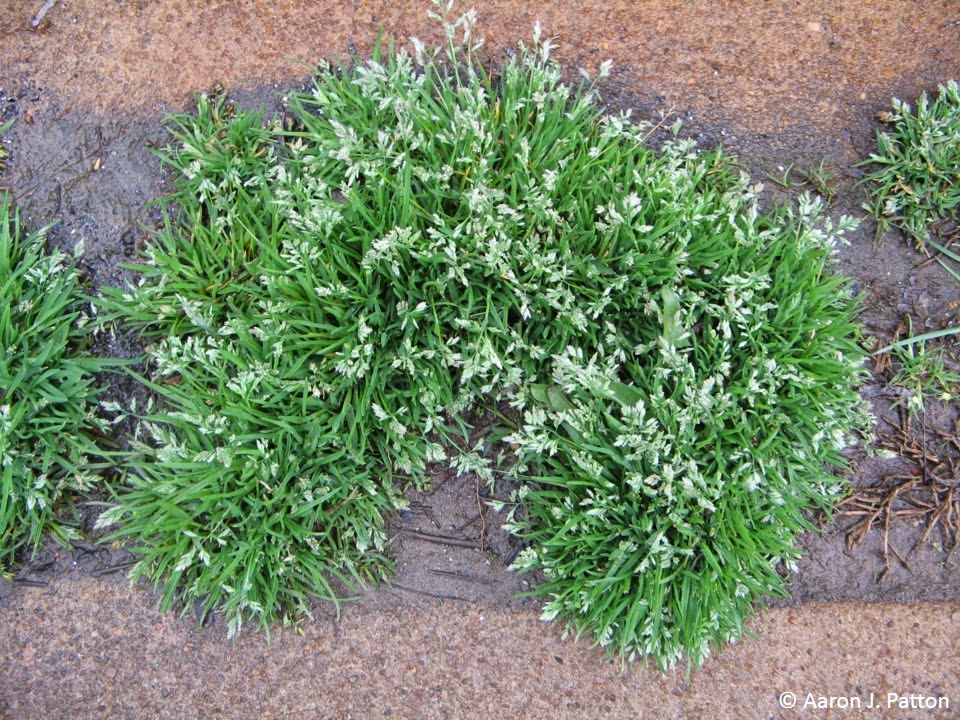
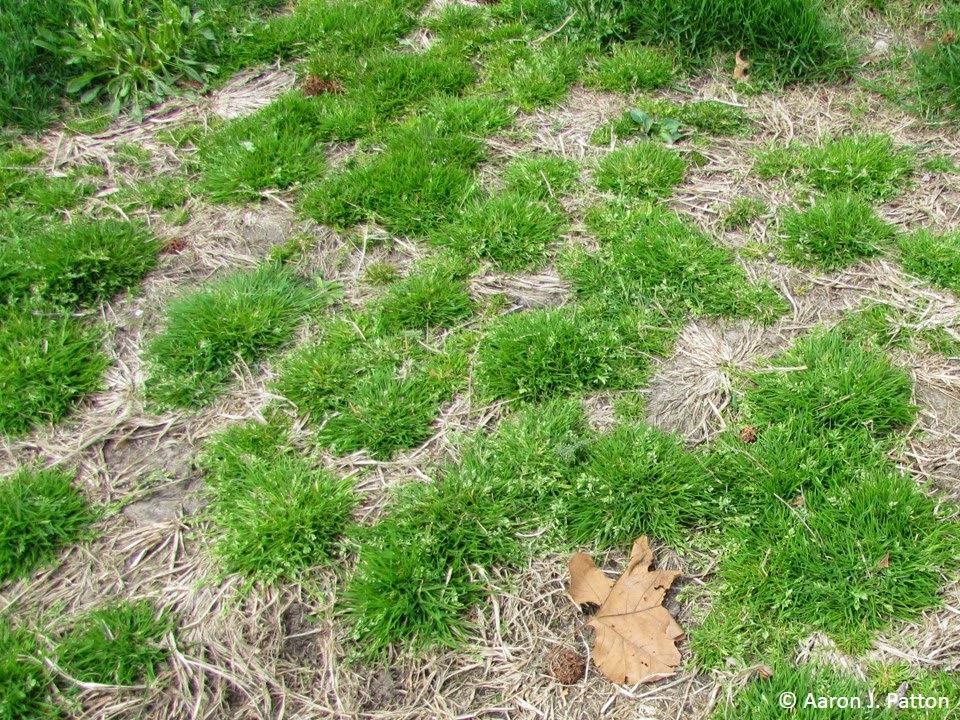
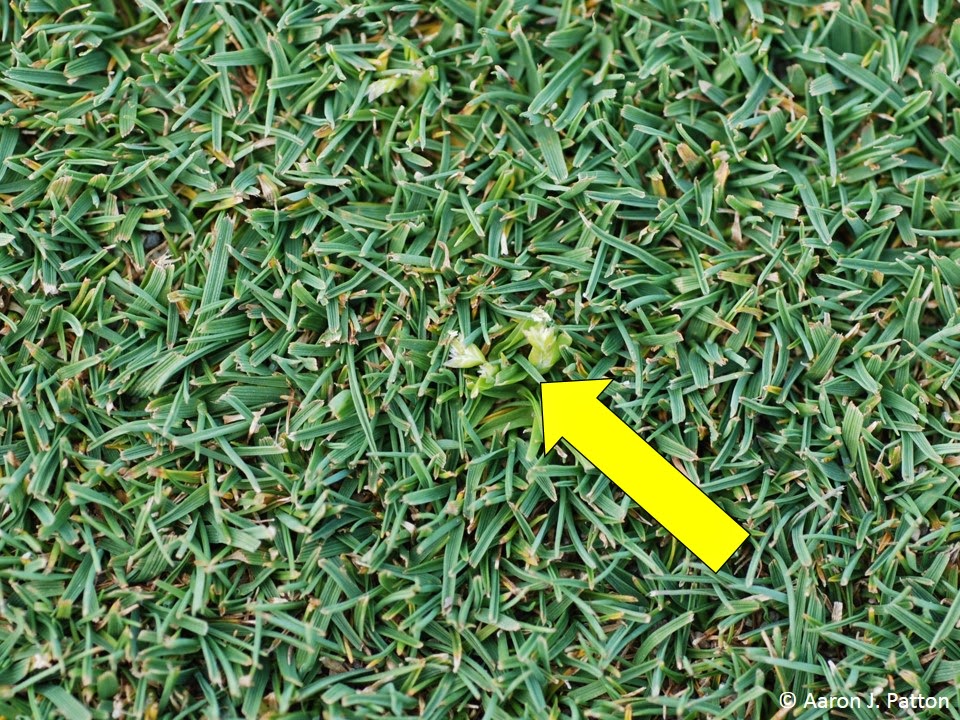
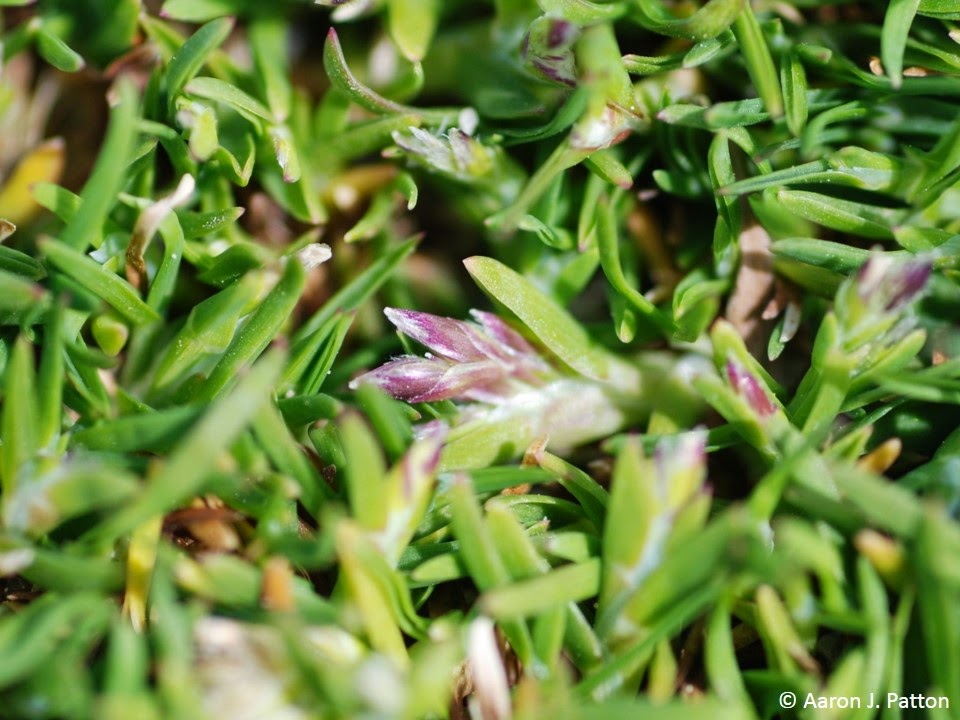
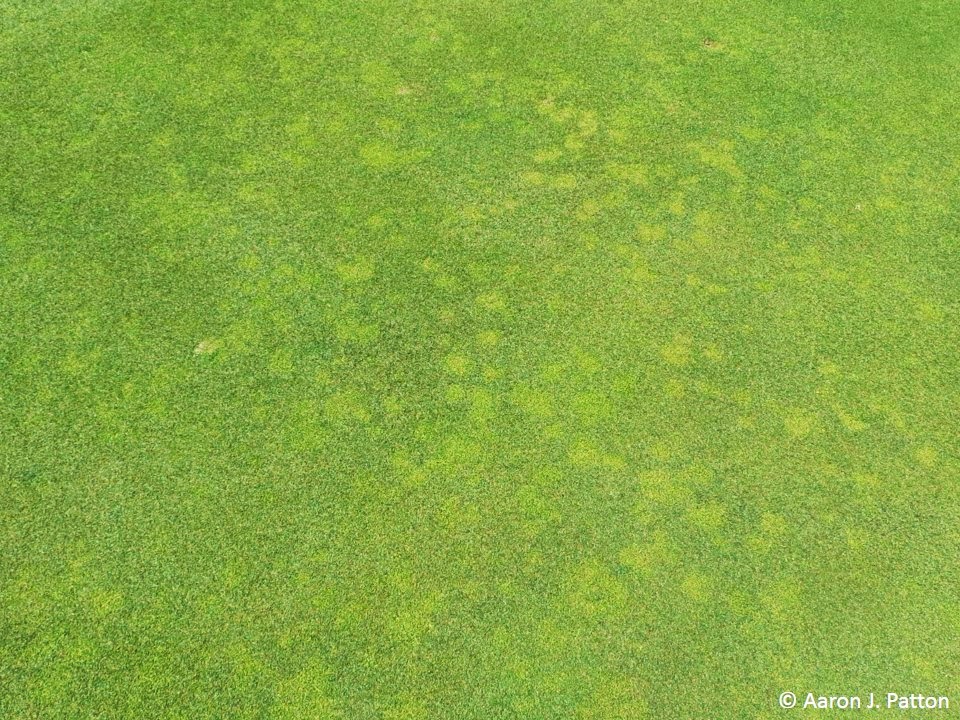
Biology: Annual bluegrass, commonly referred to by its scientific name Poa annua (sometimes pronounced Po anna on TV), is a winter annual grass that is a difficult-to-control weed in turf. Seeds germinate in late summer, early autumn, and spring. Annual bluegrass is found throughout the United States, particularly in highly compacted, excessively wet soils. Despite having a bunch-type/clumping growth habit (some biotypes have short stolons), it can withstand extremely close mowing heights; thus, allowing the weed to successfully establish in home lawns and other high maintenance turf, such as golf courses or sports fields.
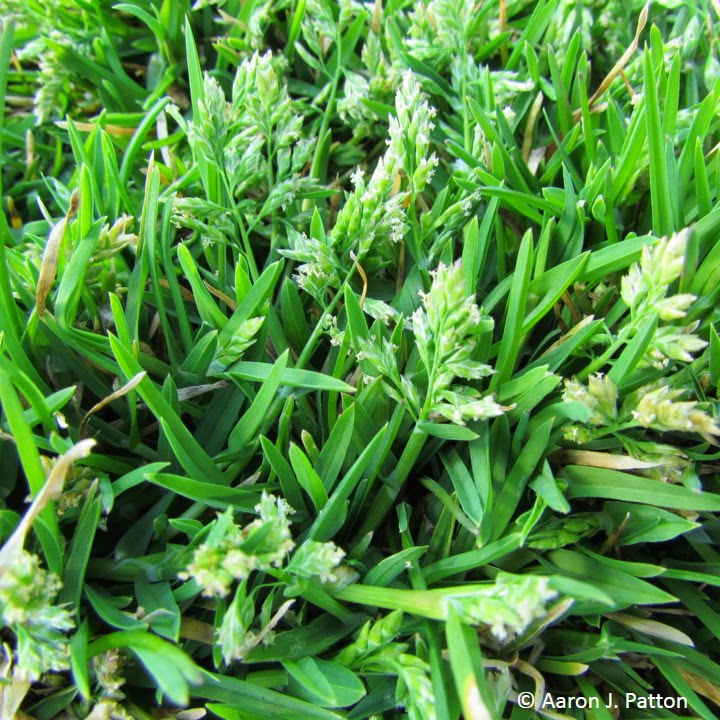
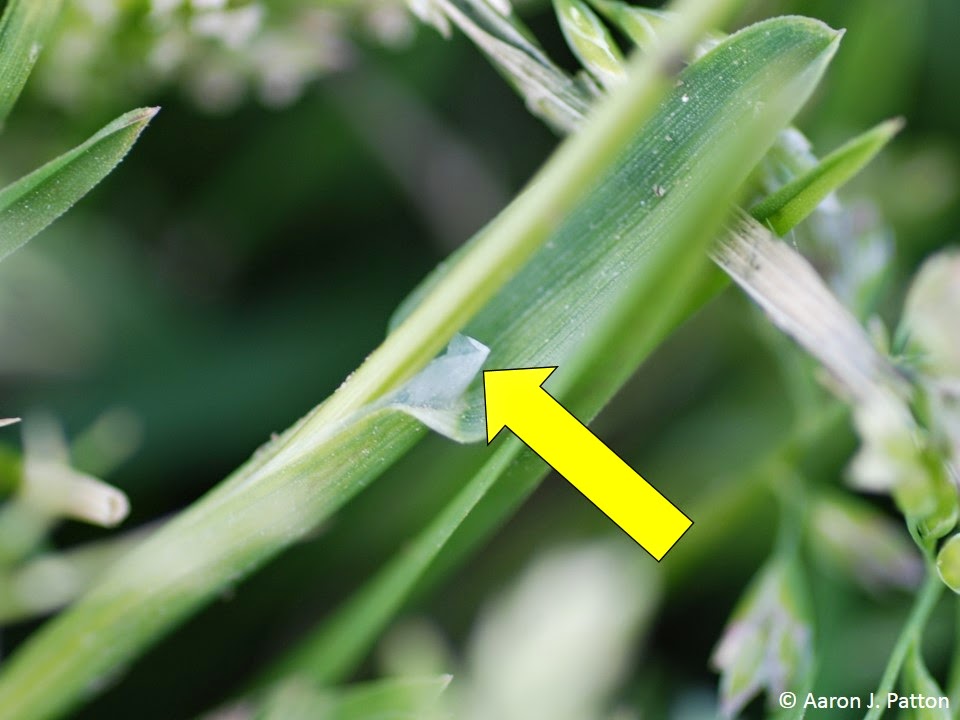
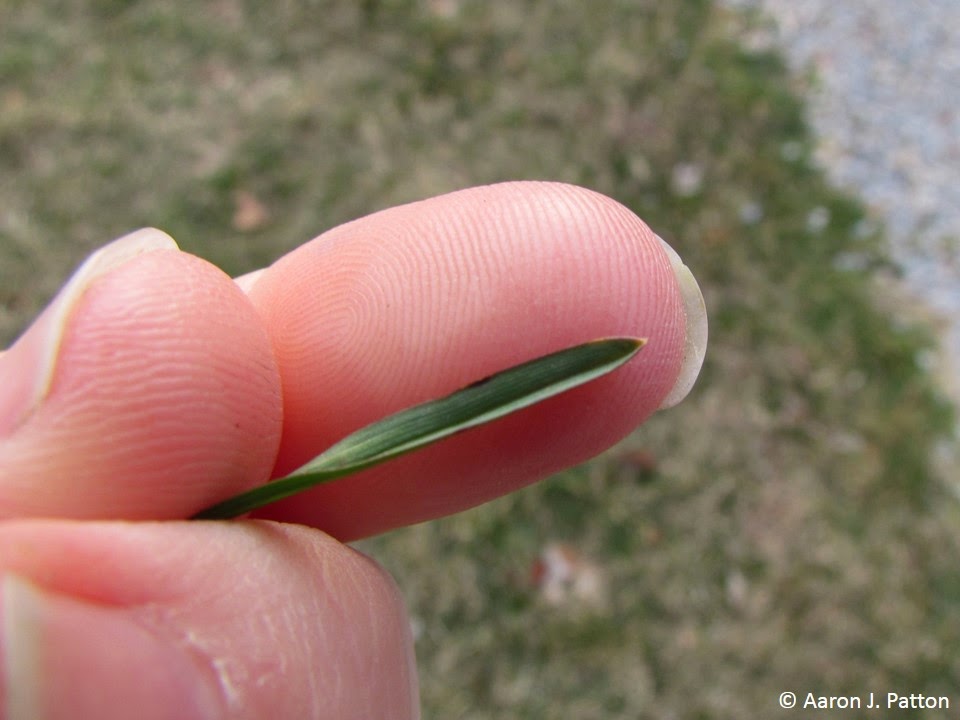
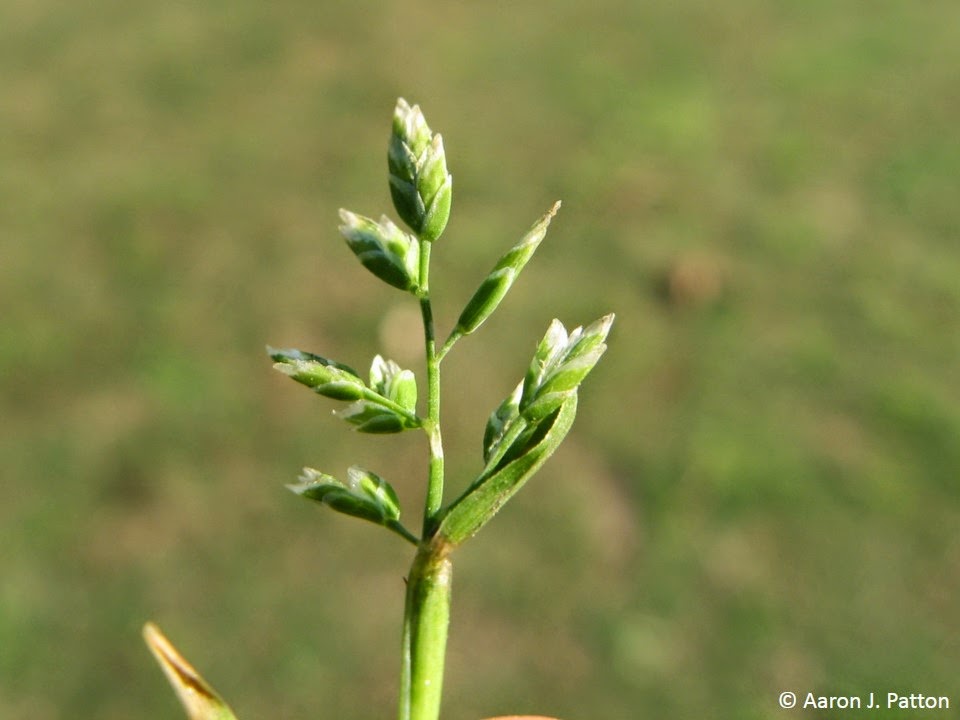
Identification: Annual bluegrass is an upright, clump-forming grassy weed that expands through the development of aggressive tillers. It is generally identifiable by its light green leaf blades that are smooth on both surfaces, have two distinct, clear lines on each side of the midrib, and a boat-shaped leaf tip. Annual bluegrass also has a slightly pointed, membranous ligule. One of the factors that makes annual bluegrass so difficult to control is its ability to produce a large amount of seedheads, even at putting green mowing heights. These seedheads can be observed as a greenish to white, open, pyramid-shaped panicle. A single annual bluegrass plant is capable of producing up to 360 viable seed that have the ability to lie dormant in the soil for many years before finally germinating.
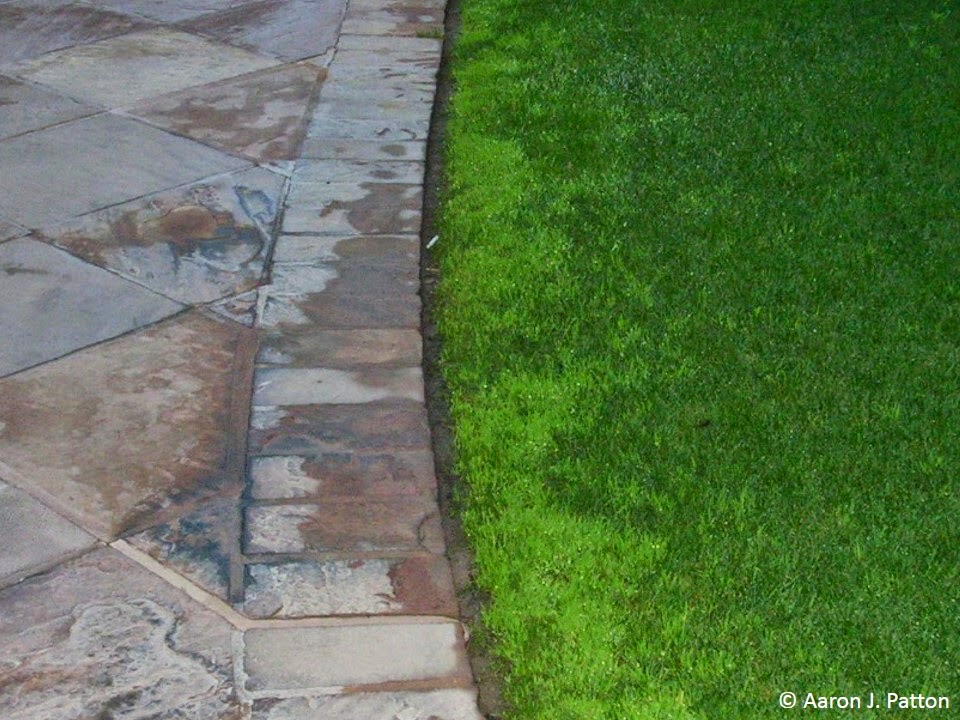
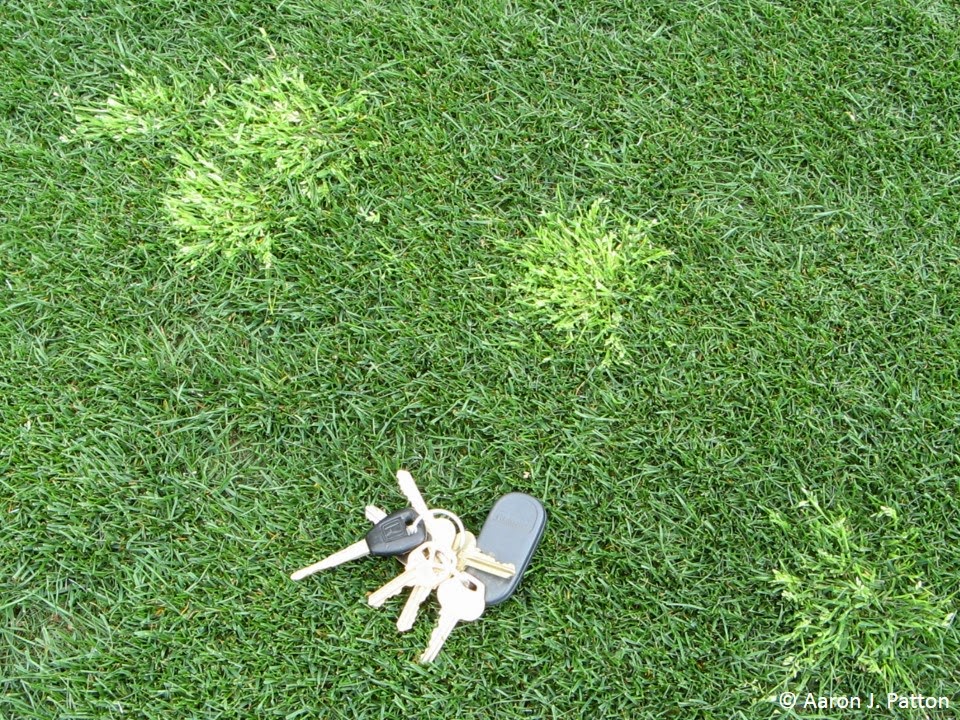
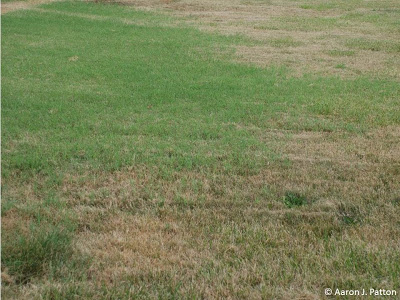
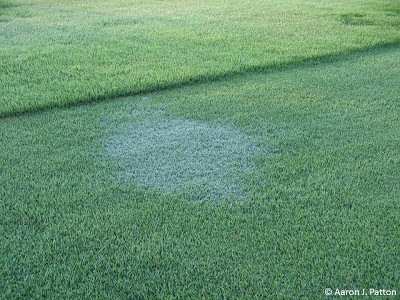
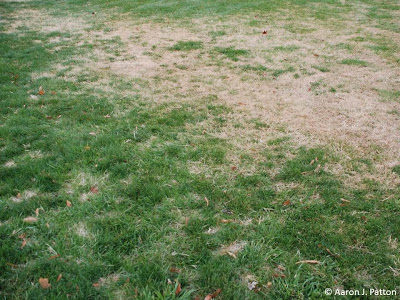
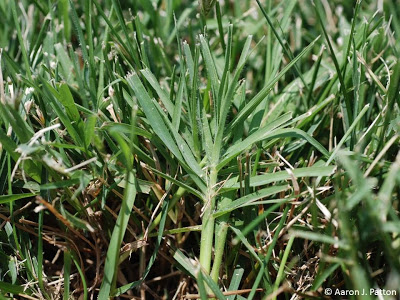
Annual bluegrass is a prolific seed producerAnnual bluegrass membranous liguleBoat-shaped leaf tipAnnual bluegrass seedheadProlific seedhead productionBunch-type growth habitLight-green annual bluegrass color in a cool-season lawn. Notice it is growing in a trafficked, compacted area.Light green color and prolific seedhead production at low mowing heightsAnnual bluegrass invading a creeping bentgrass putting green.Annual bluegrass produces seedheads even at putting green heightsLight green color and prolific seedhead production in a golf course putting green
Cultural control: The use of cultural practices to increase the competitive growth and development of the desired turf over annual bluegrass is one of the limited options for cultural control. However, annual bluegrass’ ability to tolerate extremely low mowing heights and prolific production of viable seed severely limits a professional turf manager’s ability to control the weed using cultural methods.
Biological control: No consistently effective biological control for annual bluegrass although previous research has examined some options.
Chemical control: There are options for controlling bluegrass through the use of herbicides; however, those options are generally specific to the species of the desired turf and the use of the area which is being treated (i.e. home lawns, golf course, sports turf, etc.). One could literally write a book on how to control this species.
To keep annual bluegrass out of your home lawn.
Do not over-water yours lawns as annual bluegrass likes moist areas.
Do not compact your soil through traffic where possible and aerify your lawn to reduce soil compaction as annual bluegrass grows well in thin, compacted areas.
Maintain dense turf through fertilization, overseeding, and weed control (crabgrass and broadleaf weeds).
Mow your lawn at higher heights of cut (>2.5 inches) as annual bluegrass is less competitive at a higher cutting height.
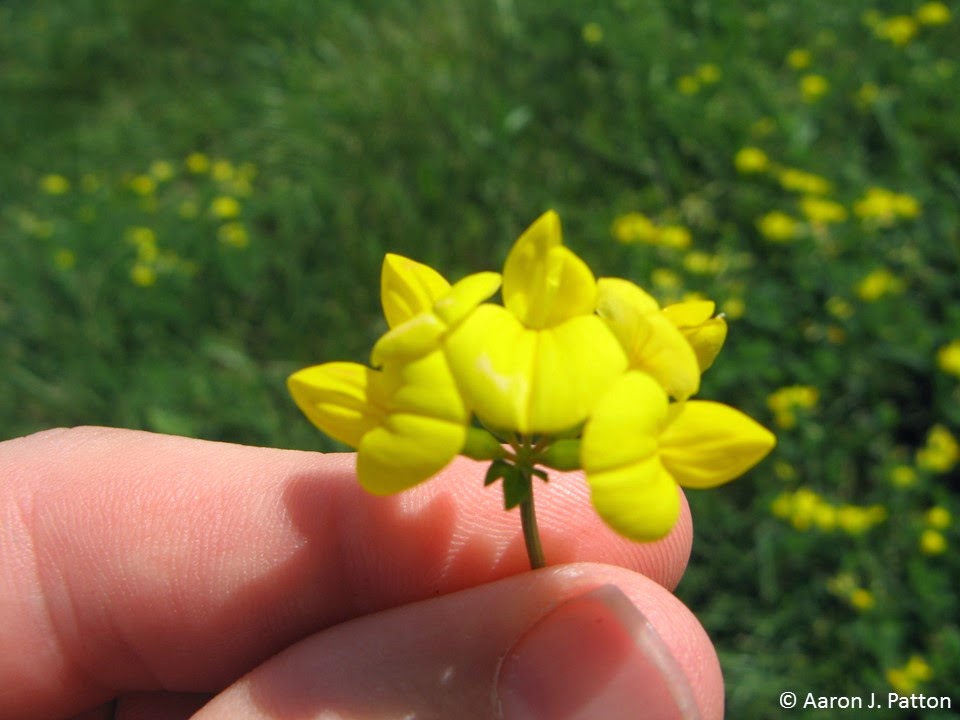
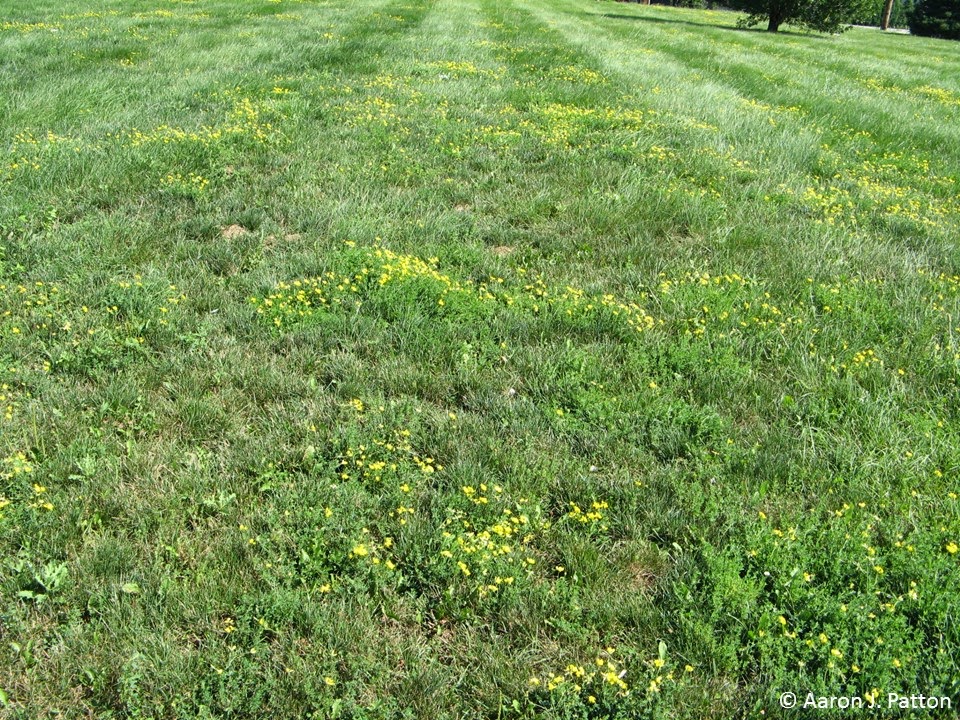
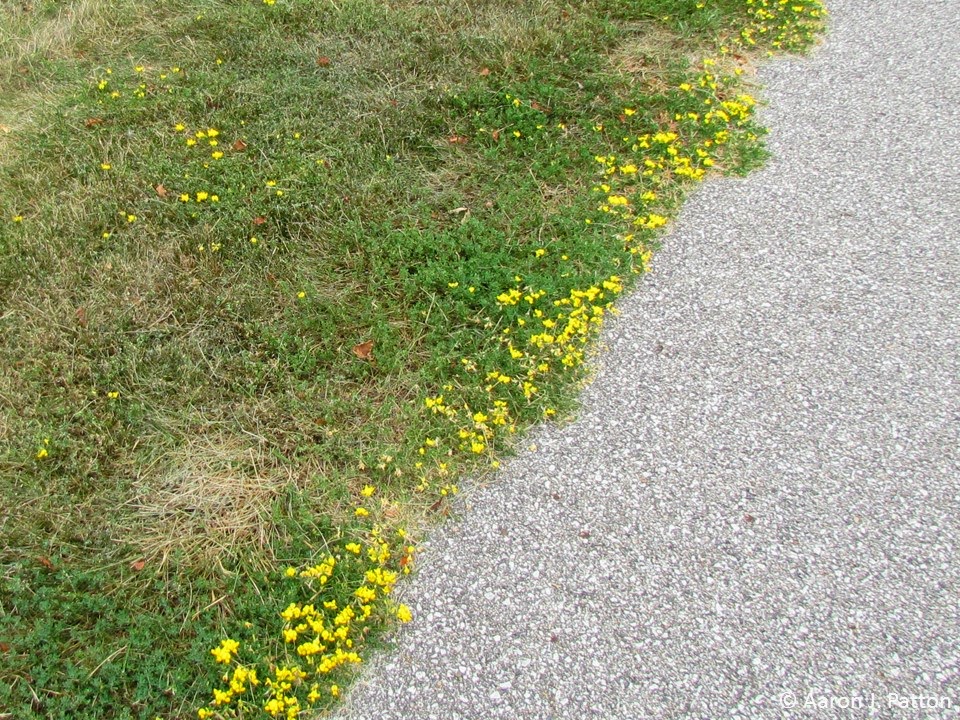
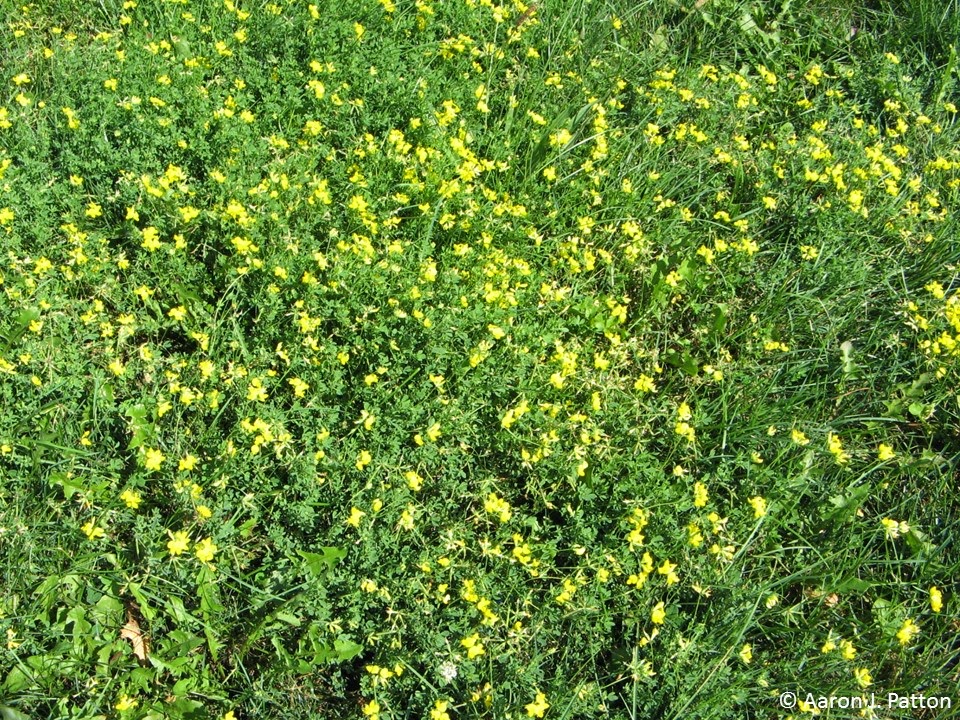
Biology: Birdsfoot trefoil (Lotus corniculatus) is a perennial broadleaf weed that is often found on drought-prone and low-fertility soils. It germinates from seed primarily in the spring but sometimes in the fall depending on temperatures. The plant quickly spreads into large colonies by developing stolons and rhizomes during the fall months which allow for dieback of the above-ground tissue during the winter and eventual emergence of the plant the following spring. Its perennial growth habit, along with its ability to survive multiple soil types and moisture regimes, make birdsfoot trefoil a common turfgrass weed throughout the United States, especially in low-maintenance sites.
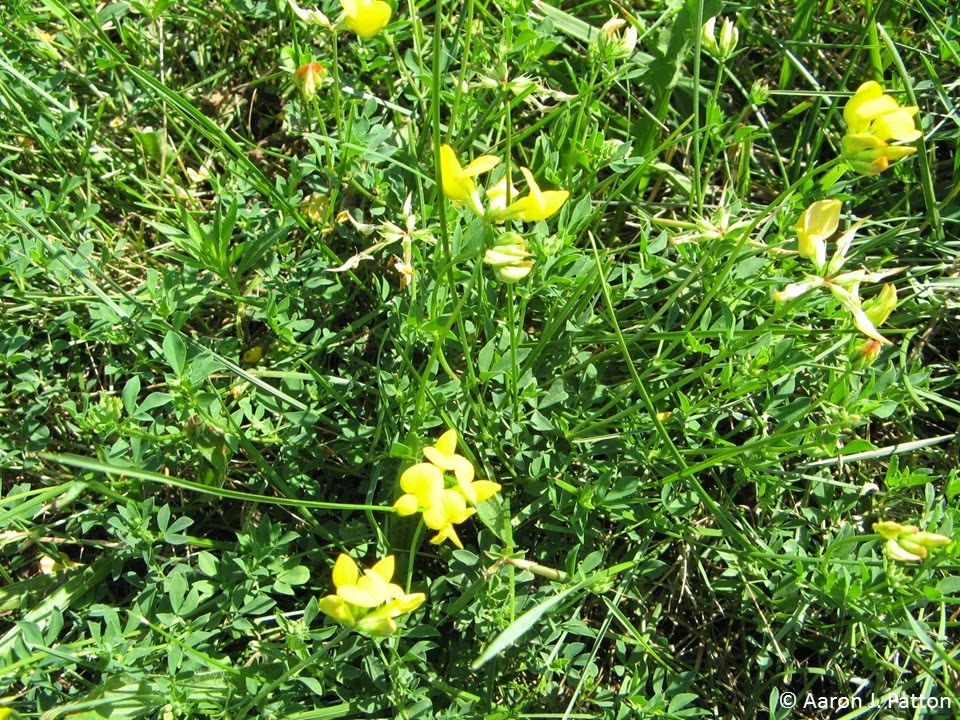
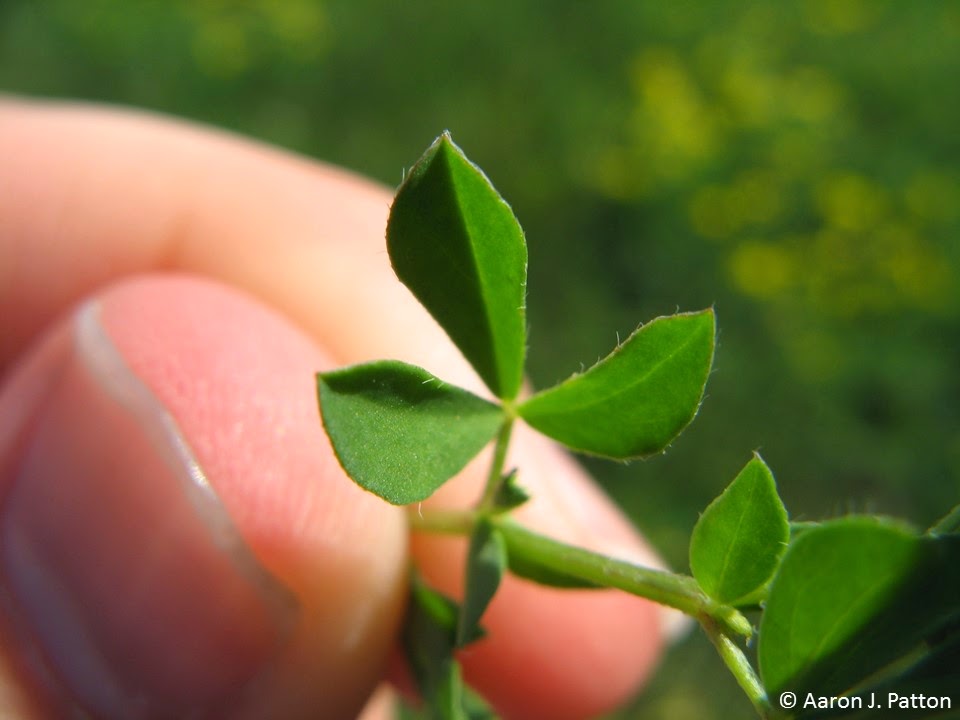
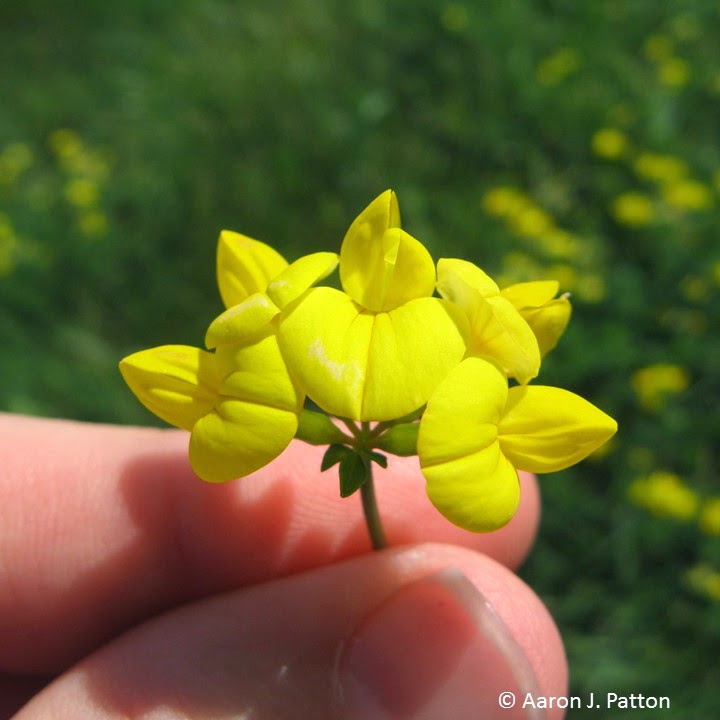
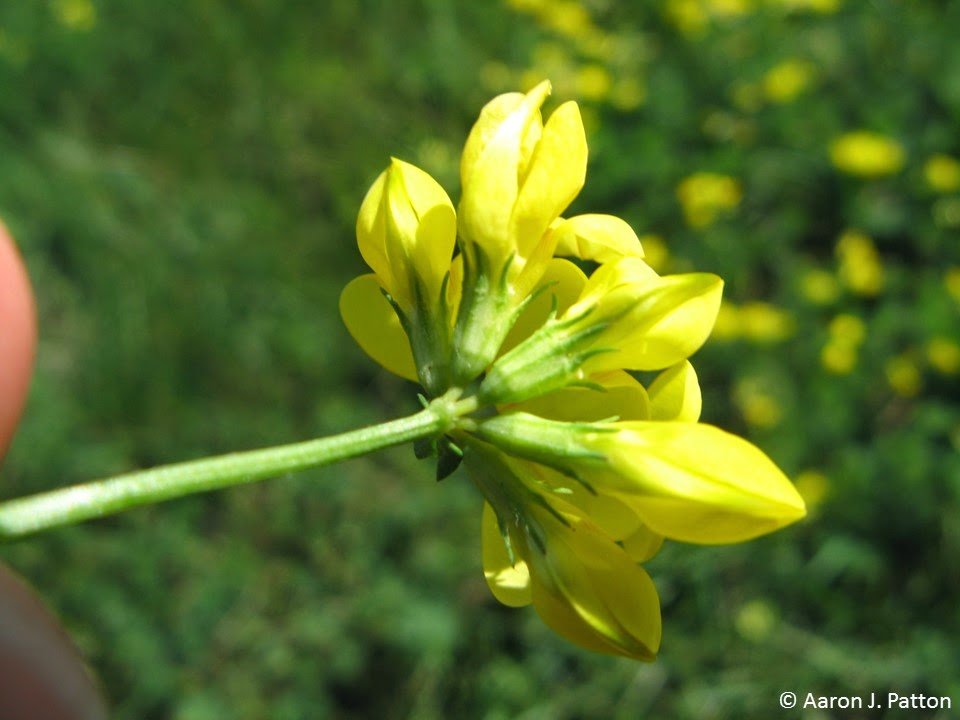
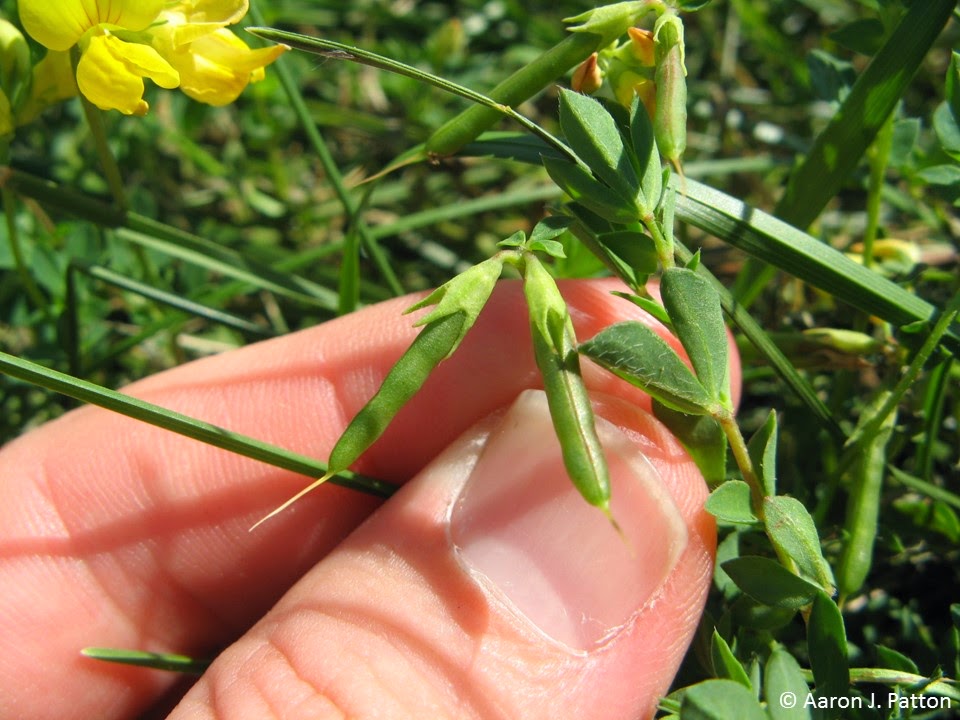
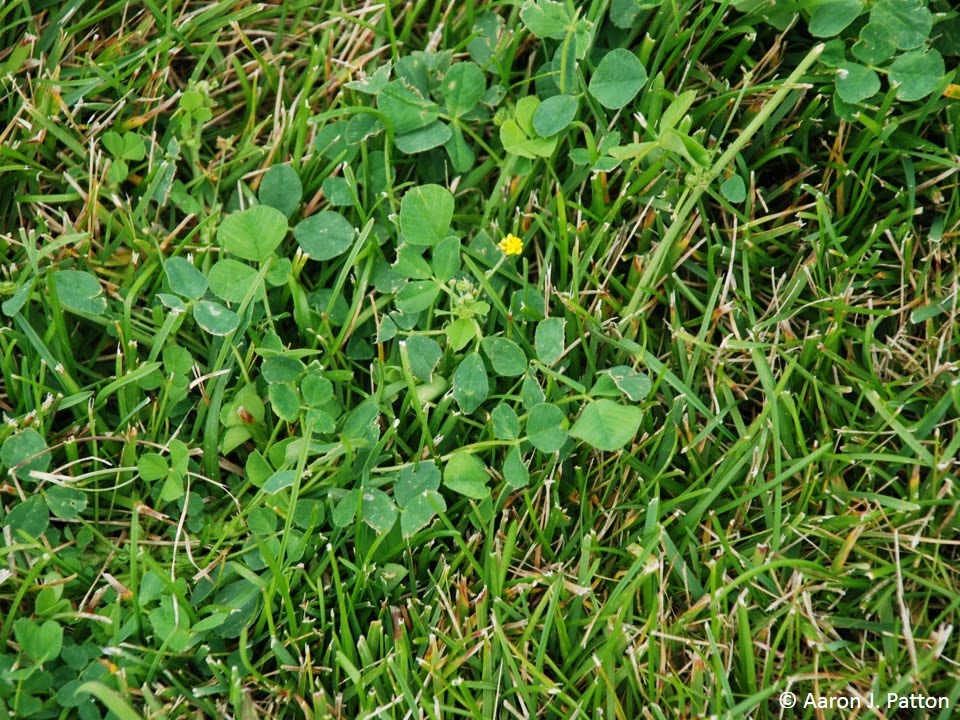
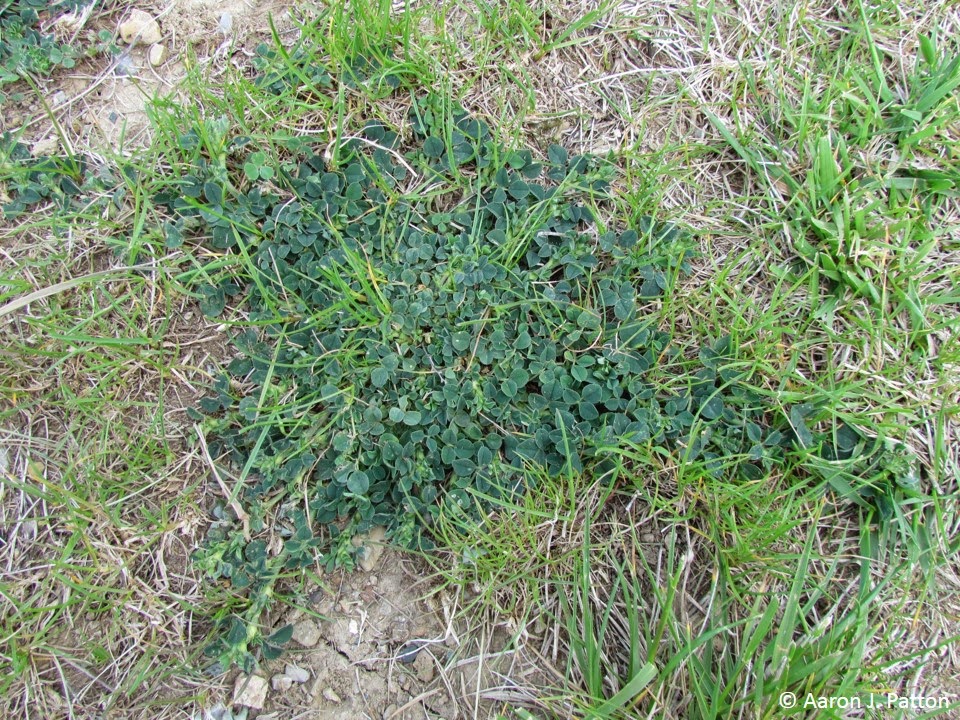
Identification: Birdsfoot trefoil is a low-growing perennial broadleaf weed . It has a prostrate growth pattern, meaning that it spreads throughout the turf canopy via mat-like stolons and rhizomes. Also referred to as cat’s-clover or devil’s-claw, birdsfoot trefoil is primarily identifiable by its unique-shaped leaves that alternate on the main stem, are trifoliate (3 terminal leaflets at the apex), and have two smaller (wing-like) leaves at the base of the leaves. Leaves can be oval- or oblong-shaped with a point at the apex and identifiable by its distinct blue-greenish color. The main stem is flat (partially square) shaped on the top, rounded on the base and can be sparsely hairy or smooth. Large, bright yellow flowers are produced in late June through the fall in open (clover-like) clusters. Eventually, fruit resembling pea pods develop that are arranged in the shape of a bird’s foot, thus explaining its common name. It may be mistaken for black medic or some clovers; however, birdsfoot trefoil has completely/or nearly entire (smooth) leaf margins. Though black medic also has yellow flowers, they are often smaller and more numerous (clusters) than birdsfoot trefoil flowers.
Cultural control: Proper turf such as adequate mowing heights, irrigation, and fertilization will help to produce a dense, aggressive turf which is the greatest defense against invading weeds. Birdsfoot trefoil often thrives in soils that are drought-prone or have low fertility; thus, fertilizing with nitrogen containing fertilizers will help reduce birdsfoot trefoil. Physical removal, such as hand-pulling or cultivation (e.g. hoeing) may also provide adequate weed management when populations are small. Although it is important to remove as much below-ground tissue as possible to prevent regrowth.
Biological control: None known for control of birdsfoot trefoil.
Chemical control: There are nonselective and selective control options available for birdsfoot trefoil postemergence (POST) control. Selective POST weed control on birdsfoot trefoil can be achieved with applications of herbicides containing 2,4-D + dicamba + MCPP as well as other herbicide mixtures. Herbicides that contain triclopyr (Turflon Ester) or triclopyr in combination with other herbicides can also control birdsfoot trefoil in cool season grasses.
Biology: Black Medic (Medicago lupulina) is a summer annual (or less commonly a winter annual) broadleaf weed that can be found throughout the United States. Seeds germinate in the spring and are capable of establishing in drought-prone or disturbed soils. Black medic is a legume, meaning that it has the capabilities to fix its own nitrogen; thus, allowing it to out compete turf in nutrient-poor soils as well. These factors, in combination with its ability to tolerate low mowing heights, make black medic a common weed in lawns and other high-maintenance turf throughout Indiana.
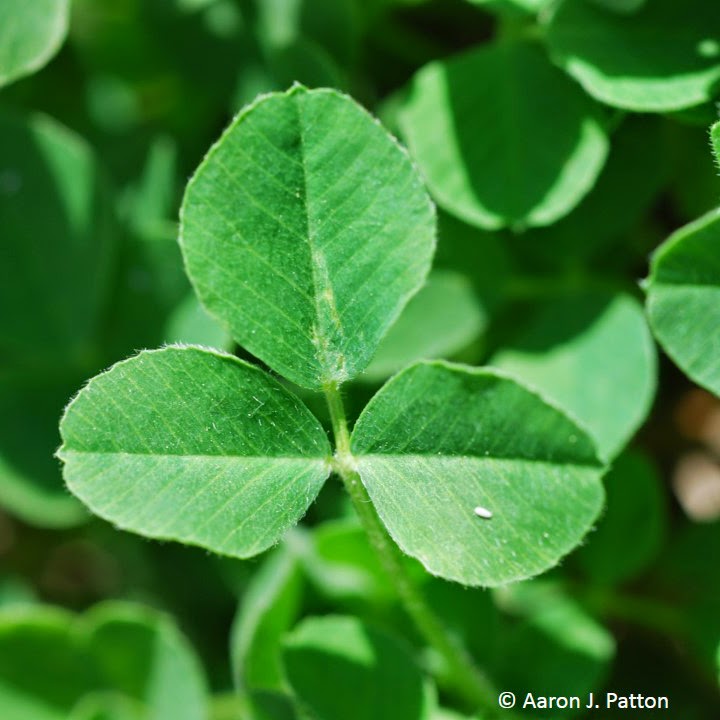
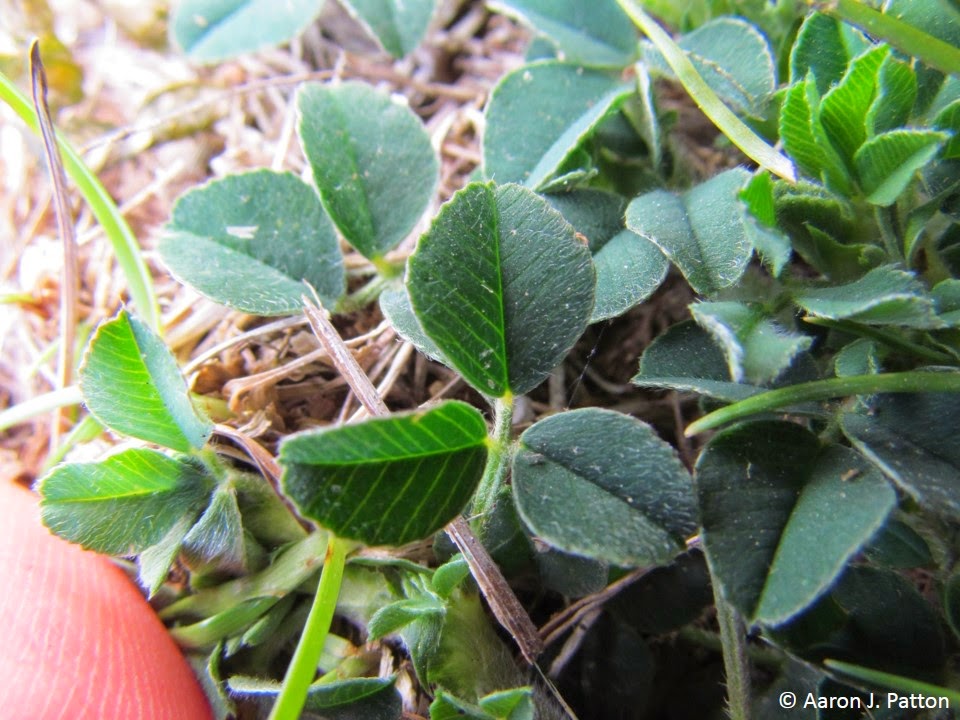
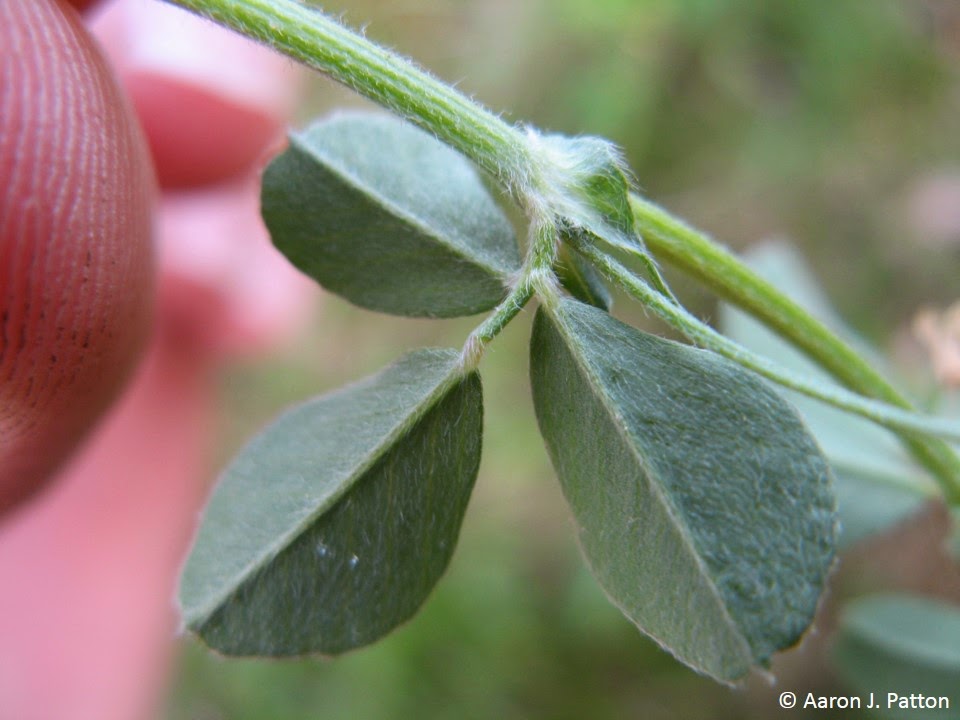
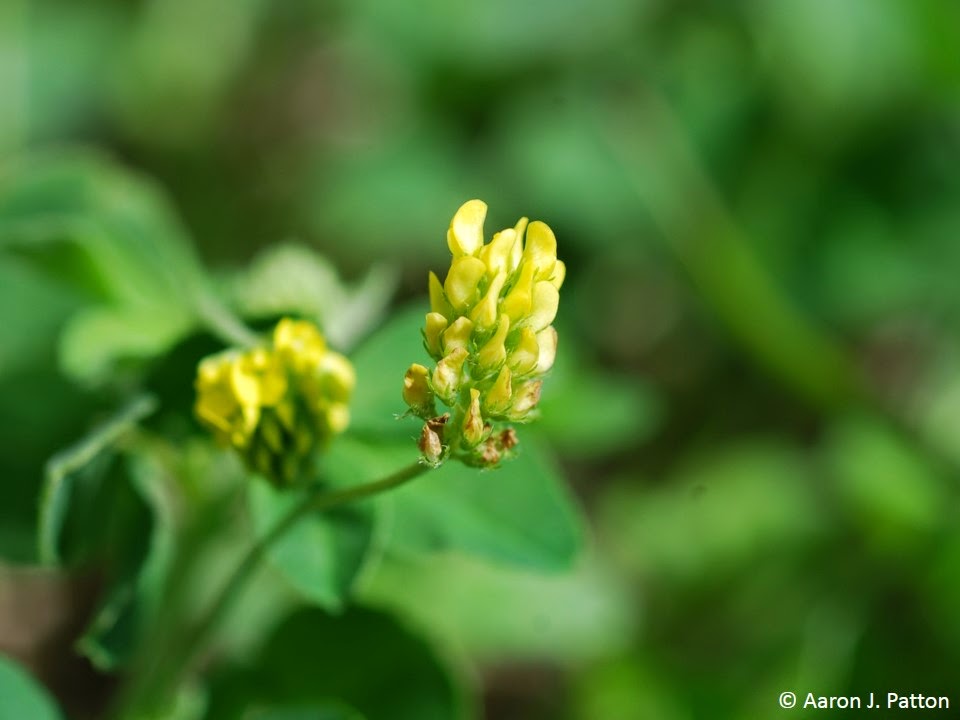
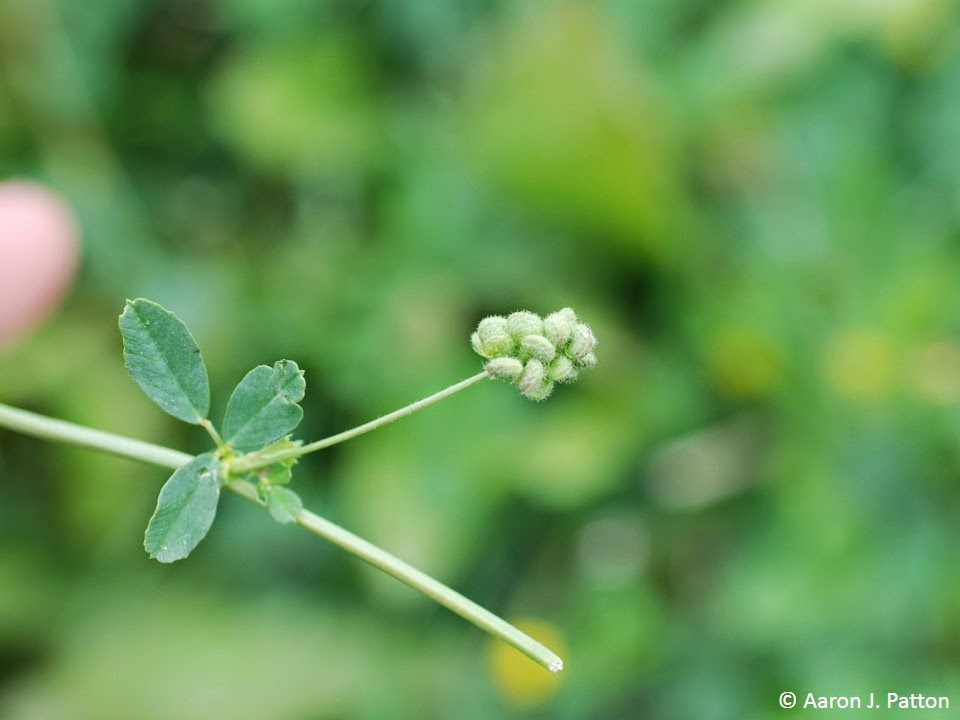
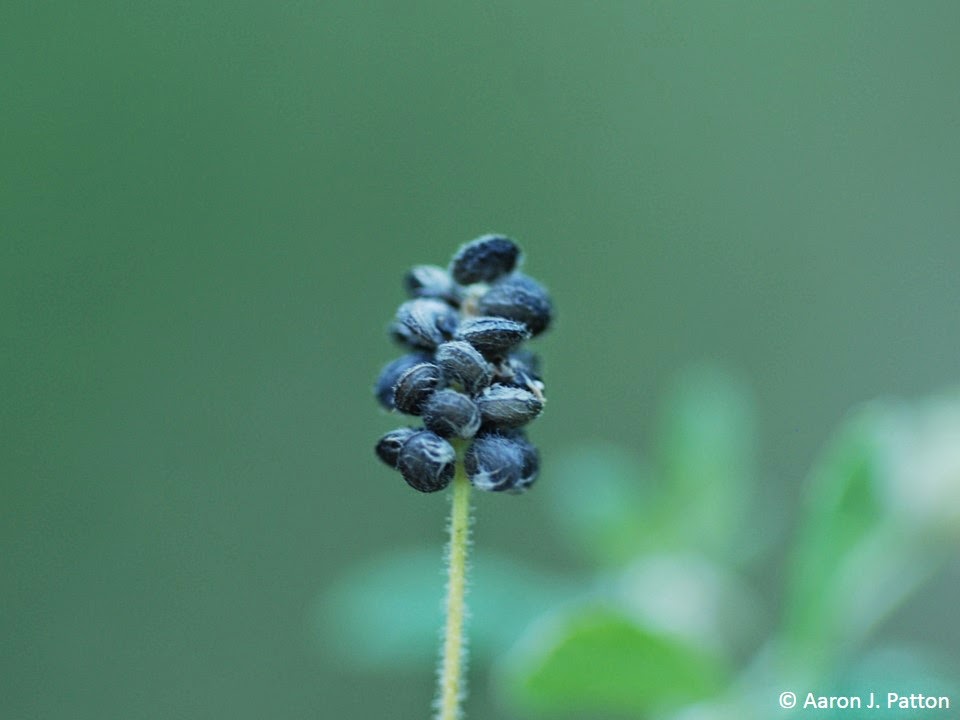
Identification: Black medic has low-growing, prostrate, somewhat square stems that extend underneath the turf canopy to lengths up to 2 feet long. Despite the production of these invasive stems, it germinates from seed in early autumn or spring. Black medic stems do not have the ability to root as they establish; however, the plant is well-anchored by a deep, central taproot. The leaves are trifoliate (3 leaves), dull green on the top, pale green below, wedge-shaped, as long as they are broad, toothed near the tip, and display a projecting tip or spur at the apex. Black medic can often be mistaken for oxalis (yellow and creeping woodsorrel) and white clover which also have very similar trifoliate leaf arrangements. However, the leaf stem (petiole) of the center leaf in black medic is slightly longer than the two lateral leaves, thus distinguishing it from oxalis and white clover. Black medic produces a very tight, compressed cluster of small yellow flowers in the spring and until the fall. Once the flowers mature, they form a very tightly coiled black seedpod, hence the name ‘black medic’.
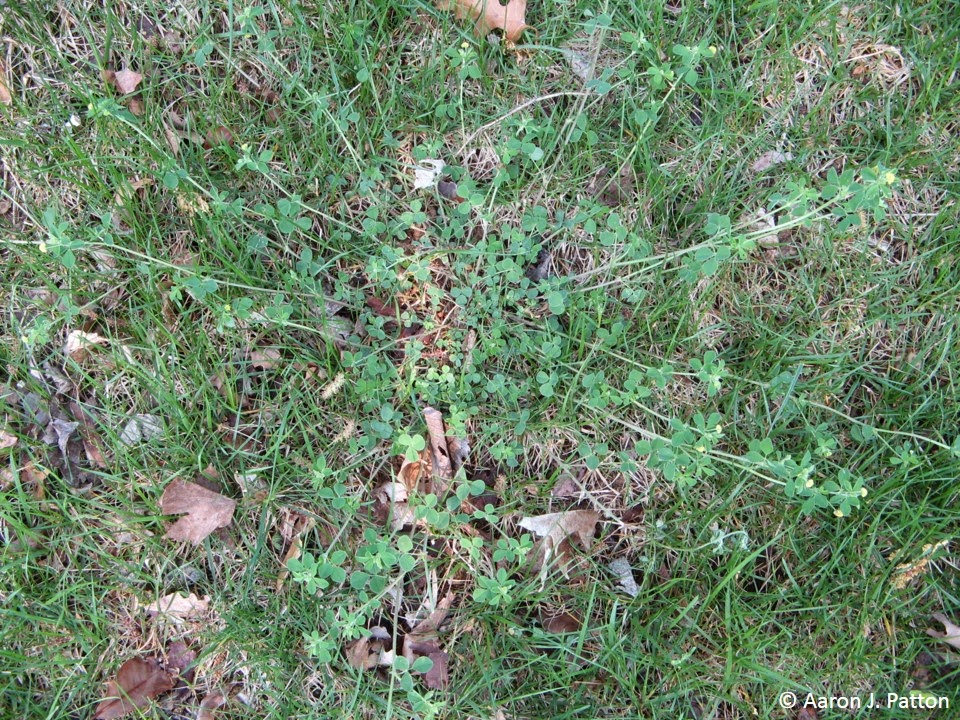
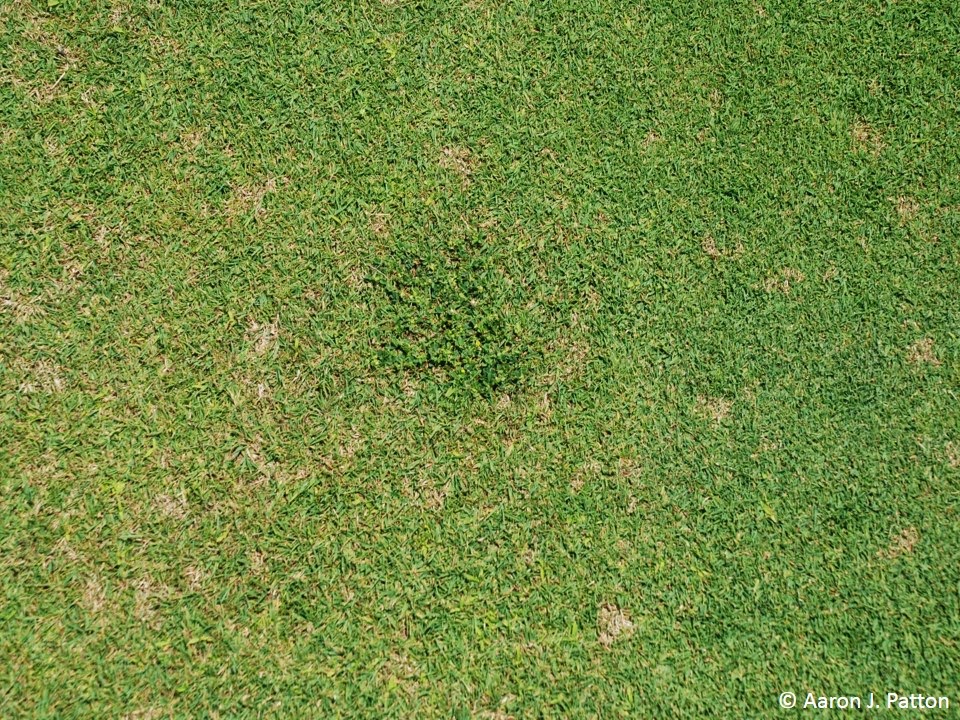
Oblong leaves are as wide as they are long. With a notch (spur) at the leaf tip.Trifoliate (3-leaves), wedge shaped leavesCenter leaf has a longer petiole (leaf stem) than the two lateral leavesSmall cluster of yellow flowersImmature seedpodCluster of blackened mature seedpodsSpreads by low-growing prostrate stemsBlack medic can tolerate low mowing heightsBlack medic invading cool-season turfPresence of black medic could indicate dry soils or low fertility
Cultural control: The use of cultural practices to increase turf competition may help to manage invading weeds like black medic. Black medic is not shade tolerant, therefore the development of a thick, dense turfgrass canopy may improve competition. Additionally, black medic is a legume capable of fixing its own nitrogen; as a result, adequate nitrogen fertilization techniques will help to manage the weed and further develop a more competitive turf. The presence of black medic in the field may also indicate a particularly dry soil in need of irrigation. Black medic can also be easily pulled by hand if populations are small enough, though it is important to remove as much of the taproot as possible. Hand-weeding should be done when the plant is in the early growing stages, especially before it produces viable seed.
Biological control: None known for specific use in black medic. There are some organic postemergence herbicides available for turf weed control such as pelorgonic acid (Scythe), acetic acid (5% or greater solutions), and medium-length fatty acids (Eugenol); however, these products do not differentiate between the target weed and the desired turf (non-selective). As a result, these products are often used as spot treatments for weed control in parking lots, along fence rows, and in other bare-ground areas. Other organic products that contain essential micronutrients such as iron HEDTA (FeHEDTA), may be used to manage black medic; however, their ability to control black medic has not been adequately researched.
Chemical control: Chemical management of black medic is generally focused on a postemergence strategy over a preemergence strategy. The best postemergence management strategy is to apply two- or three-way mixtures of 2,4-D, dicamba, MCPP, or MCPA. Other options for selective control may include products such as Turflon Ester (triclopyr) or Drive (quinclorac) which may require multiple applications for adequate control.
Biology: Broadleaf plantain (Plantago major) is a perennial, broadleaf weed that can be found in nutrient-poor soils; however, they prefer nutrient rich-soils that are moist and often high in calcium. Broadleaf plantain is a common weed in turfgrass, nurseries, and landscapes as it can tolerate very low mowing heights. It germinates from seed in late spring through mid-to-late summer and occasionally in the fall depending on temperature and moisture. It has a low growing rosette habit and tolerates close mowing. It’s ability to surve a range of environments make broadleaf plantain a common turfgrass weed in North America.
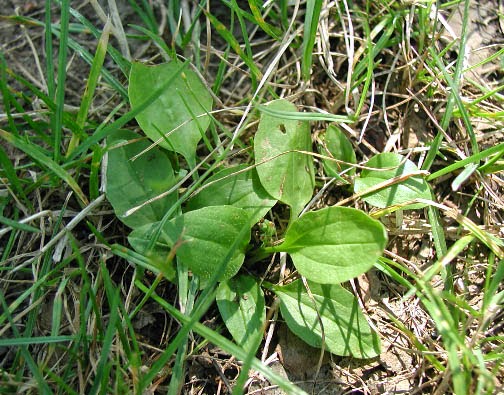
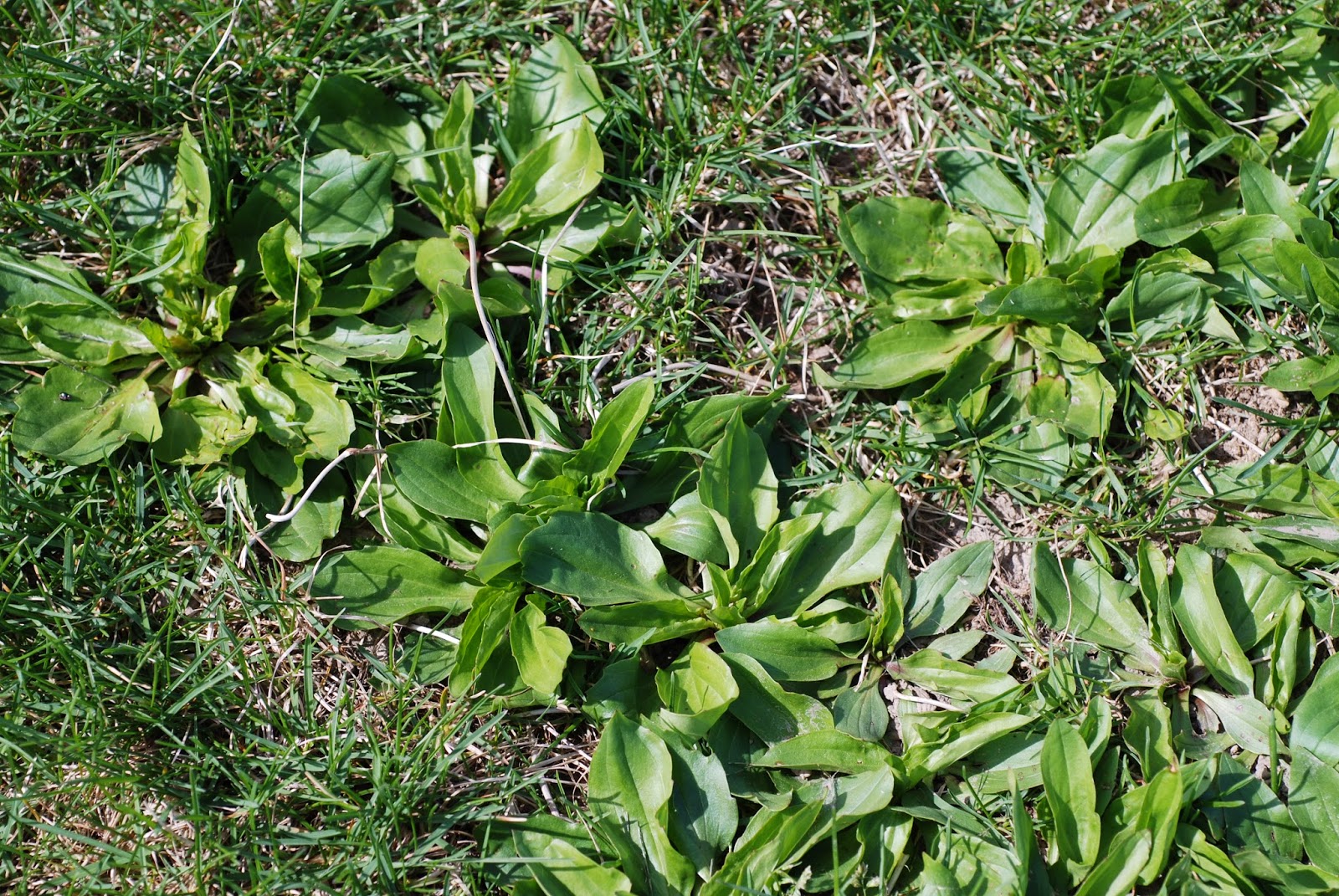
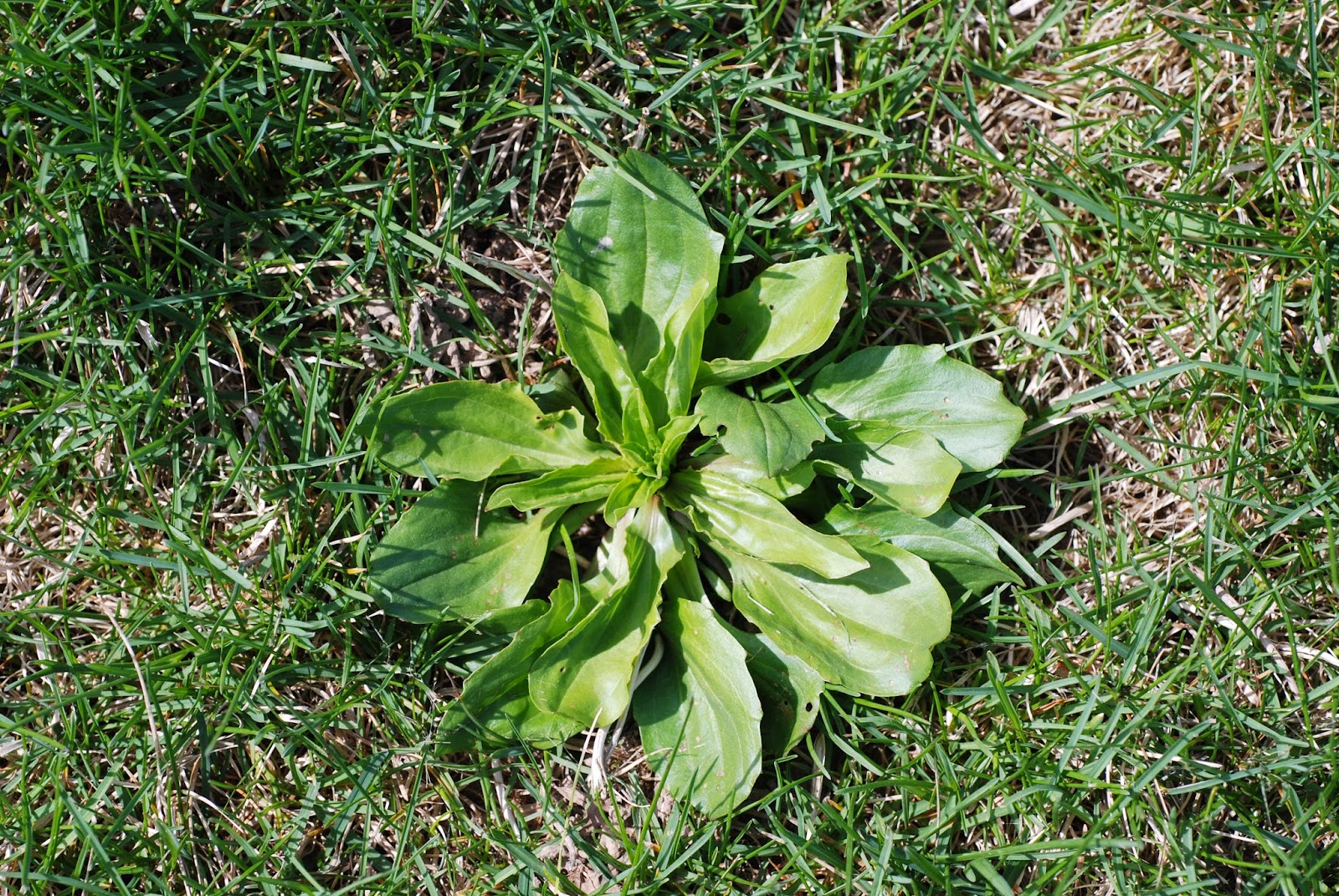
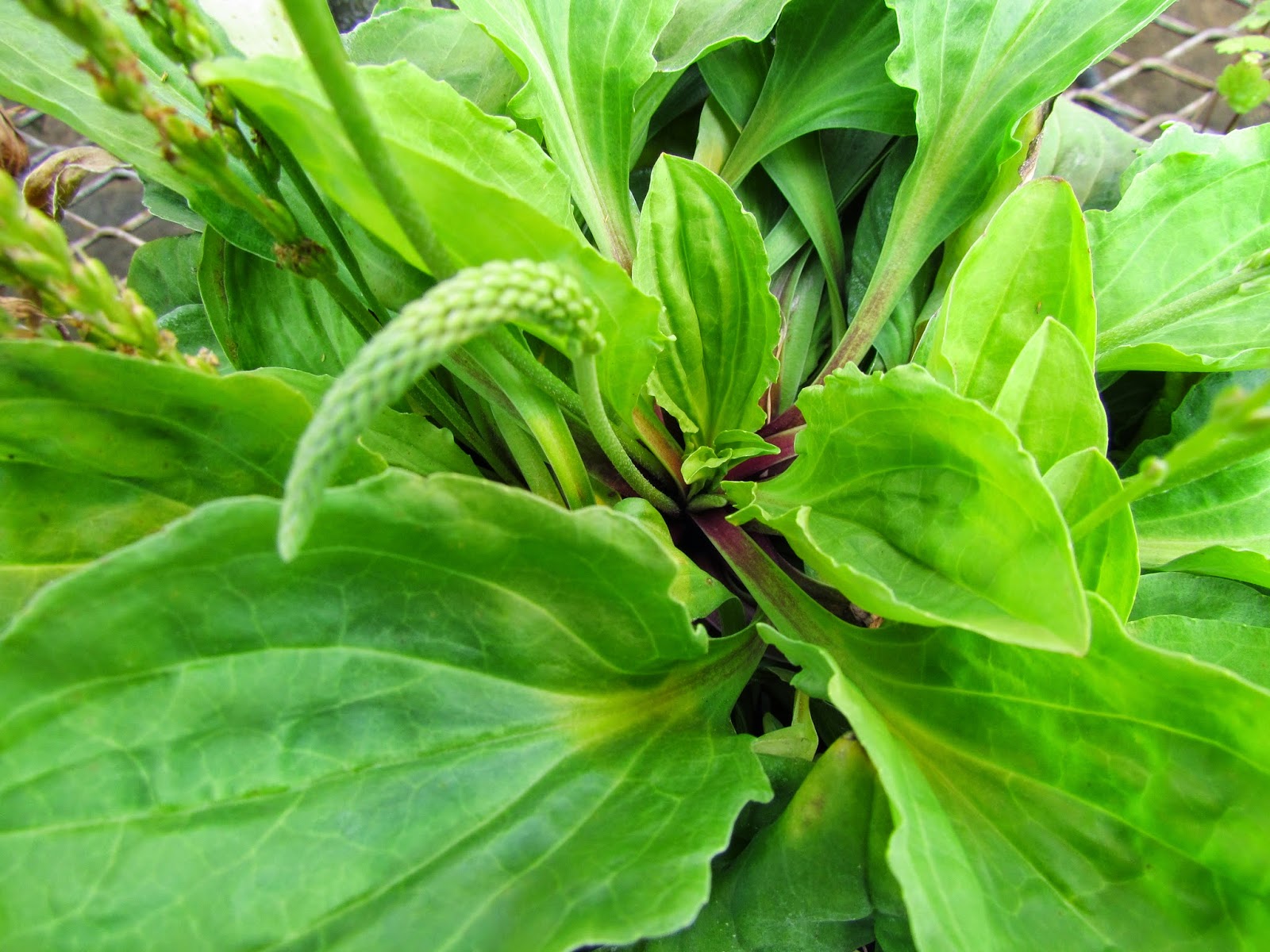
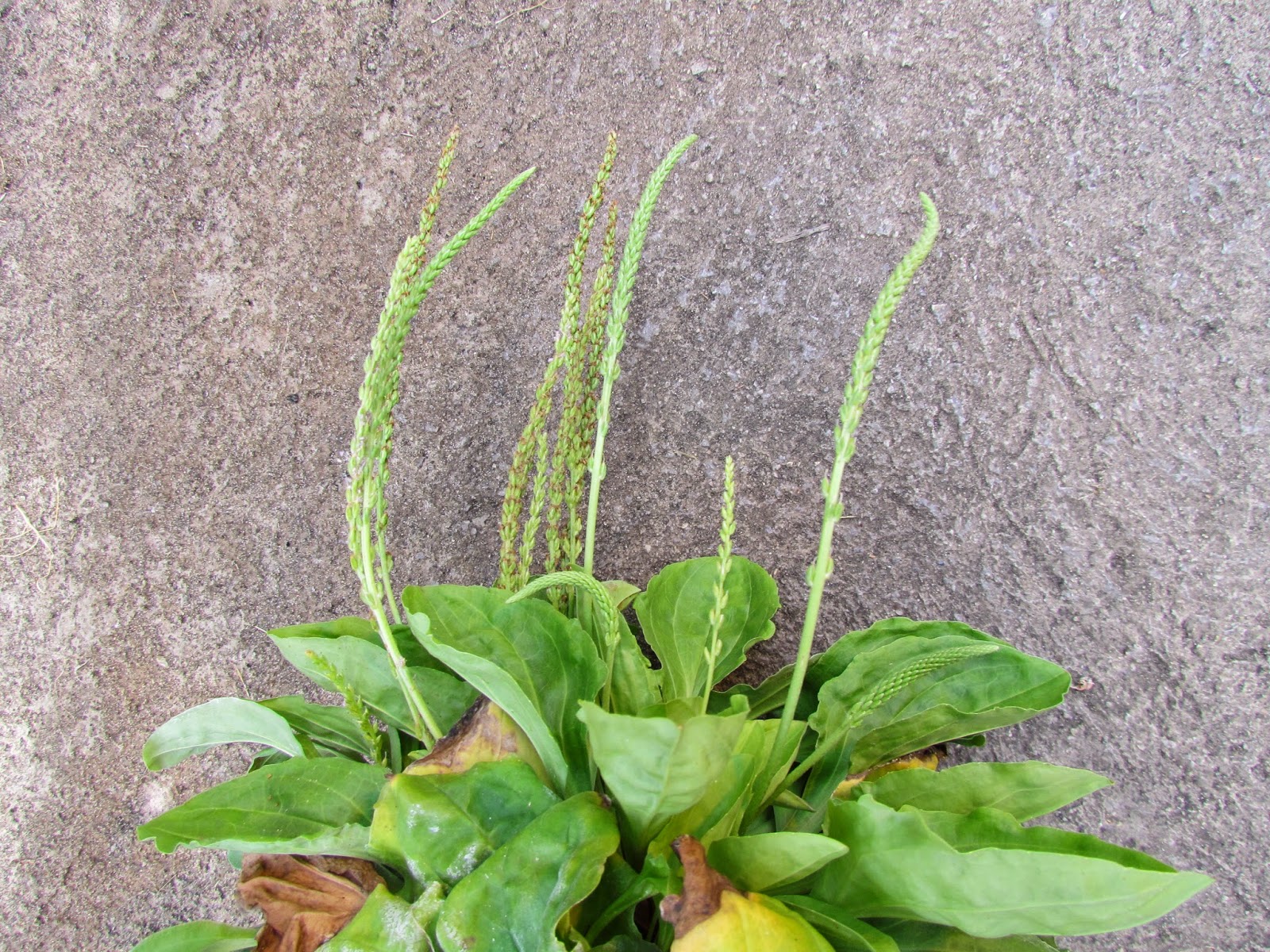
Identification: Broadleaf plantain is anchored primarily by fibrous roots. Some describe the root system as having a central, short taproot with branched-out fibrous roots but my experience is that large, fibrous roots are common and that taproots (especially large taproots like a dandelion) are very uncommon. Broadleaf plantain grows with a rosette habit with leaves that can grow flat along the turfgrass canopy or more erect and upright depending on mowing practices. The plant produces leaves that form on long, broad leaf-stems (petioles) that may grow up to six inches long and four inches wide when left unmown or untreated. Young leaves are oval to egg-shaped, generally have 3-5 prominent veins, and are light green in color. As the plant matures, the leaves start to appear darker green, can be smooth or slightly hairy, and abruptly narrowing to the petiole (leaf stalk). Very prominent leaf veins run parallel to the margin and appear to originate from the attachment point at the petiole. Leaf margins are smooth (entire) and appear more crinkled and wavy as the plant matures. Though the leaves can appear waxy and dark- to bluish-green, the petioles often have a reddish color towards their base, or the origin point of the rosette. Broadleaf plantain can produce flowers from June through September on long, leafless flower-stalks that arise from the center of the rosette. Small, whitish petals emerge from the flower-stalk where seeds are produced in an oval-shaped capsule which can contain up to 30 viable seeds. It may often be confused with blackseed plantain (Plantago rugelii) which is similar in appearance. Additionally, it is thought that many plants characterized as broadleaf plantain may in fact be natural crosses between Plantago major and Plantago rugelii.
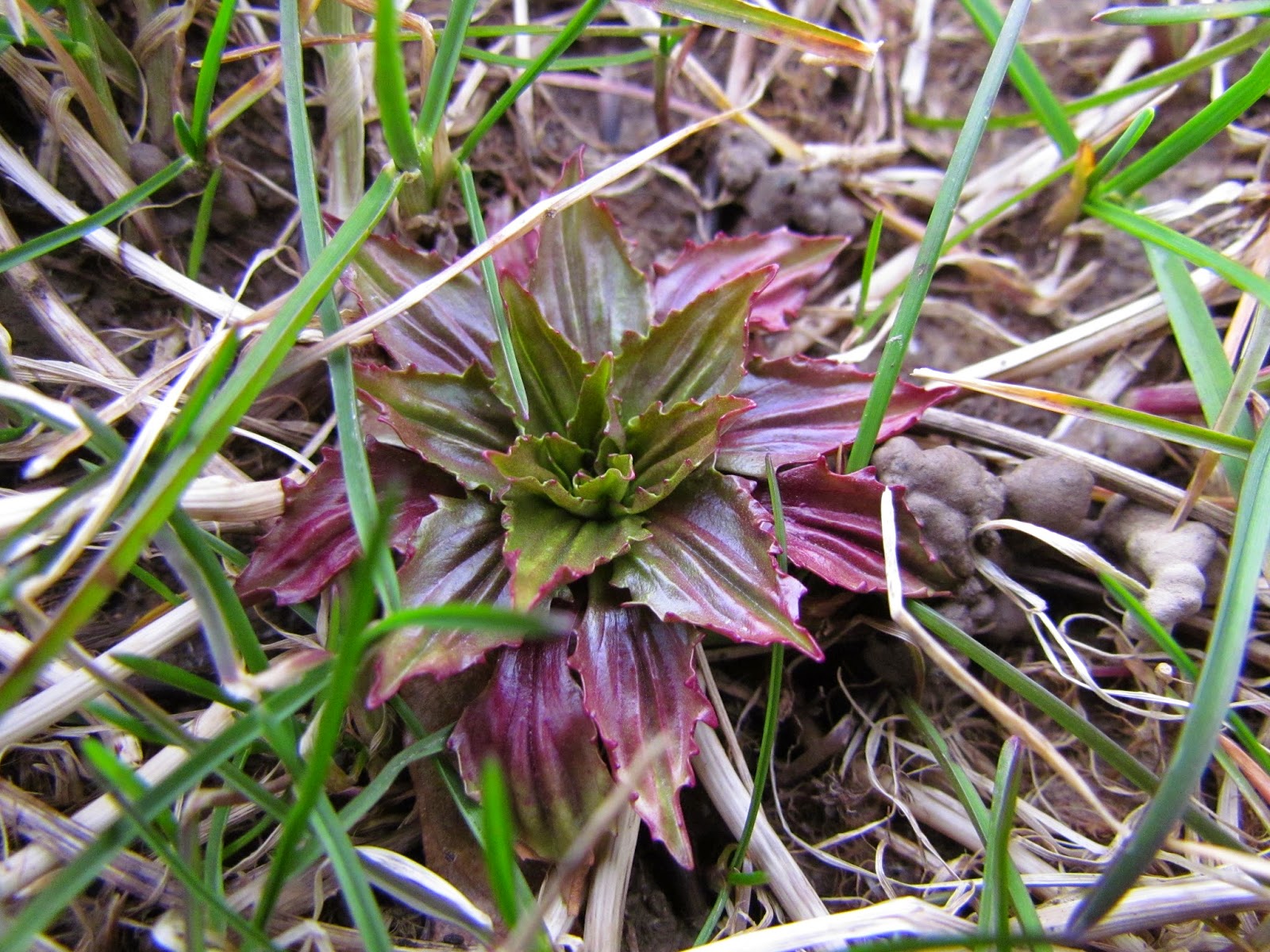
Broadleaf plantain appearance in early spring. it will regrow all its leaves each spring. The purple coloring here is in response to cool, spring temperatures.
Cultural control: None known specifically for broadleaf plantain. Since its primary method of dispersal is through seed, control or removal of the plant prior to seed production could reduce the spread of this weed. However, mowing practices alone to remove the seed stalks will not provide adequate management since the plant can produce viable seed at low mowing heights (produces viable seed at about 2 inches and taller heights of cut). Proper turf management such as higher mowing heights, irrigation, and fertilization will help to produce a dense, aggressive turf which is the greatest defense against invading/germinating weeds. Broadleaf plantain thrives in compacted soils, moist or dry soils, and shady conditions. Some research suggests as well that this plant prefers high calcium soils, but high calcium soils are a common phenomenon in North American because the soil parent material is limestone. Plants can be removed by hand-weeding if there are only a few on the property.
Biological control: None known specifically for broadleaf plantain. Many new organic products contain the active ingredient iron HEDTA (FeHEDTA). Multiple applications of this product are required for control. FeHEDTA containing products injure turf less (can actually make turf darker green), but their efficacy for weed control is yet to be well documented.
Chemical control: Broadleaf plantain can be chemically controlled with several products such as repeat applications of two- or three-way mixtures of 2,4-D, dicamba, MCPP, or MCPA which are available in multiple formulations at local retailers. 2,4-D is the active ingredient that does most of the work in these mixtures. Herbicides that contain triclopyr (Turflon Ester) or triclopyr in combination with other herbicides, such as 2,4-D, can also provide good broadleaf plantain control in cool-season grasses.
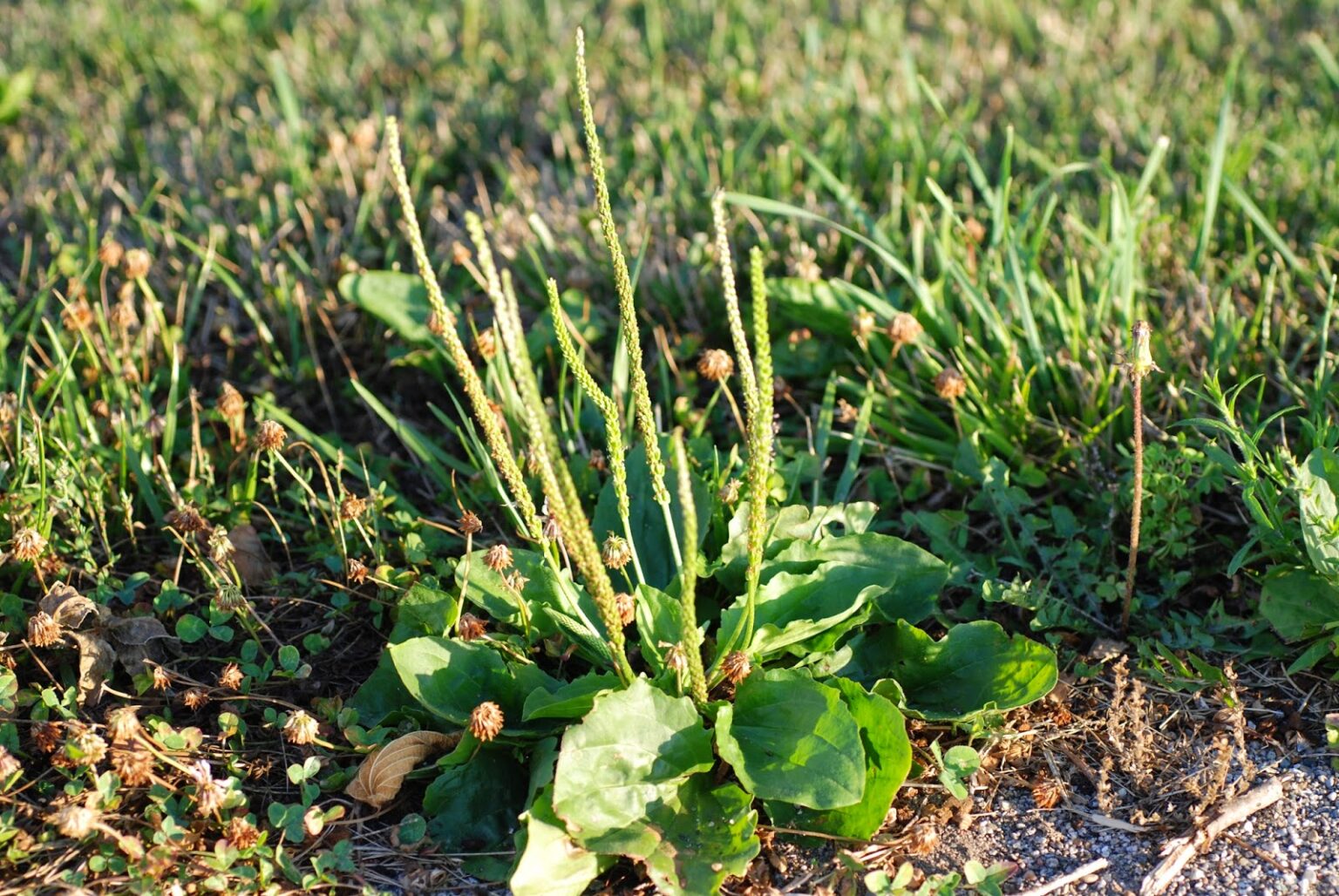
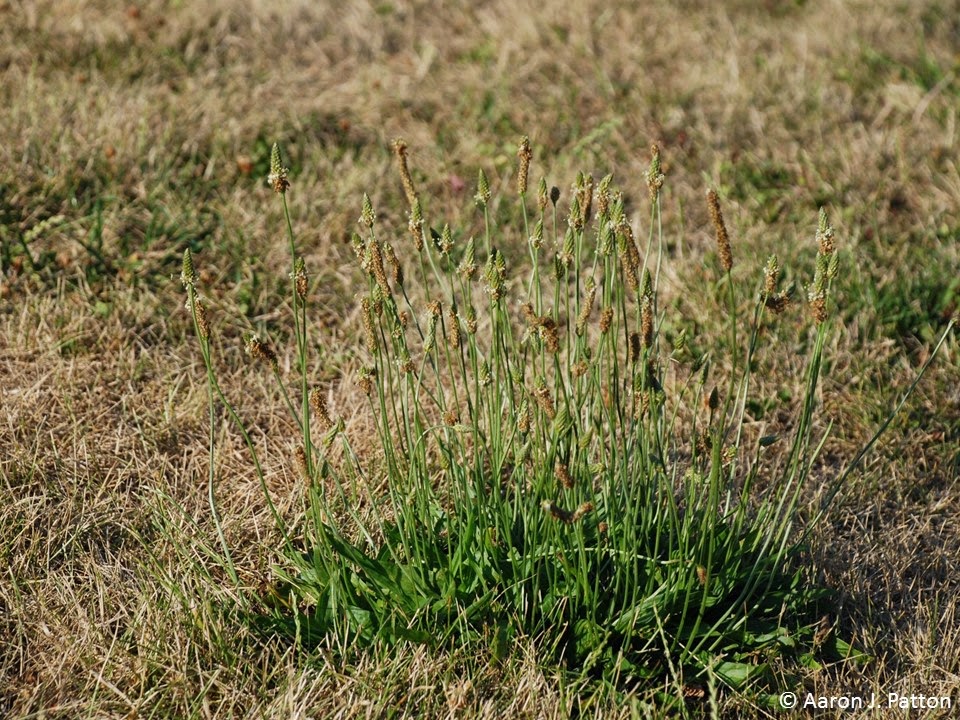
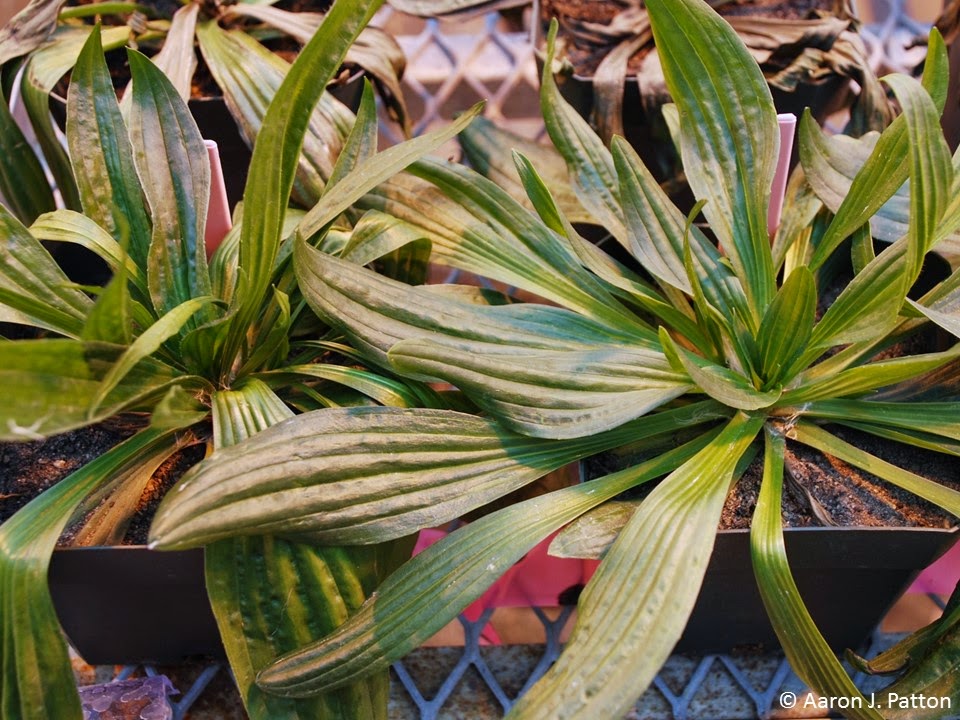
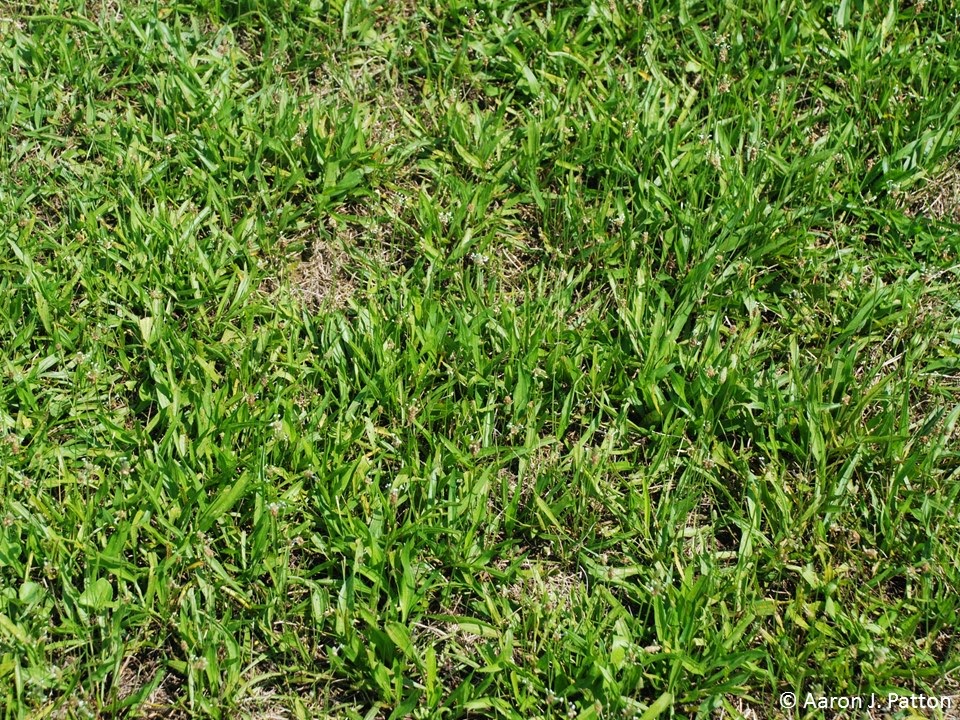
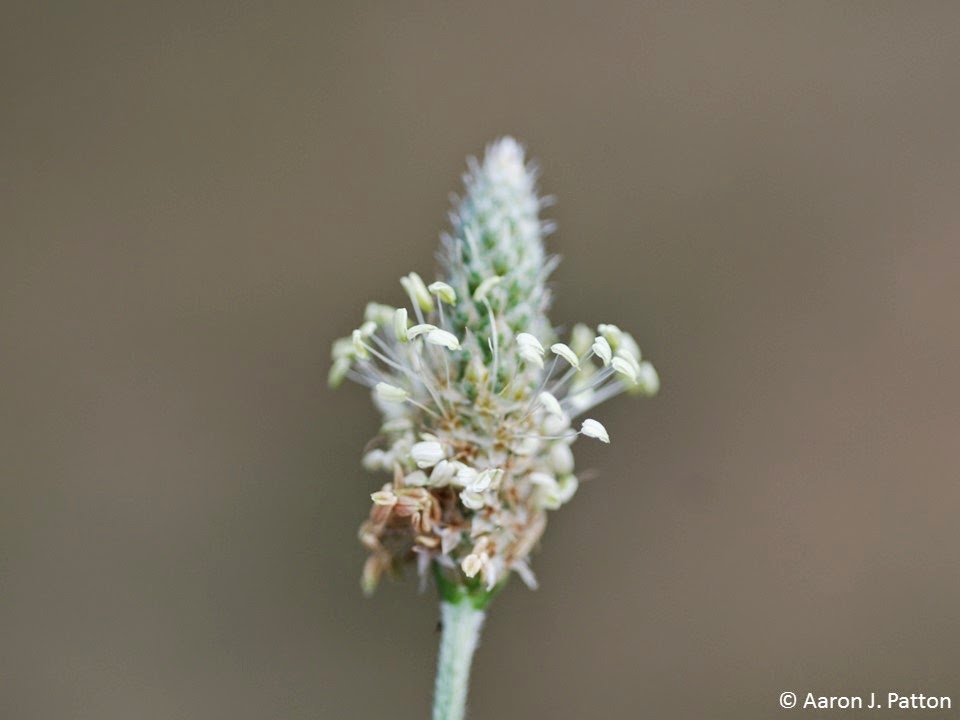
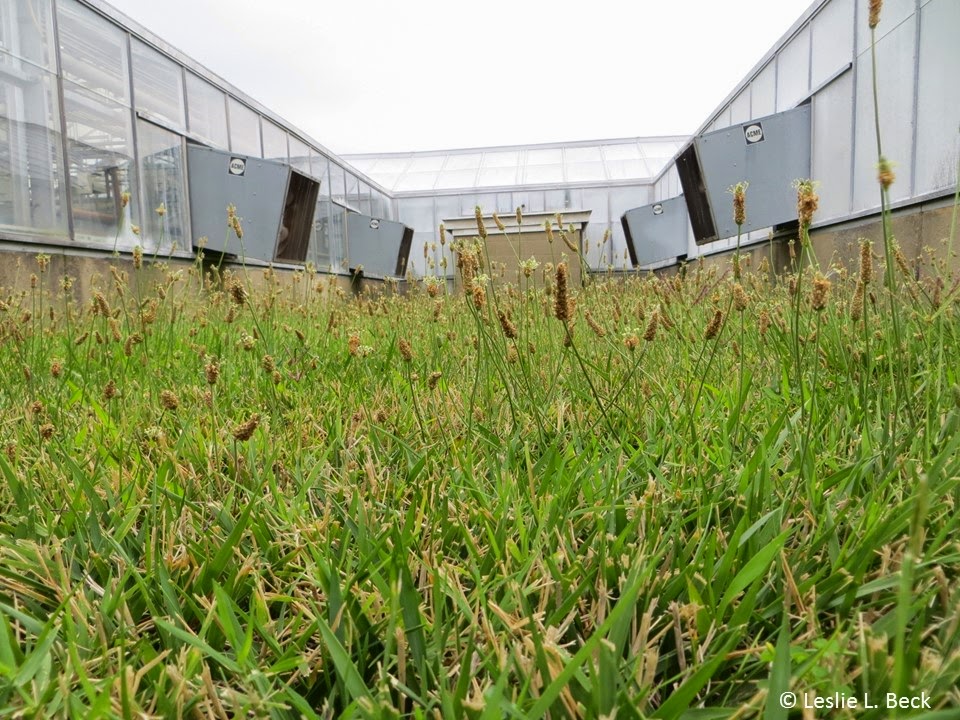
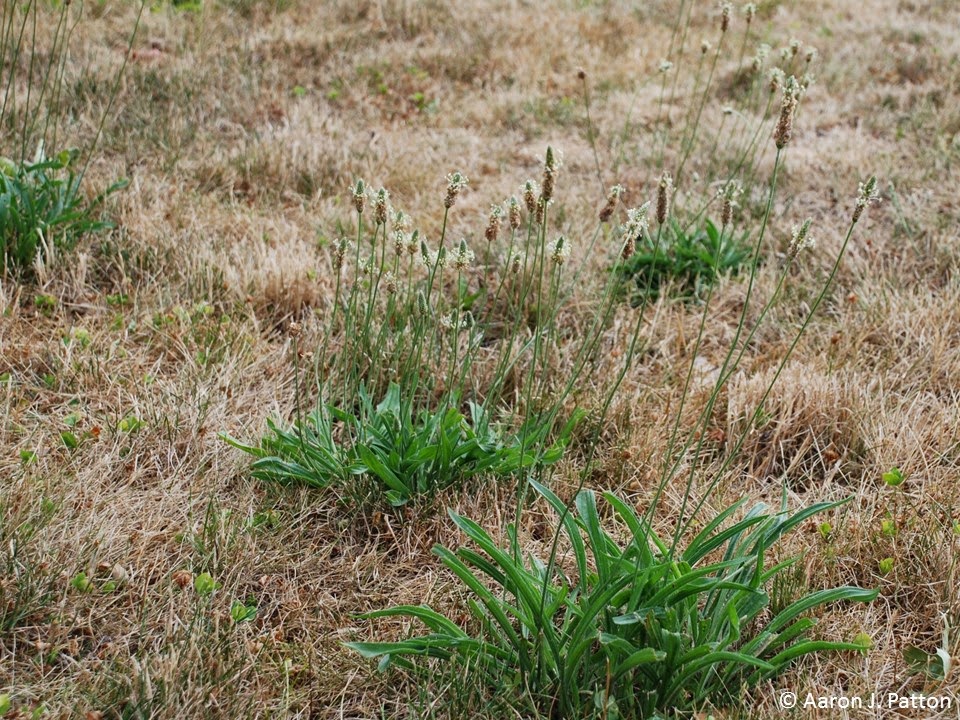
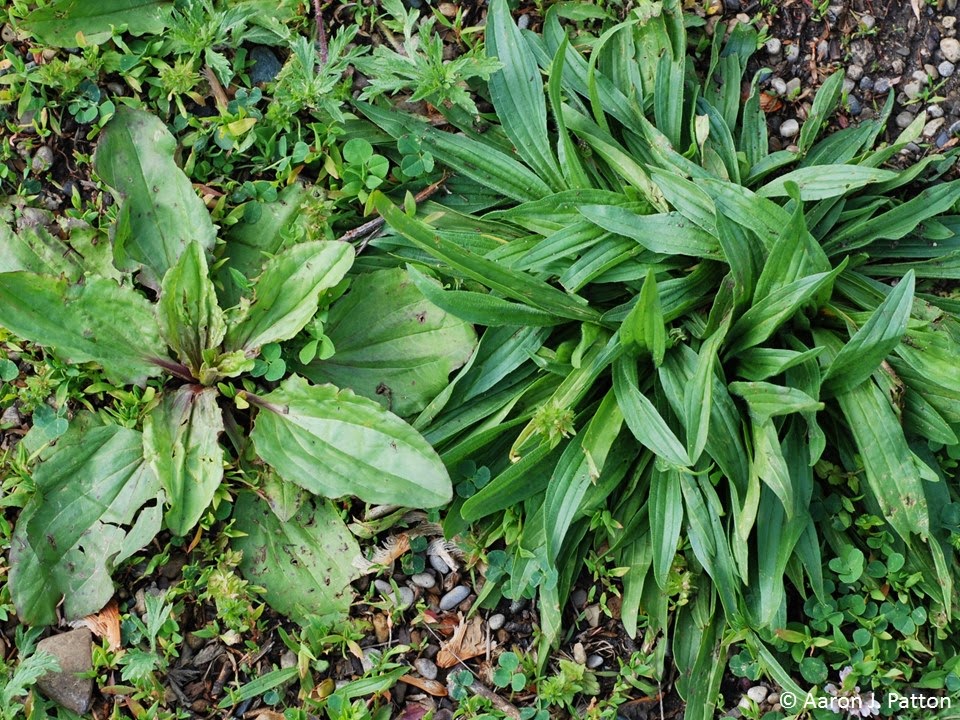
Biology: Buckhorn plantain (Plantago lanceolata) is a perennial broadleaf that can be found in sites that are typically dry and consist of neutral to basic soils. Like the closely-related broadleaf plantain (Plantago major), buckhorn plantain can often be found in compacted soils but does not tolerate injury from constant traffic stress. It germinates by seed typically in spring or fall. Seeds have the ability to germinate in relative darkness and can successfully establish and develop into a mature plant; even when surrounded by tall, dense turf. These factors, coupled with its ability to survive low mowing heights, make buckhorn plantain a common weed in low or high maintenance turfgrass. Identification: Buckhorn plantain is a perennial broadleaf weed that can be found in high and low-maintenance turf throughout the Midwestern United States. The plant produces a dense network of fibrous roots. Buckhorn plantain forms a central, basal rosette. Though it is a broadleaf weed, the first leaves (cotyledons) of the germinating plant are grass-like in appearance and are hairy only on the outer edge of the leaf (margins). As the plant matures, leaf clumps remain in a basal rosette; however, mature plants have the ability to produce multiple clumps all originating from the same crown. The leaves are spear- (lanceolate) to narrowly oval-shaped, are widest at just above the middle point of the leaf length, and are often twisting or heavily curled. Very prominent leaf veins run parallel to the leaf margins which may be entirely smooth or slightly toothed. These leaf veins form prominent ridges that can be easily seen and felt along the lower surface of the leaf. Leaf blades are generally smooth, but can occasionally have long, silky hairs at the base, and are bright to dark-green in color. In a taller turfgrass canopy, the leaves can grow more erect. As the mowing decreases in height and increases in frequency, leaf growth will be more prostrate along the surface of the turfgrass canopy. Small white flowers can be seen branching from dense, cone-shaped seedheads held aloft on an erect, leafless, hairy stalk from June throughout September. In yards that are infrequently mown in the Midwest, the appearance of hundreds of erect buckhorn plantain seed stalks can increase the look of a ‘weedy’ lawn during the summer months. Buckhorn plantain may be confused with bracted plantain (Plantago aristata); however, it has narrower, and hairier leaves and lack the deep, prominent leaf-vein ribs that are characteristic of buckhorn plantain. Buckhorn plantain may also be confused with broadleaf plantain; however, broadleaf plantain has much longer spike-inflorescence (not cone-shaped) and leaf veins appear to originate from a very distinct attachment point to a long, broad leaf-stem (petiole). Buckhorn plantain leaves originate from a very short stem which forms the basal rosette.
Buckhorn plantain grows in clumps of leaves which originate from a central rosette.Buckhorn plantain leaves have parallel leaf veins that form very deep, prominent ridges.Dense population of buckhorn plantain.Cone-shaped seedhead with small white flowers.Dense groups of seedhead can often appear in lawns that are infrequently mowed. These seedheads can make lawns look very ‘weedy’, even from a distance.Multiple clumps of bright green buckhorn plantain leaves in a droughty cool-season lawn.Though the plants are related, the leaves of broadleaf plantain (left) are much more broad with leaf margins that originate from the leaf stem (petiole). Buckhorn plantain leaves (right) are more narrow with seemingly parallel leaf venation.
Cultural control: None known specifically for buckhorn plantain. Since its primary method of dispersal is through seed, control or removal of the plant prior to seed production is crucial for deterring the spread of the weed. However, mowing practices alone to remove the seed stalks prior to germination will not provide adequate management since the vegetative portion of the plant can tolerate very low mowing heights. Additionally, since multiple plant clusters can originate from the same crown, it is possible to hand-weed buckhorn plantain; however, it is crucial to remove the crown to prevent regrowth.
Biological control: None known specifically for buckhorn plantain.
Chemical control: Both buckhorn and broadleaf plantain can be chemically controlled using similar herbicide products. Repeat applications of two- or three-way mixtures contianing 2,4-D, MCPP, or MCPA are available in multiple formulations at local retailers and can provide adequate control of buckhorn plantain. Additionally, herbicides that contain triclopyr (Turflon Ester) or triclopyr in combination with other herbicides, such as 2,4-D, can also control buckhorn plantain in cool-season grasses. For best results, herbicides should be applied when buckhorn plantain is actively growing. Follow the directions on the product label for suggestions on improving herbicide efficacy through mowing and irrigation practices prior to- and following the herbicide application.
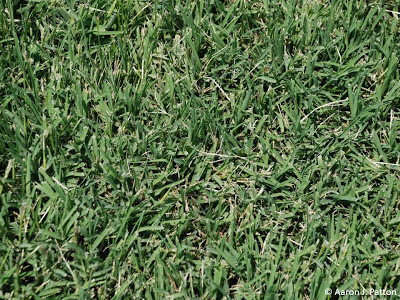
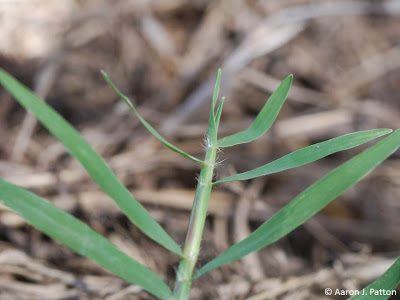
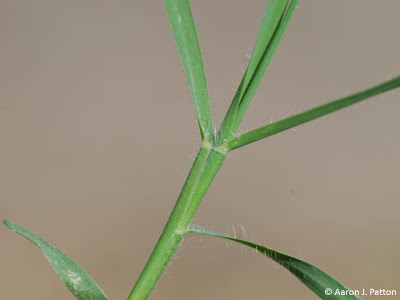
Biology: Common bermudagrass (Cynodon dactylon) is the most commonly used turfgrass in the southern United States, but it is also a difficult-to-control weed in northern turf. Bermudagrass is a drought tolerant, warm-season, perennial grass species that tolerates low mowing and actively spreads vegetatively by both rhizomes and stolons but also has the ability to spread by seed.
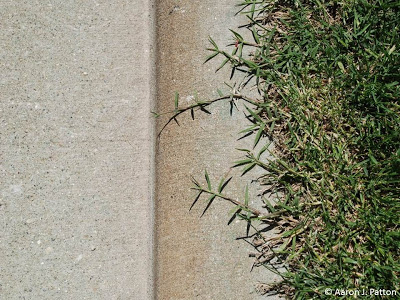
Identification: Bermudagrass has a blue-green leaf and forms large patches in lawns as it spreads radially from rhizomes and stolons once it becomes established. The stolons can be easily spotted spreading over sidewalks and drives.
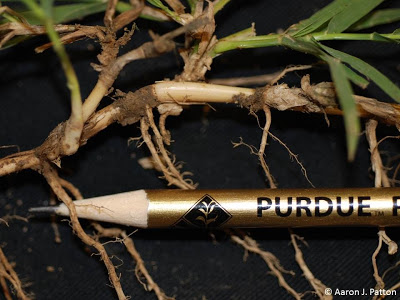
Stolons of bermudagrass are visible creeping over a street curb.Bermudagrass rhizomes are thick and can be found in the soil.
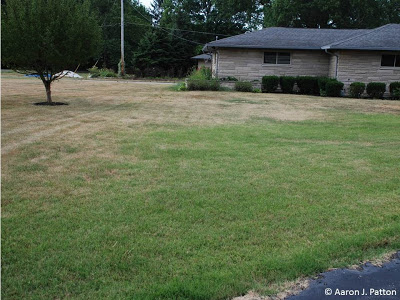
The patches are easily noticed in the summer months when cool-season turf is stressed by heat or drought. Patches are also noticeable in the early morning as bermudagrass holds a heavy dew on its leaves in the early am. In the winter months, bermudagrass is apparent as brown, dormant areas of turf.
Green bermudagrass is apparent in this drought stressed cool-season turf.Green bermudagrass is apparent in this drought stressed cool-season turf.Heavy dew on a small bermudagrass patch.Green cool-season turf surrounding a dormant bermudagrass patch.
Leaves can be very hairy or sparsely hairy depending on the biotype but the ligule will always have hairs.
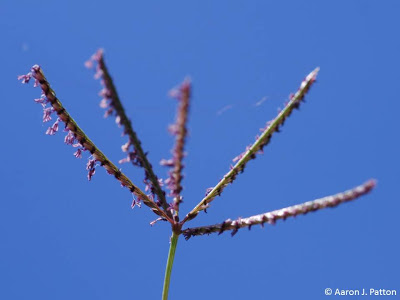
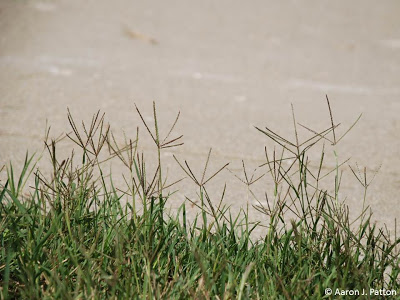
The finger-shaped spikelets on the bermudagrass seedhead are similar to a crabgrass. Bermudagrass will produce seedheads from mid-summer until fall. Spikelets typically have 3-6 spikes in number.
Cultural control:Enhance cool-season turf density through overseeding and fall fertilization.
Biological control:None known.
Chemical control: Bermudagrass is the most difficult to control turf weed. Keep this in mind when trying to control it! These “control” methods should be regarded as ways to “suppress” bermudagrass. It is extremely difficult to “eradicate” bermudagrass. Different situations require different approaches. The areas below describe bermudagrass control in different situations for different users:
Control before seeding or sodding an area during renovation
Control for homeowners
Control for professionals
Control before seeding or sodding an area during renovation
The most effective way to control bermudagrass is with a preplant soil fumigant. For most, fumigation is not an option because it is so costly and because of specialized application equipment needed. A good alternative is to make three applications of glyphosate over the growing season (May, July, and September). Wait three to four weeks for regrowth before making the follow-up applications. Research shows that a tank-mix of 3 qts/A glyphosate plus fluazifop will improve bermudagrass control over glyphosate alone. When using fluazifop, be aware that it will have some residual soil activity. Wait at least 30 days before seeding turfgrass after applying fluazifop to bare ground or 14 days after an application to turf.
Professional products that contain fluazifop only that can be used during renovation include Fusilade II and Ornamec.
Homeowner products that contain fluazifop only that can be used during renovation include ORTHO GRASS B GON GARDEN GRASS KILLER
Control for homeowners
There are few “over-the-counter” products available for bermudagrass control. One such product is Bayer Advanced Bermudagrass Control for Lawns. Multiple (3 or more) applications will be needed to suppress bermudagrass. I suggest that homeowners make applications at the start of the end of the summer when the bermudagrass is not actively growing. Summer applications are generally less effective on bermudagrass and could injure their lawn when applied to drought stressed turf or heat stressed turf as temperatures approach 90 degrees. I suggest using this product twice in the month of May, twice in September, and once in early October. Treating during the cooler periods of the year while the weed is green will help to control the weed while reducing the risk of injuring your desirable lawn grasses. Having said all of this, remember that this is the toughest turf weed to control and few options are effective. At best, the homeowner will be able to suppress/reduce this weed but likely ever completely eradicate it.
Control for professionals
There are many situations on golf courses or lawns where bermudagrass invades. There are also many cool and warm-season grasses that bermudagrass invades. Each situation in each different turf spcies requires a different approach. Consult Turfgrass Weed Control for Professionals Publication (AY-336) for more information on professional options for control in these situations.
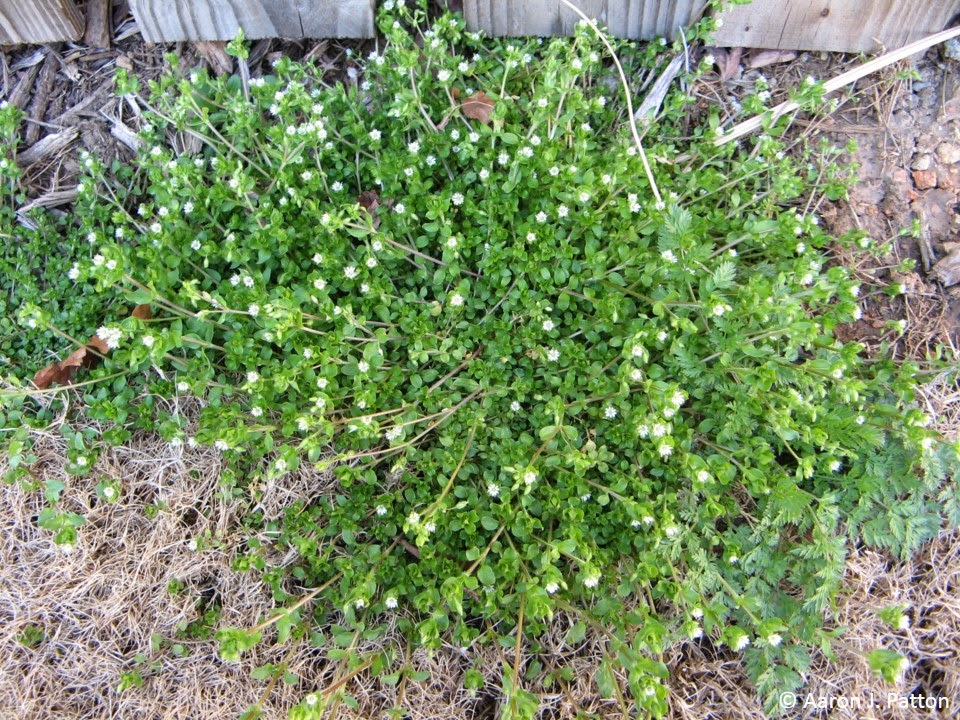
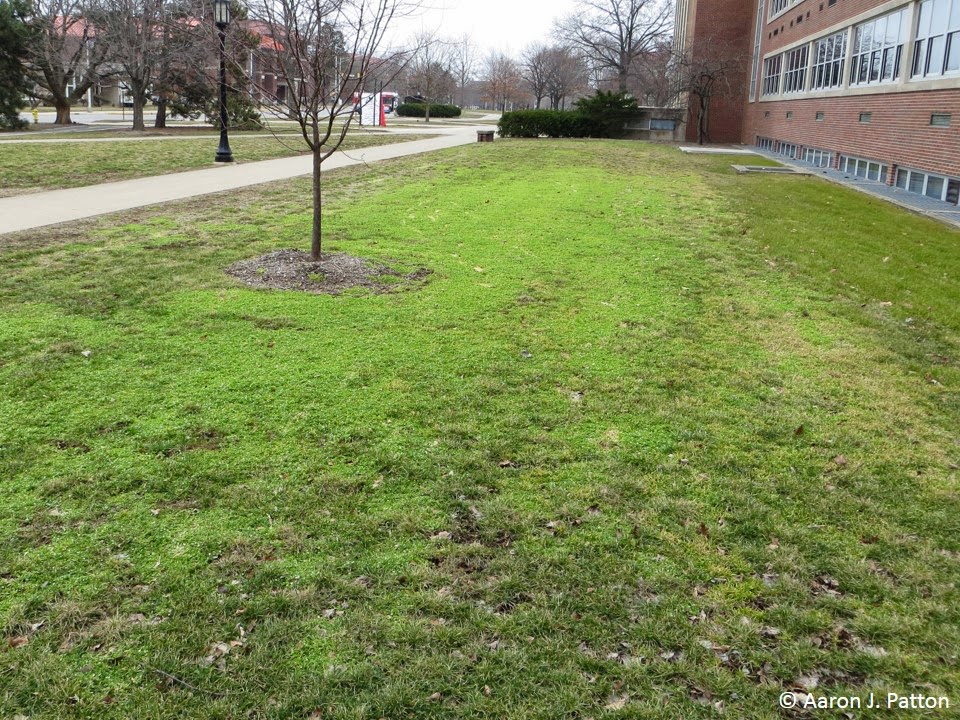
Biology: Common chickweed (Stellaria media) is a winter annual broadleaf weed. It forms dense, prostrate patches in turfgrass throughout North America, though it can grow much taller when it’s not mowed. Common chickweed germinates from seed in late summer or early fall. However, germination timings can vary throughout the year if conditions are shady, and moist enough. Its prostrate growth habit and capabilities to withstand low mowing practices make common chickweed a widely distributed turfgrass weed in all regions of the United States.
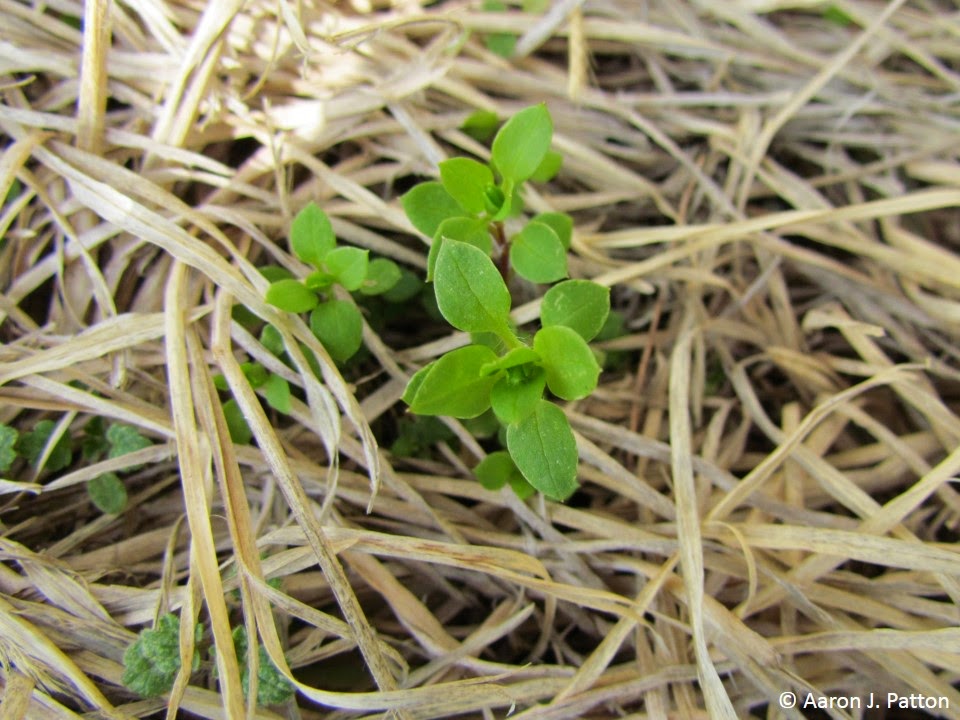
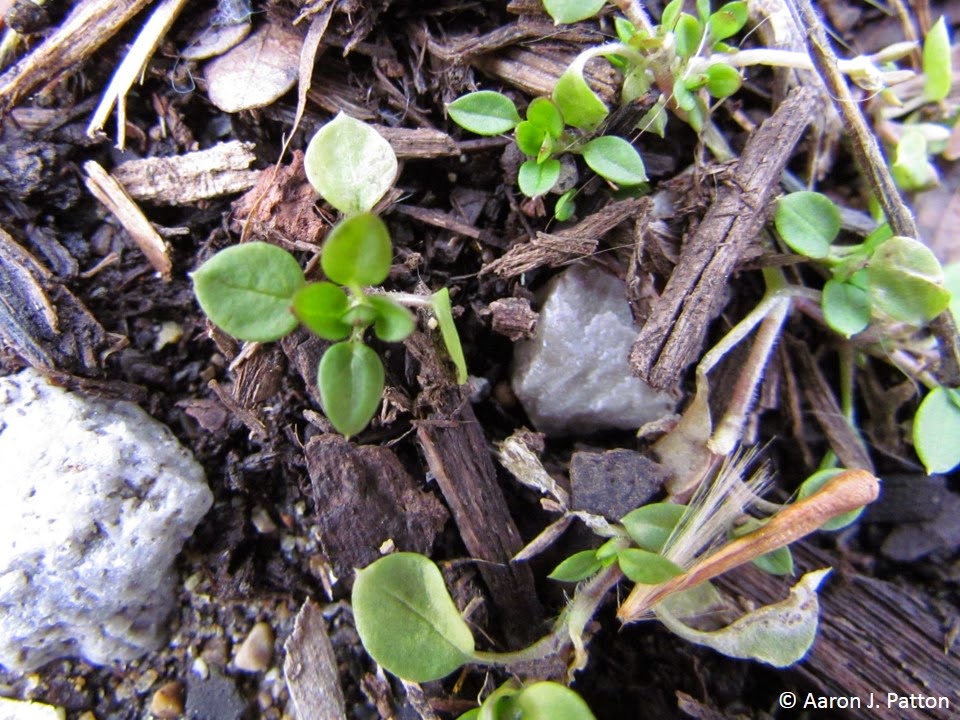
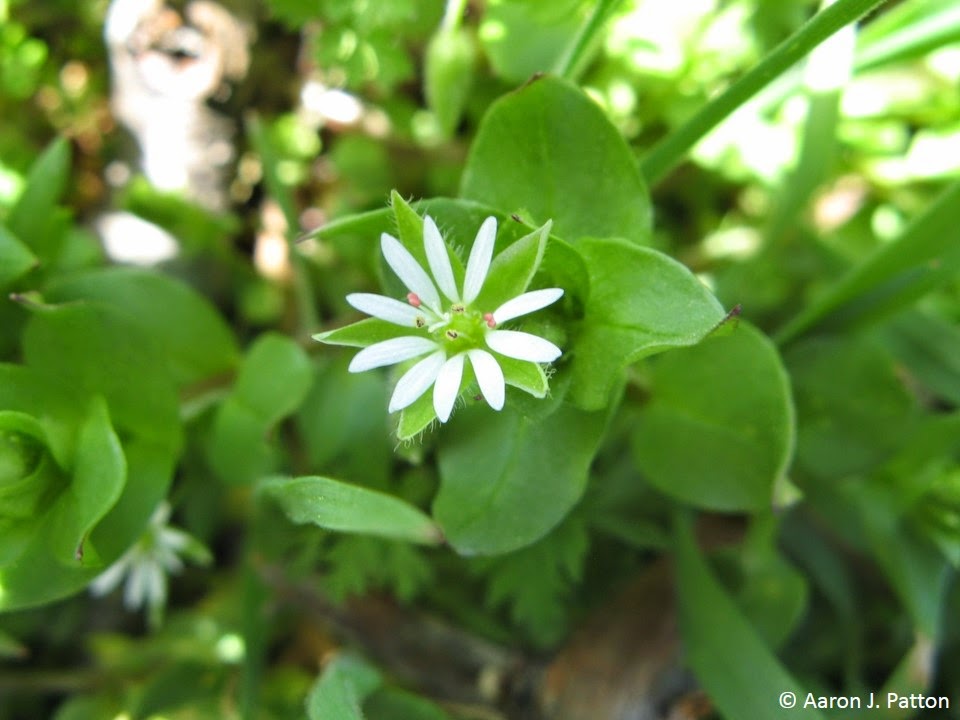
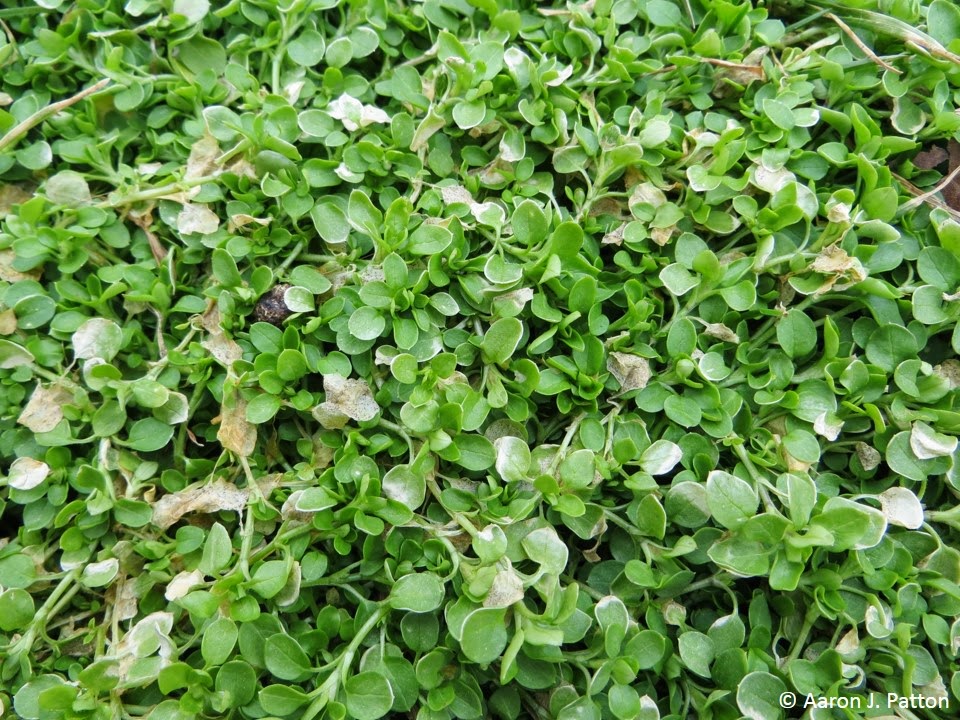
Identification: Common chickweed is predominantly a winter annual broadleaf weed that can be identified by its prostrate growth habit and leaf shape. Common chickweed leaves are located opposite each other on stems that may be hairy on older portions and smooth on newer growth. Additionally, leaves are light green, smooth, and oval- to egg-shaped that come to a point at the apex. Leaves located on the upper portions of the stems have no petioles (leaf stems) while leaves located lower on the stems have long, sparsely-hairy petioles. Common chickweed produces small clusters of white flowers with five daisy-like petals in early spring. Flower petals have a deep centered lobe that makes it appear as though there are ten petals. Common chickweed can often be mistaken for mouse-ear chickweed; however, mouse-ear chickweed leaves are more oblong in shape and are densely covered in soft hairs.
Light green leaves with tiny point at the apexLeaves may often look more succulent than herbaceousaisy-like flowers with 5 petals. Petals have deep lobes so it appears there are 10 petalsProstrate growth habit via laterally spreading branchesDense, mat-like growthPresence may indicate moist, poorly drained, or compacted soils
Cultural control: Proper turf maintenance such as adequate mowing height, fertilization, and irrigation will help to develop a dense, aggressive turf capable of out-competing invading weeds. Common chickweed is also an indicator weed, meaning its presence might indicate underlying management issues that are allowing the weed to dominate spaces meant for turf. For example, it thrives in compacted soils that are consistently moist or poorly drained. Its presence might indicate that the soil should be cultivated (aeration) and irrigation practices should be adjusted to reduce excess moisture in the soil. Common chickweed also thrives in shady conditions; thus, efforts to reduce shade if possible, such as pruning tree branches, may also help turf out compete common chickweed. Hand-pulling common chickweed when populations are small may also be an effective cultural weed management tool.
Biological control: None known for specific use in common chickweed. There are some organic postemergence herbicides available for turf weed control such as pelorgonic acid (Scythe), acetic acid (5% or greater solutions), and medium-length fatty acids (Eugenol); however, these products do not differentiate between the target weed and the desired turf (non-selective). As a result, these products are often used as spot treatments for weed control in parking lots, along fence rows, and in other bare-ground areas.
Other organic products that contain iron HEDTA (FeHEDTA), may be used to manage common chickweed; however, their ability to control common chickweed has not been effectively researched.
Chemical control: Control options for common chickweed include both pre- and postemergence management strategies. Preemergence herbicides such as Gallery 75 (isoxaben), Pendulum (pendimethalin), Barricade (prodiamine), and Dimension (dithiopyr) are available for use in home lawns; however, it is important that they are applied prior to common chickweed germination in autumn.
Postemergence control can be achieved with repeat applications of two or three-way mixtures of 2,4-D, dicamba, MCPP, or MCPA in cool-season turf. In warm-season grasses, Manor (metsulfuron), Katana (flazasulfuron), or Celsius (thiencarbazone + iodosuluforn + dicamba) can control common chickweed when applied in combination with a non-ionic surfactant (0.25% v/v).
Most of these herbicides require supplemental applications for adequate control especially in spring when common chickweed plants are larger.
Biology: Common mallow (Malva neglecta), also known as cheese mallow, cheese weed, and dwarf mallow, is a winter annual broadleaf weed, though it can also act as a biennial if environmental conditions that favor growth persist. It is generally found in low-maintenance turfgrass lawns, nursery crops, and landscapes. The ability of common mallow to survive in multiple environmental and soil conditions, such as frigid temperatures and dry, compacted soils, as well as its ability to survive lower mowing heights, make common mallow a common turfgrass weed throughout the state of Indiana.
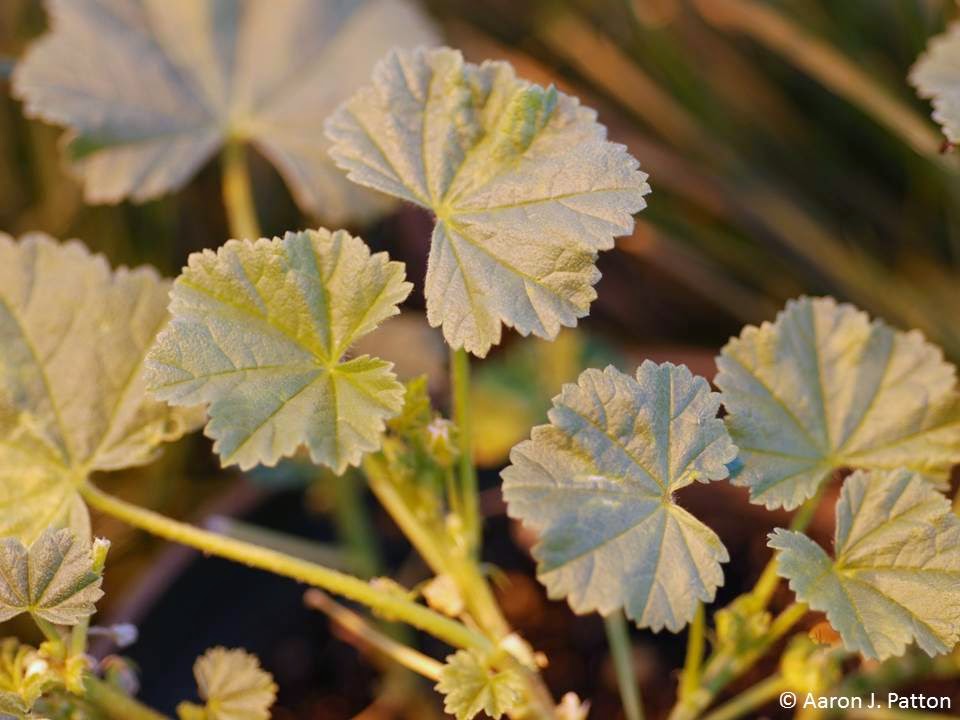
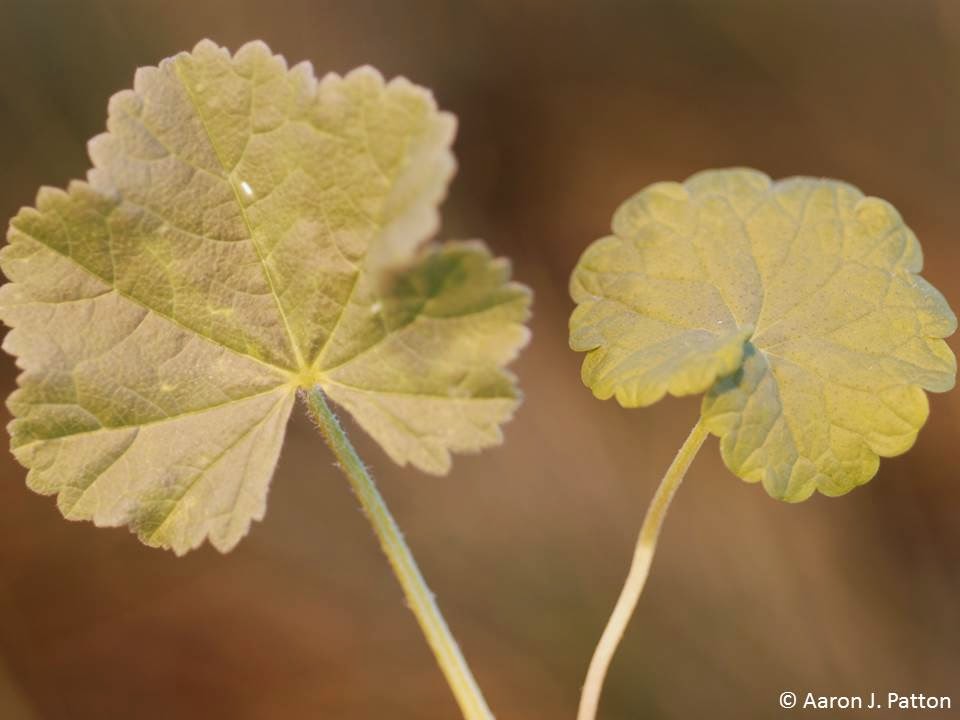
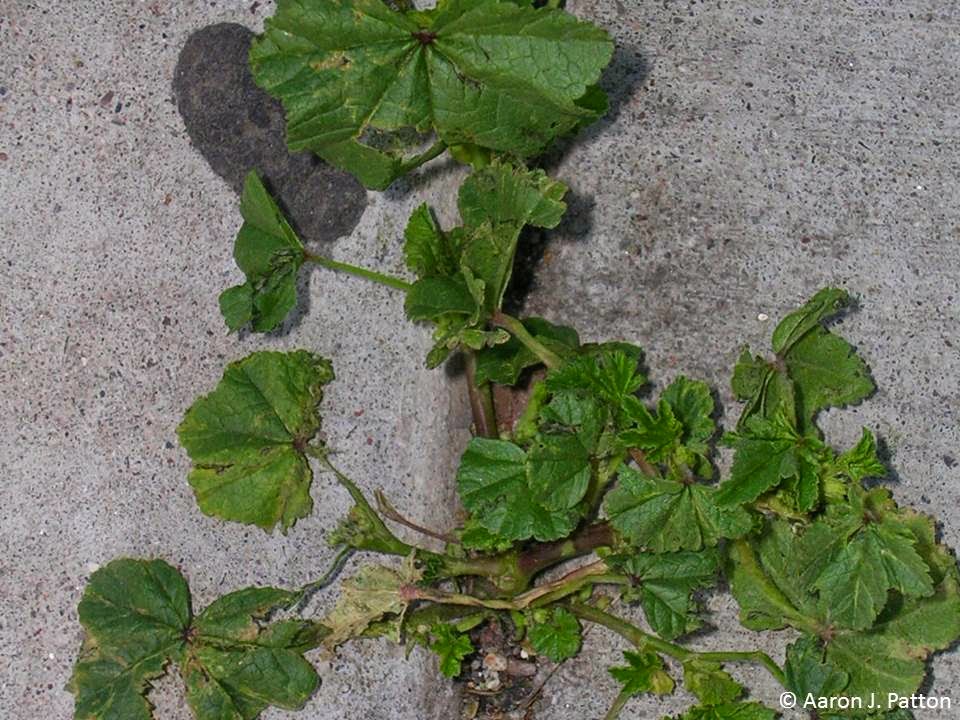
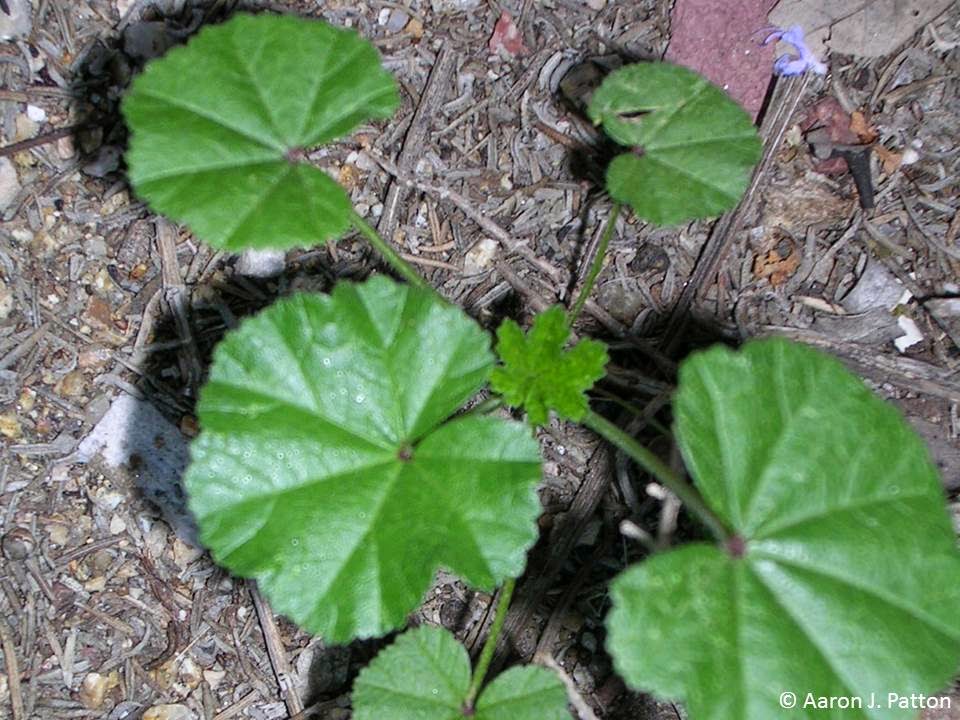
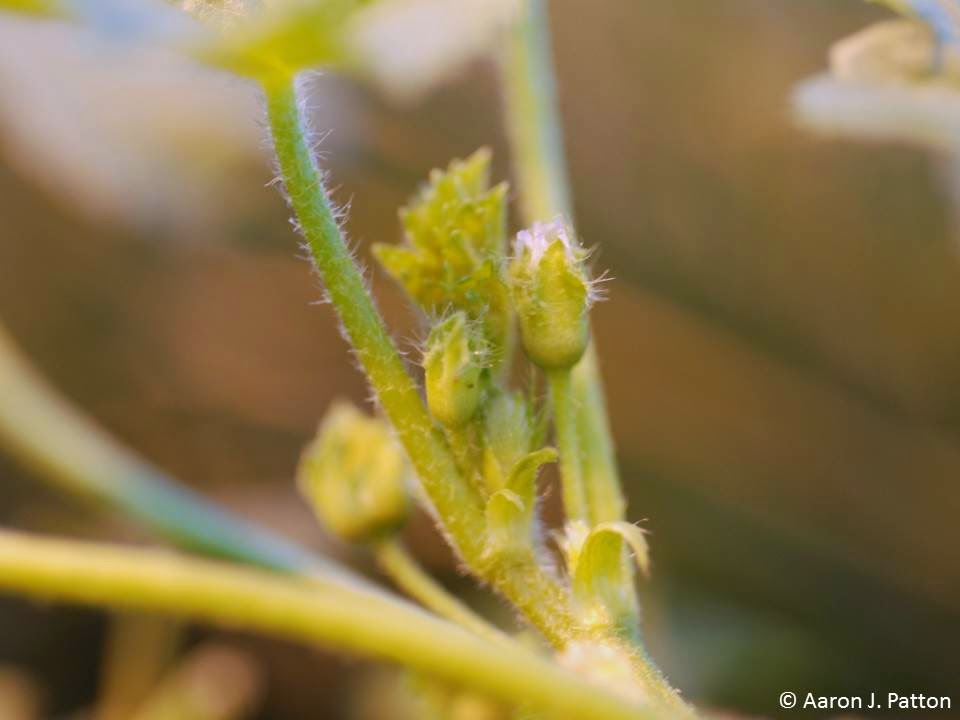
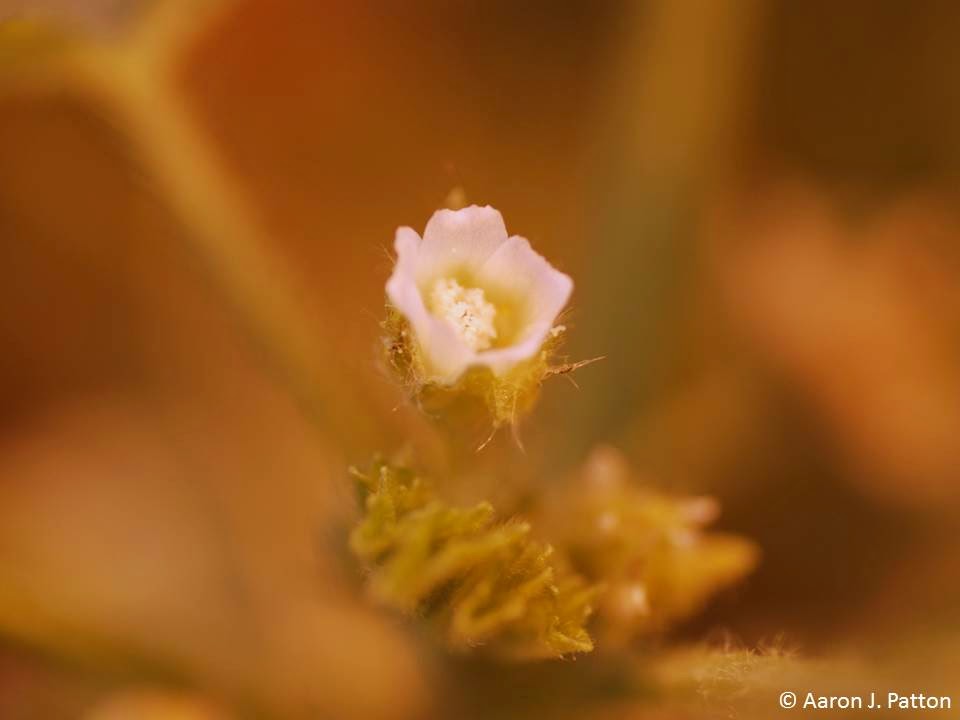
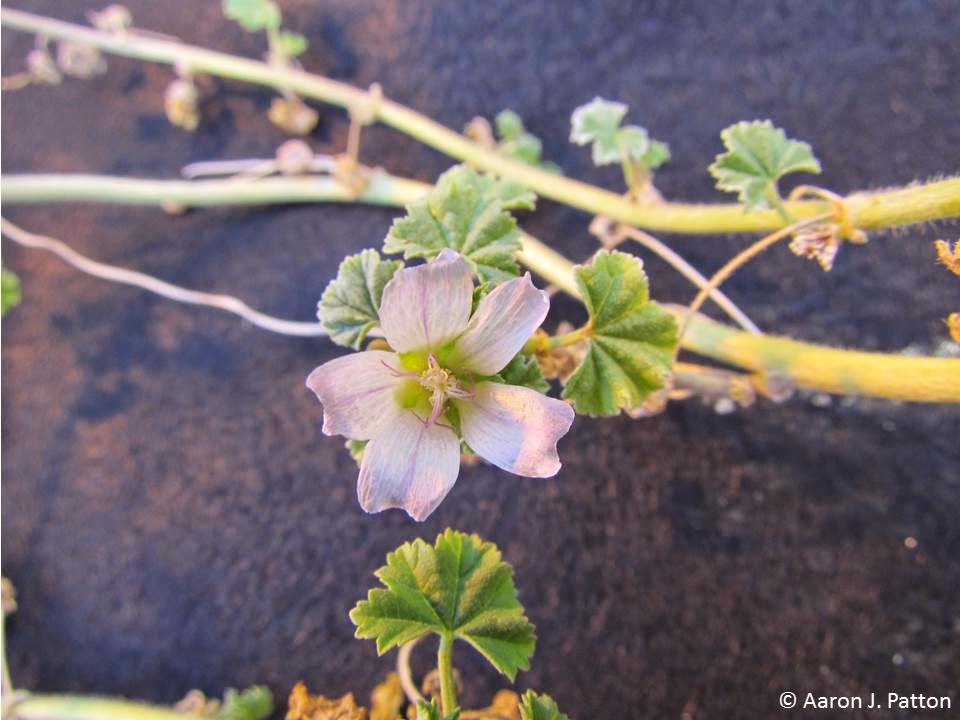
Identification: Common mallow is a broadleaf winter annual weed that has the ability to persist into a biennial or perennial life cycle if environmental conditions are favorable. Common mallow can be found in lawns throughout the United States as a low-growing, spreading/prostrate broadleaf weed that will grow more erect in the absence of mowing. It reproduces by seed, which typically germinates from spring to early autumn; however, it is anchored to the ground by a short-to-deep, straight taproot which allows to plant to persist for an extended amount of time. Though it spreads primarily though seed, fragmented stems can also produce adventitious roots when nodes come into contact with the soil and conditions are moist enough. Plants initially develop as a basal rosette, and stems branch-out and elongate along the soil surface as the plant matures. The base of each thickened, hairy stem lies close to the soil surface while the tip (apex) is turned upward. The leaves can range from 0.5 to 1.5 inches in diameter and are located at the apex of thinner stems (petioles) branched alternatively from the main stems. Leaves are palmately veined (similar to fingers branching from the center of your palm), circular- to kidney-shaped, dark green with a ‘crinkled’ appearance, slightly hairy on both the upper and lower surfaces, and sharply toothed in the margins. Flowers are produced in May and can be present throughout the summer and into October. Flowers appear as 5 white, or whitish-lavender colored petals that are often tinged with purple or have purple veins. Flowers then produce a small fruit that can be described as the shape of a button or a wheel of cheese, hence its multiple common names. Each fruit contains 10-12 wedge-shaped seeds that break apart at maturity. Though common mallow seeds have a relatively low germination rate, they can remain viable in the soil for many years (decades). Often the stems will remain green and viable throughout the winter months, allowing the plant regenerate and sprout from the surviving crown the following spring. Common mallow can often be mistaken for ground ivy; however, ground ivy leaves are located opposite each other on the main stem and have rounded edges. Ground ivy also emits a strong mint-like odor when cut or damaged and has square stems commonly found within the mint family but not on common mallow (rounded stems).
Common mallow growing in a sidewalk crack.
Cultural control: None known specifically for common mallow. Hand pulling or hoeing can be an effective method of physically removing the plant when it is young and the taproot is shorter. Its ability to survive in low maintenance conditions helps common mallow out-compete desirable plants; however, it is not as competitive with dense vigorous turf that is maintained at adequate mowing heights, fertilization rates, and irrigation practices.
Biological control: Some research has been focused on developing a fungus to help control other weedy mallows with a small amount of success; however, there are no commercially available products for the biological control of common mallow.
Chemical control: Since it reproduces from seed (generally), it is possible to manage common mallow through the use of preemergence herbicides. Postemergence herbicides can also be used to control common mallow. Two- or three-way mixtures of 2,4-D, dicamba, MCPP, or MCPA should provide adequate control. These products are available at local garden retailers and professional turf suppliers. Additionally, products that contain triclopyr, fluroxypyr, and quinclorac as one of the ingredients in a two- or three-combination herbicide will also work. In warm-season turf, metsulfuron (Manor) can control common mallow when applied in combination with a non-ionic surfactant (0.25%).
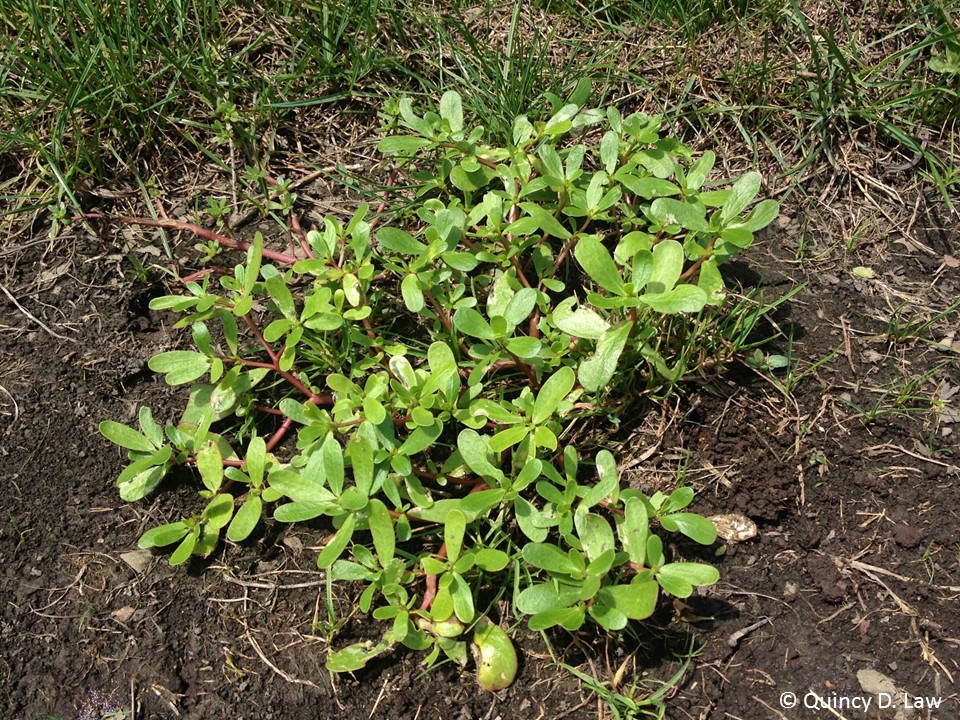
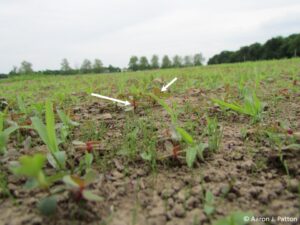
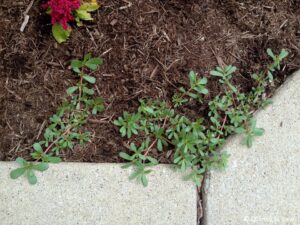
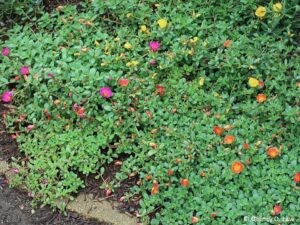
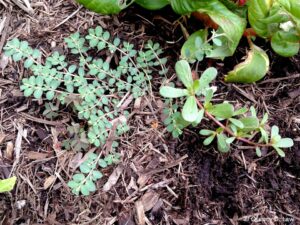
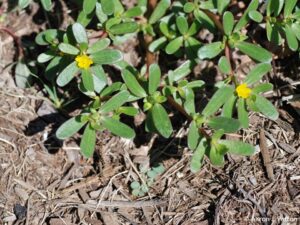
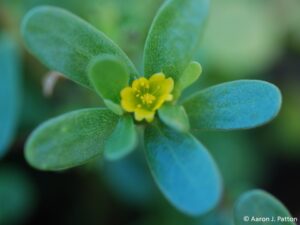
Biology: Common purslane (Portulaca oleracea L.) is a summer annual broadleaf weed (Fig. 1) that is commonly found in low maintenance turf swards (Fig. 2), turf seeded in summer (Fig. 3), next to sidewalks and driveways, and in mulched beds and gardens (Fig. 4). Purslane is a succulent plant with a prostrate growth habit, and it is one of the most common weeds in the world, especially in vegetable production. Purslane can reproduce by both seed and stem fragments. A single plant can produce as many as 240,000 seeds in a single year (Zimmerman, 1970), and seeds can be viable for up to 40 years (Darlington and Steinbauer, 1961). Severed stems are able to from adventitious roots, which allows the weed to regrow from stem or intact root fragments following cultivation (Miyanishi and Cavers, 1981). Purslane has a unique way of conducting photosynthesis in that it is able to switch from C4 to crassulacean acid metabolism (CAM) in the presence of short days or drought stress (Proctor, 2013). In short, CAM photosynthesis is advantageous in arid conditions because the plant closes its stomata during the day to reduce water loss and opens them at night to collect the carbon dioxide required for photosynthesis. Additionally, purslane is an edible plant that can be found at farmers markets for use in crunchy salads or ethnic cuisine, and it can be cultivated for ornamental use (Fig. 5).
Fig. 1. Common purslane.Fig. 2. Common purslane in thin turf.Fig. 3. Arrows marking purslane seedlings.Fig. 4. Common purslane is a common weed along sidewalks and in gardens and landscape beds.Fig. 5. Ornamental purslane. “Toucan Hot Mix’ shown.
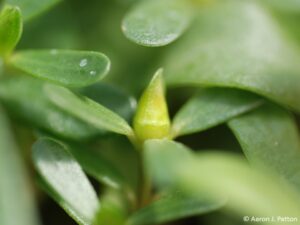
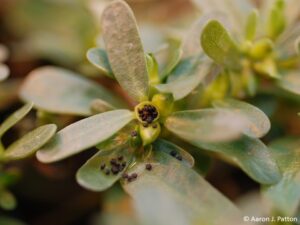
Identification: A succulent broadleaf, purslane has fleshy, glabrous (smooth) leaves and stems. Leaves are green with a red margin, lack a petiole, and are rounded at the tip. Additionally, the leaves of purslane can be alternately arranged near the crown of the plant and become opposite or whorl-like towards the apex. Stems are plump, red in color, and originate from a central point to from a rosette. Prostrate spurge is a look-a-like weed to purslane (Fig. 6). Prostrate spurge will have smaller leaves and stems and a more strictly opposite leaf arrangement that purslane. Additionally, spurge, like milkweed, will exude a white sap when the stem is severed. Purslane has a yellow flower (Figs. 7 & 8) that is rarely seen and following pollination, its seed pods (Fig. 9) can hold many seeds (Fig. 10).
Fig. 6. Prostrate spurge (left) and common purslane (right).Fig. 7. Common purslane flowering.Fig. 8. Close-up of the common purslane flower.Fig. 9. Following pollination and ovule fertilization, a seed pod encapsulates the seed.Fig. 10. When the seed pod opens, many seeds (>20) per pod are spilled onto the ground.
Cultural control: Common purslane is generally not an issue in a healthy and well-established turf stand, but it can be found in thin or newly established areas. Thus, cultural practices that improve the competitive ability of the existing turf and/or promote the establishment of a new stand are the best methods of purslane management, prevention, and control.
Biological control: The purslane sawfly (Schizocerella pilicornis) and the portulca leaf-mining weevil (Ceutorhynchus portulacea or Hypurus portulacea) can contribute to reducing purslane infestations, though total control may not be realistic.
Chemical control:Triclopyr, fluroxypyr, and dicamba are the most effective herbicides for postemergent purslane control in cool-season turf. In addition to the herbicides already listed, metsulfuron or a combination of sulfentrazone and metsulfuron can be used in warm-season turf for postemergent purslane control. For preemergent purslane control, spring applications of isoxaben or late-winter applications of simazine can be used in cool-season and warm-season turf, respectively.
Biology: Dandelion (Taraxacum offinianale), is a broadleaf perennial weed that can be found in lawns, nursery crops, and landscapes throughout the United States. It has the ability to survive many different soil types, environmental conditions, and management practices; thus, it is a commonly found weed in lawns throughout the northern half of the U.S.
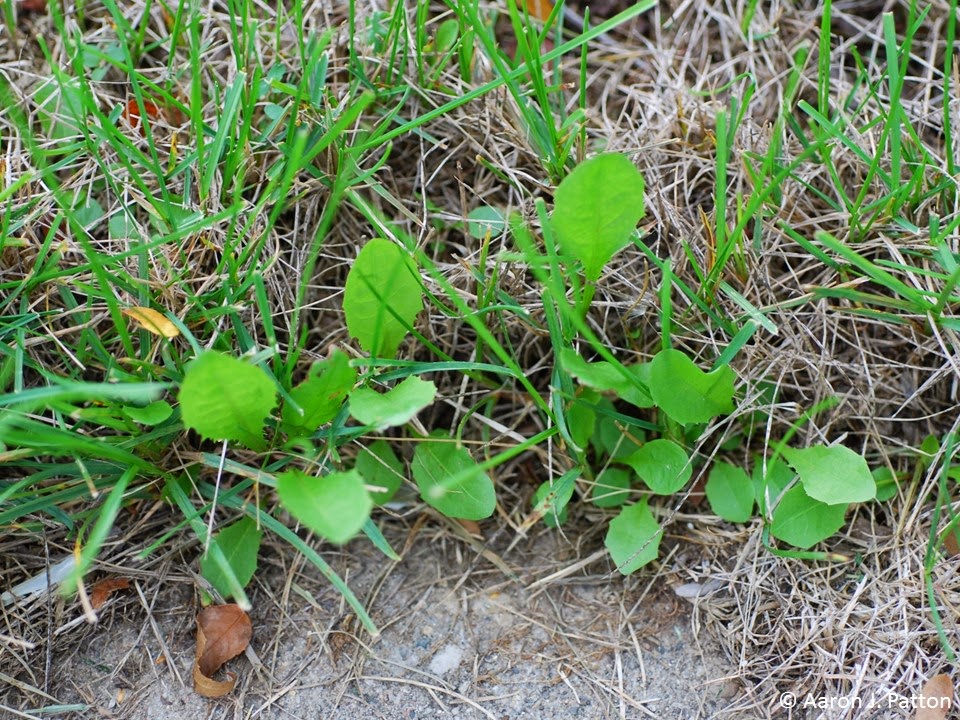
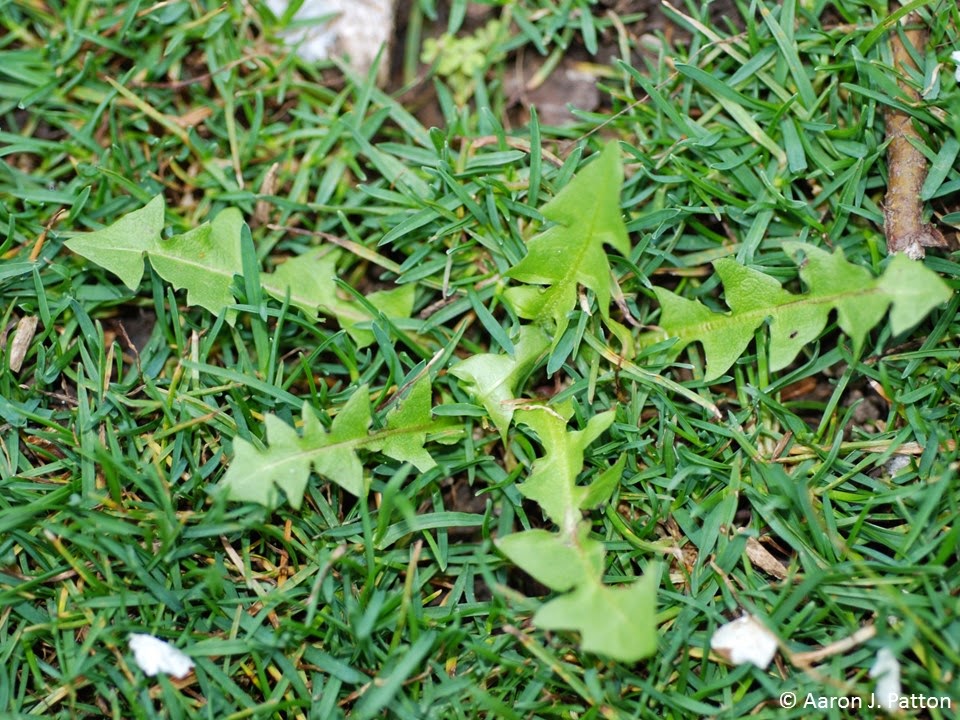
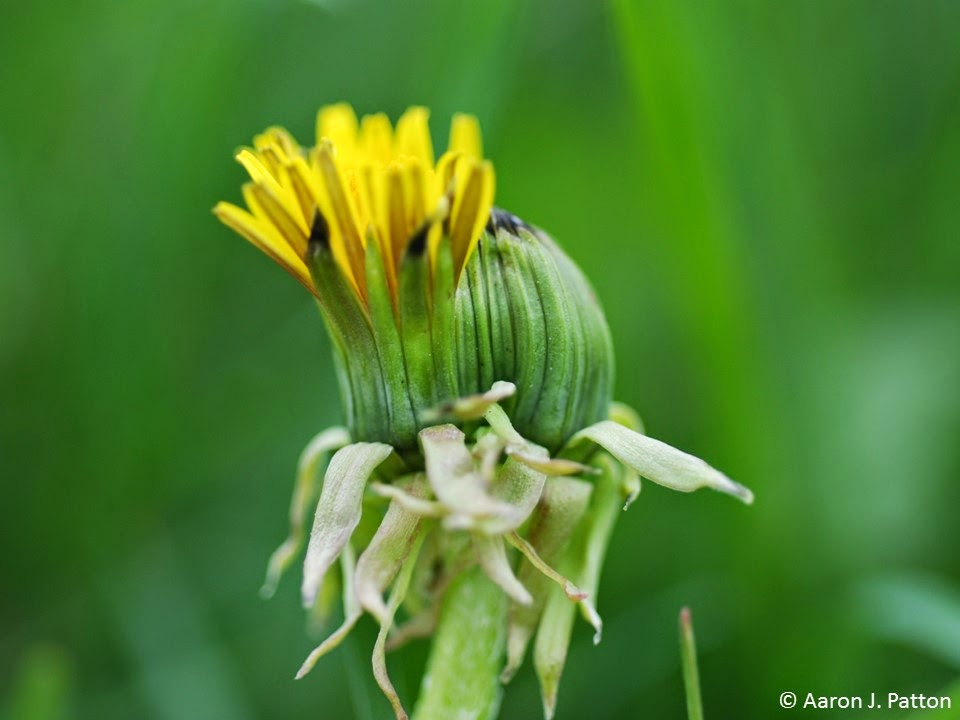
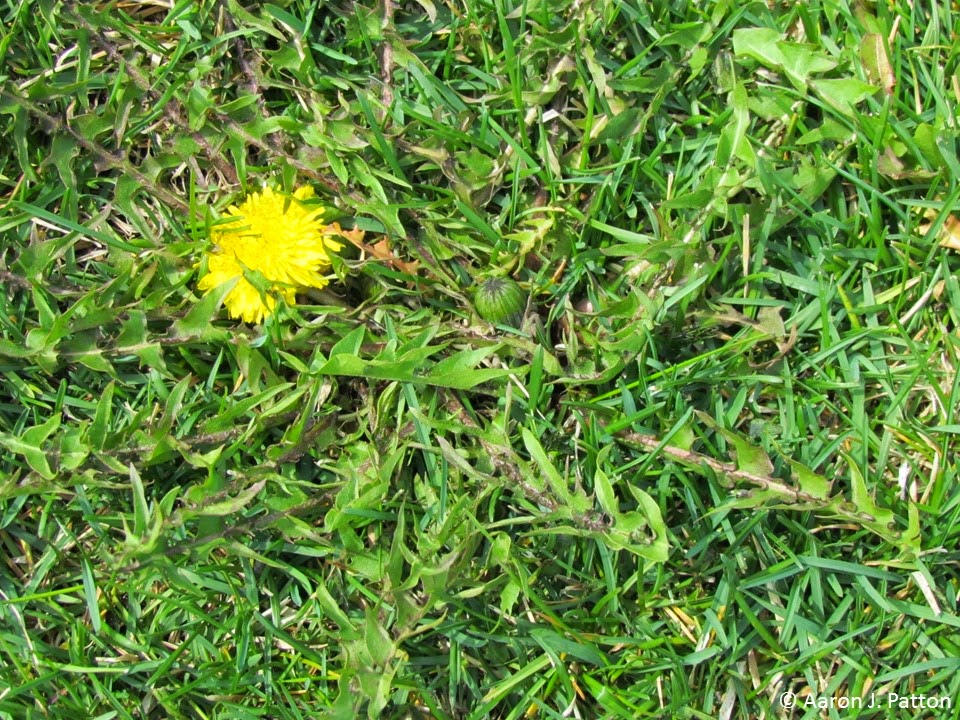
Identification: Dandelion is one of the most identifiable broadleaf weeds. It is a perennial broadleaf that is a member of the composite or daisy family. It prefers full sun and grows best in moist soils; however, it can survive in multiple environmental conditions (shade and heat) and management practices (fertility, drought, low mowing practices). Dandelions generally appear in early spring as they regrow from a few overwintering leaves and their taproot. Leaves have distinct wavy margins that form into the irregular ‘toothed’ appearance that makes the plant easily identifiable. The ends of the ‘teeth’ tend to point downward towards the base of the rosette.
Dandelion produces a strong taproot and the plant has the capability to regenerate from surviving taproot segments (so hoeing a dandelion from your garden may not actually kill the plant). The survivability of this taproot helps to make dandelion a very prevalent and ‘difficult to completely control’ weed in lawns in Indiana, even following herbicide applications.
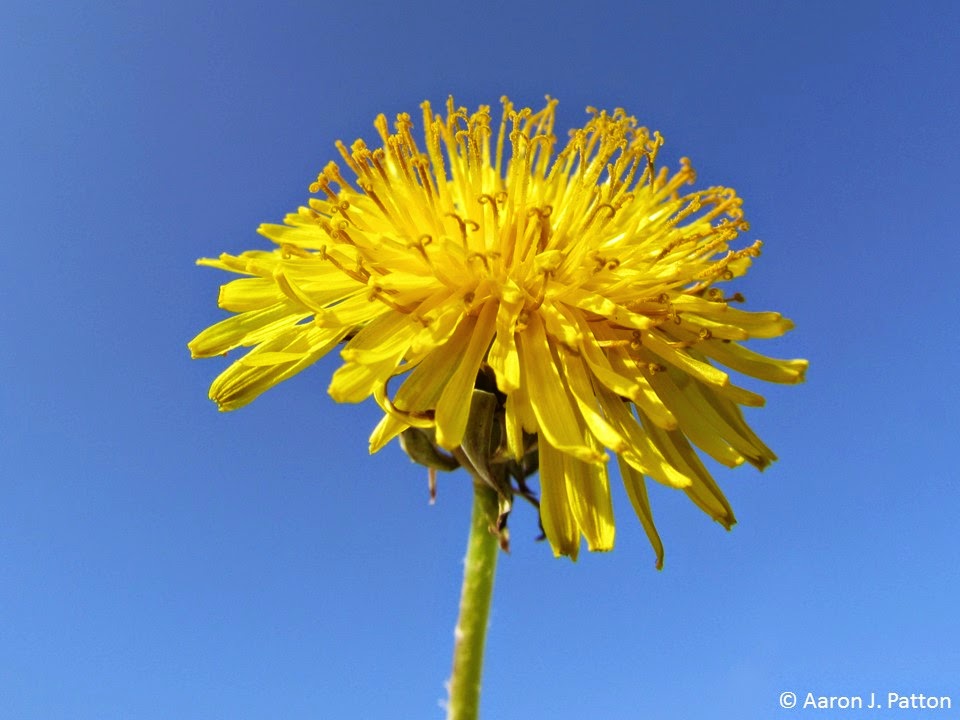
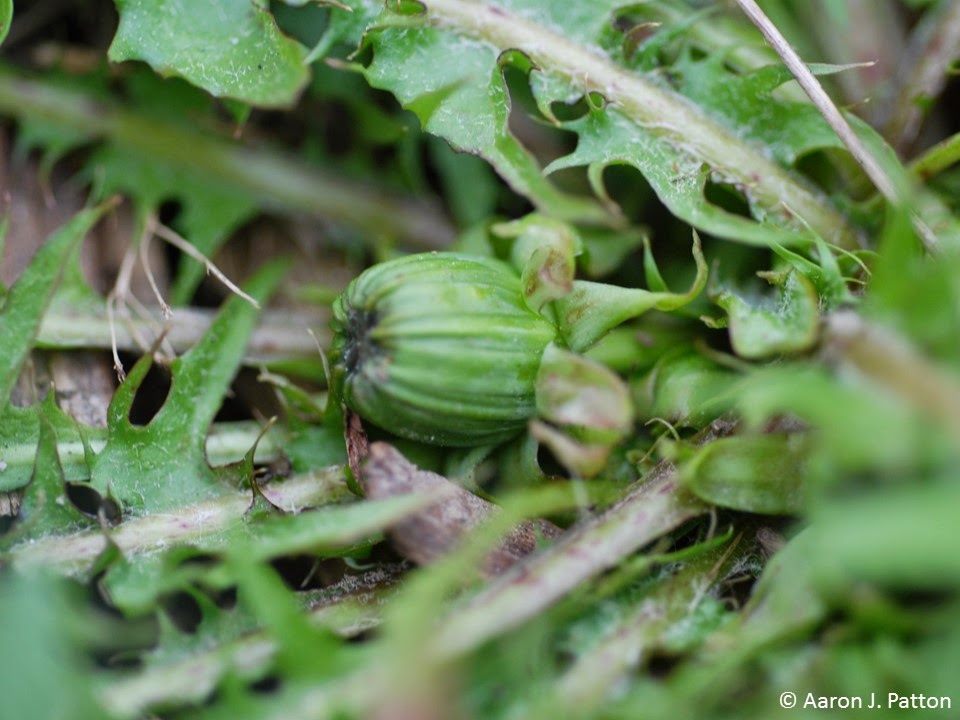
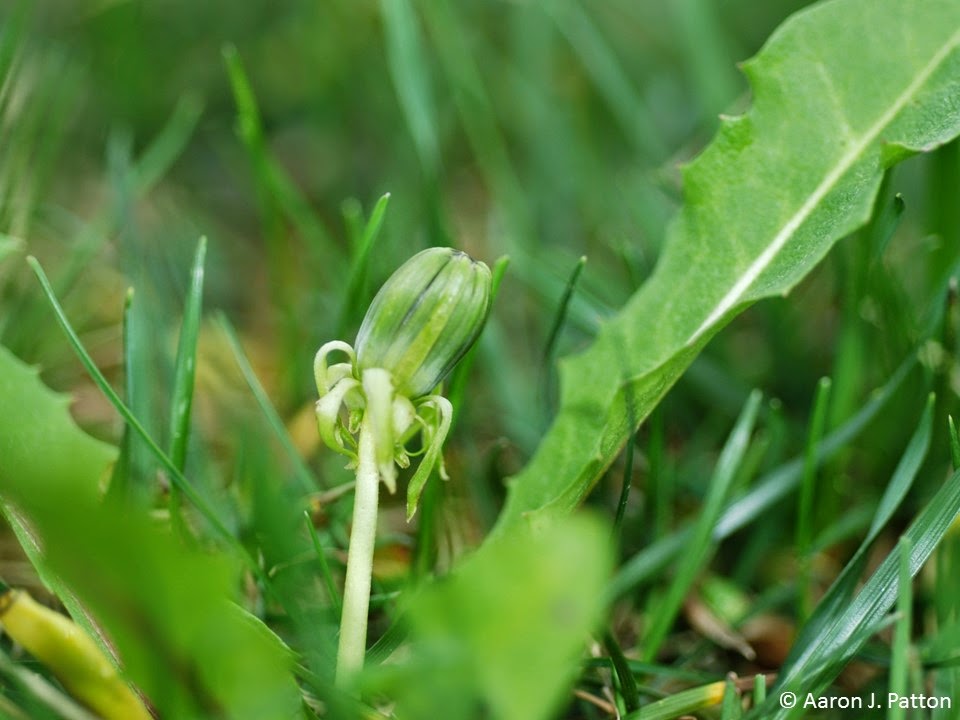
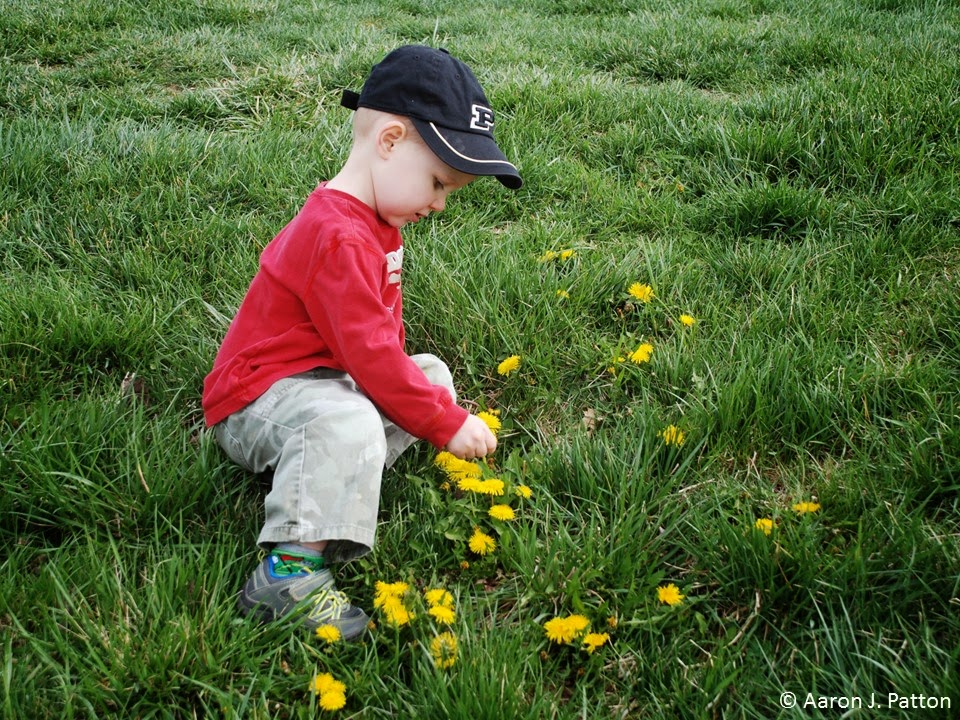
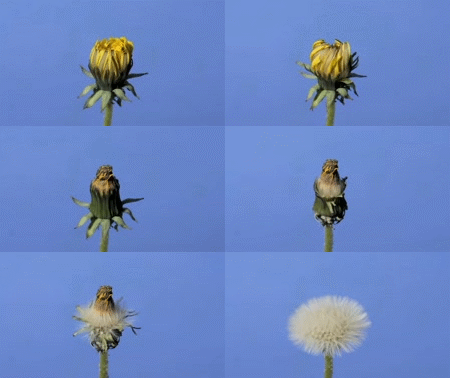
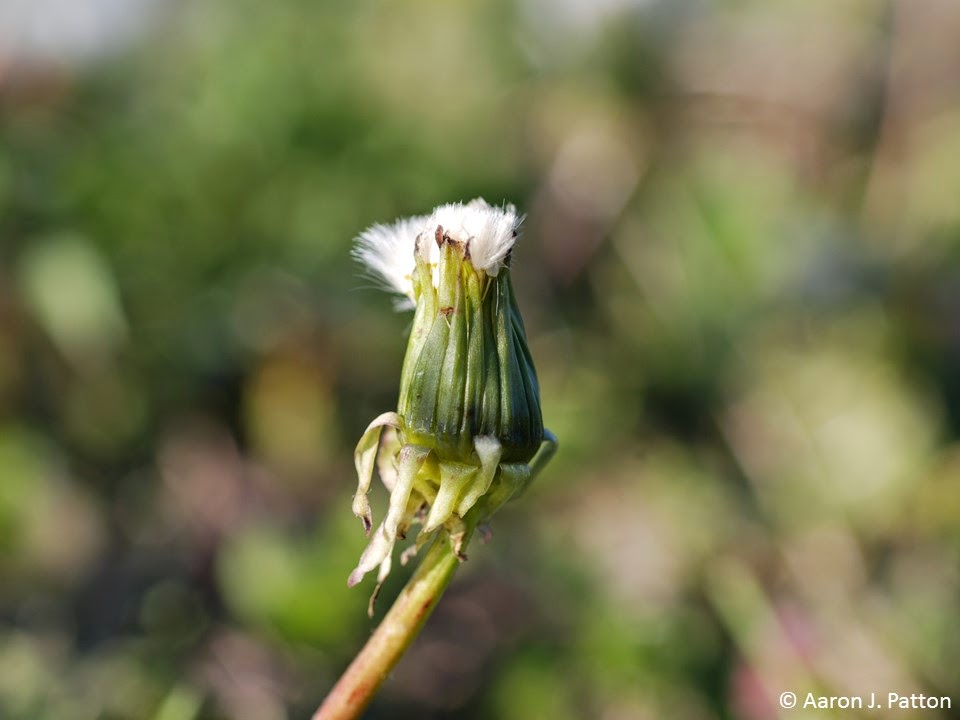
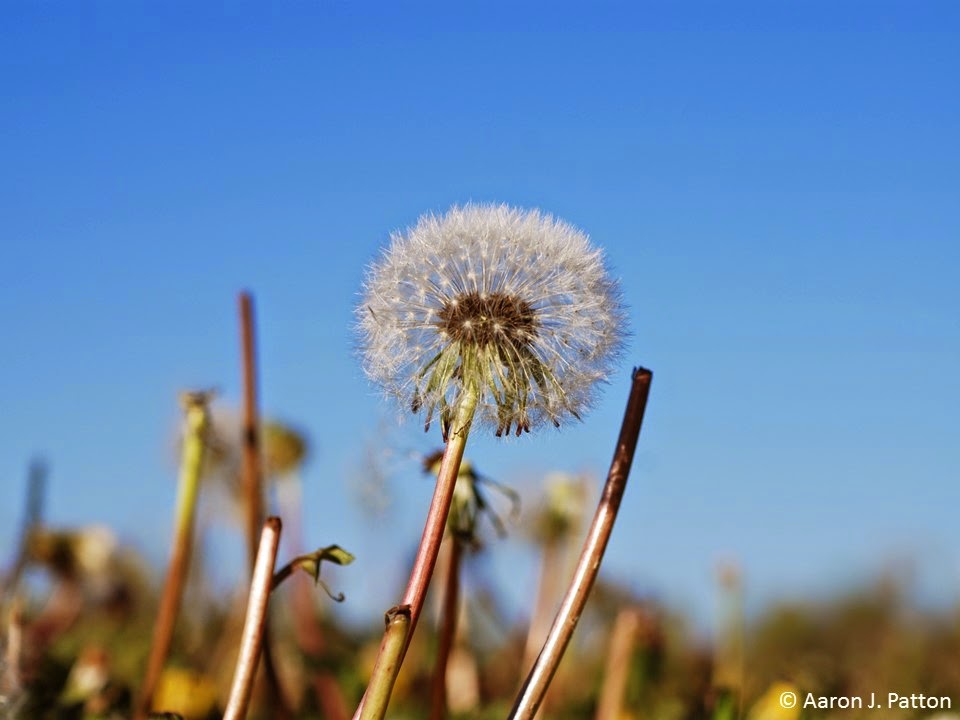
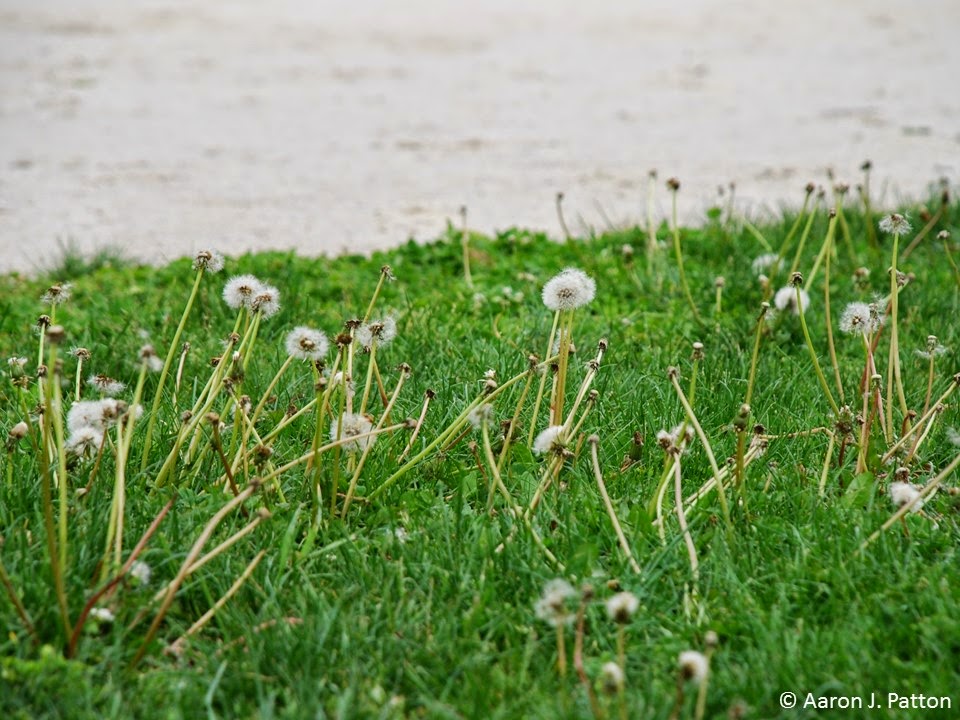
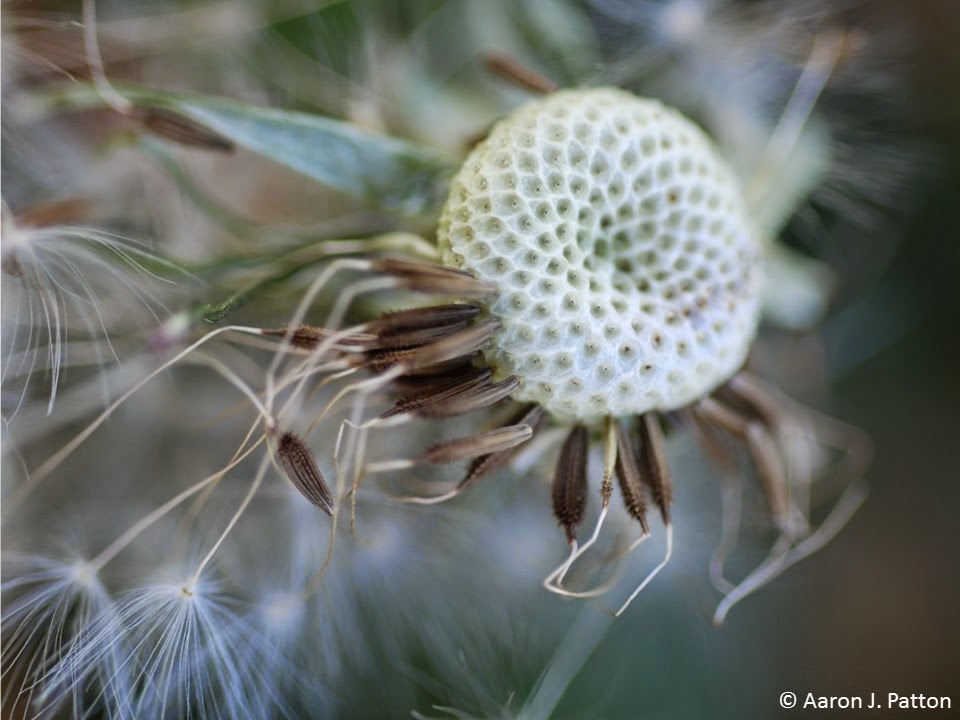
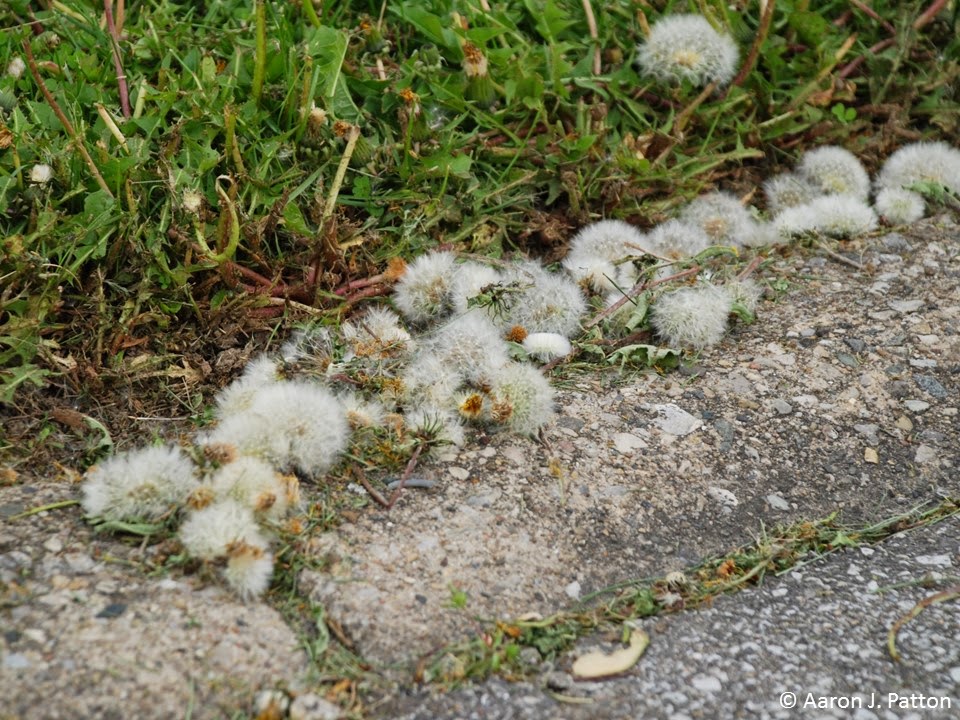
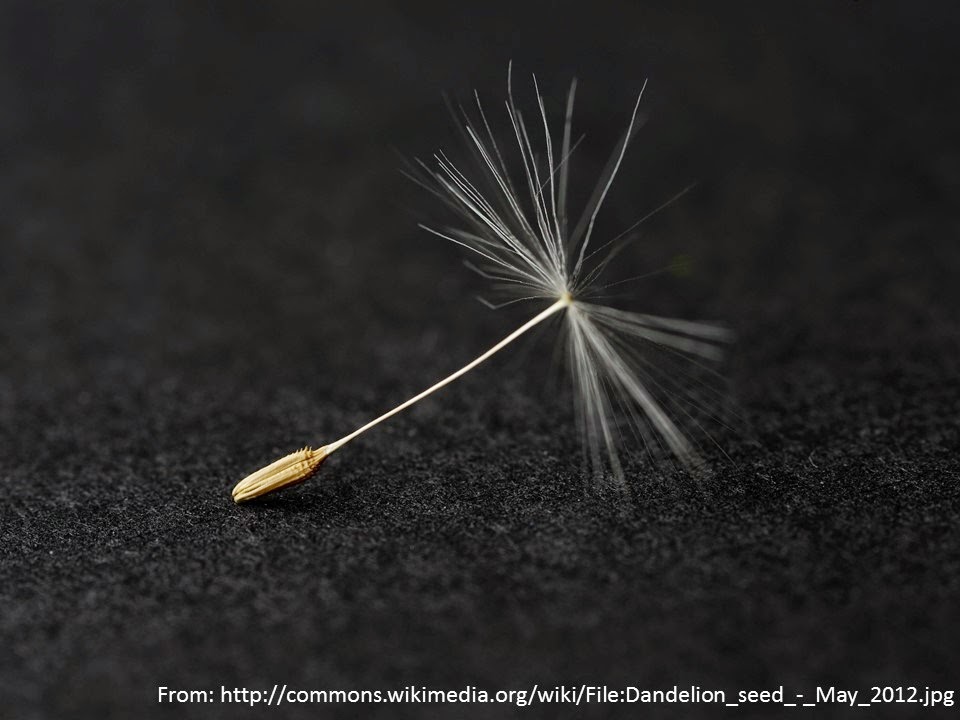
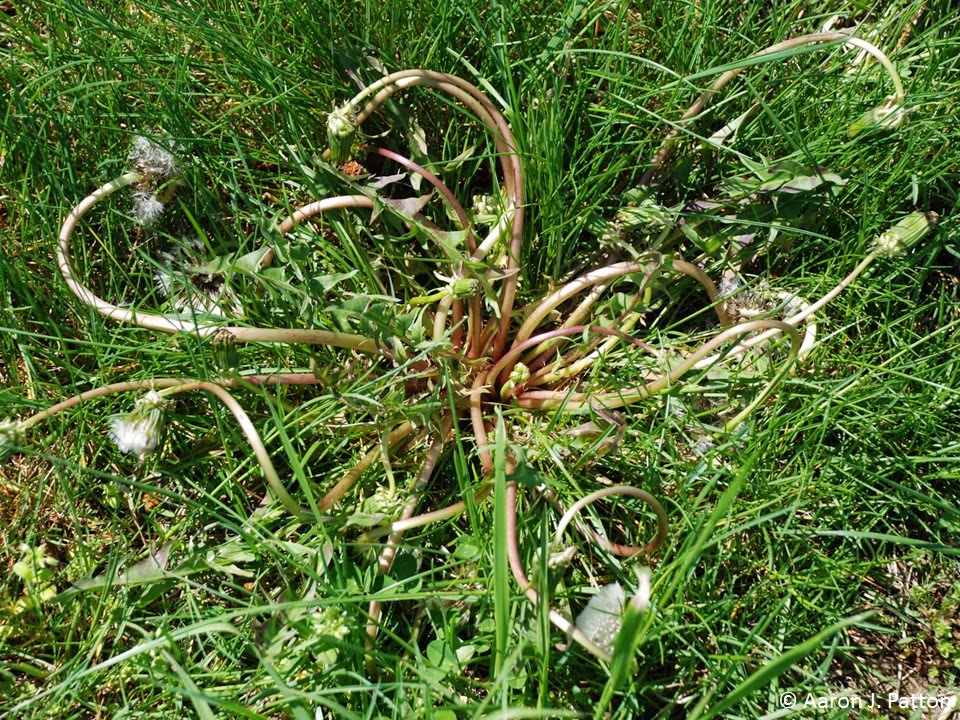
Dandelions typically flower from late April to mid-May in Indiana. Yellow flowers consisting of sunflower-like petals, are produced at the ends of long, leafless, erect stalks. Dandelions typically flower in their second year of growth after germination from seed. Yellow-brown fruit (flowers) are formed into a conspicuous, globe-like, white seedhead with light, feathery ends capable of easy dispersal by the wind. Each seedhead is capable of producing 140 to 190 individual viable seed, which helps to contribute to the vast populations of dandelion located in lawns throughout the Midwestern United States. Dandelion seeds germinate in emerge from late spring (after flowering and seed dispersal) to early autumn.
Dandelion may often be mistaken for chicory since both form toothed leaves that form from a basal rosette. However, the basal leaves of chicory tend to be rough to the touch with distinct, coarse hairs. Additionally, the toothed lobes of chicory are often alternately arranged on the leaf and point both backwards and forward, while the toothed margins of dandelion are located opposite of each other on the leaf and predominantly point backwards. The most distinct difference between the two plants is that dandelion produces yellow flowers while the flowers of chicory are purplish-blue in color.
I am not sure who created this .gif movie of dandelion flowering, but it is amazing.