Field Paspalum

Biology: Field paspalum (Paspalum laeve Michx.) is a warm-season perennial weed with short rhizomes similar to dallisgrass (Paspalum dilatatum Poir.). Much of the below Weed of the Month entry comes from research conducted in Indiana on how to control Field Paspalum. That research was published in 2012. Reicher, Z.J., A.J. Patton, and D.V. Weisenberger. 2012. Suppression of field paspalum in Kentucky bluegrass with mesotrione. [Online]. Appl. Turfgrass Sci. doi:10.1094/ATS-2012-0626-01-RS.

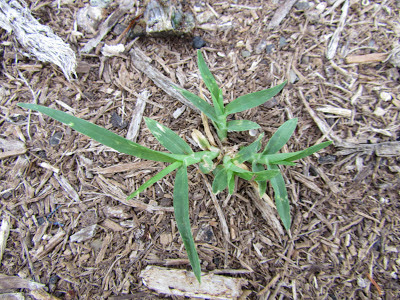
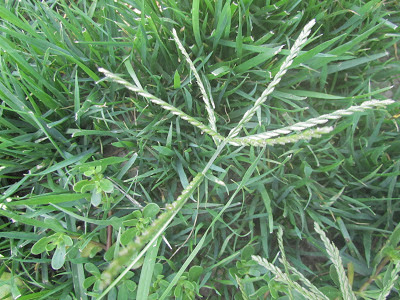
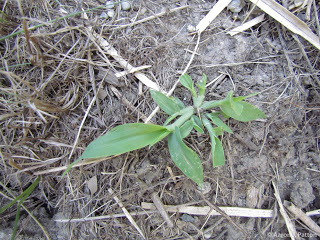
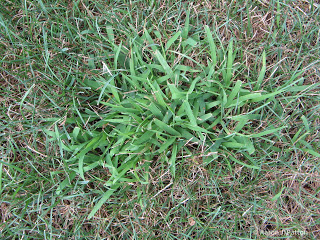
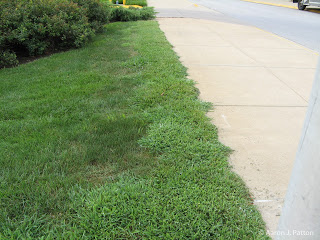
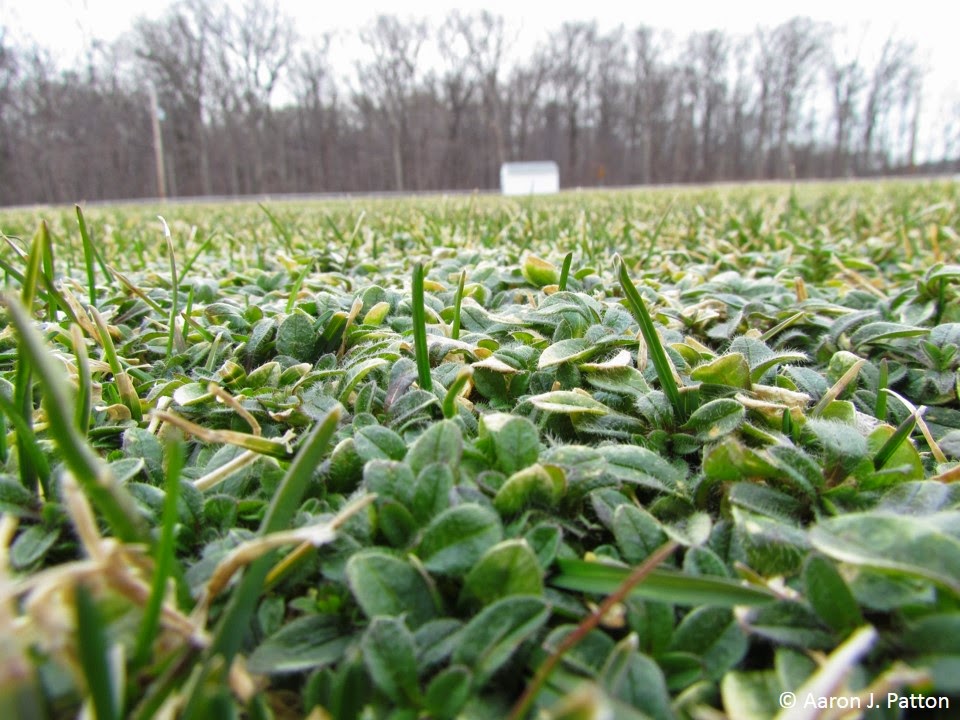
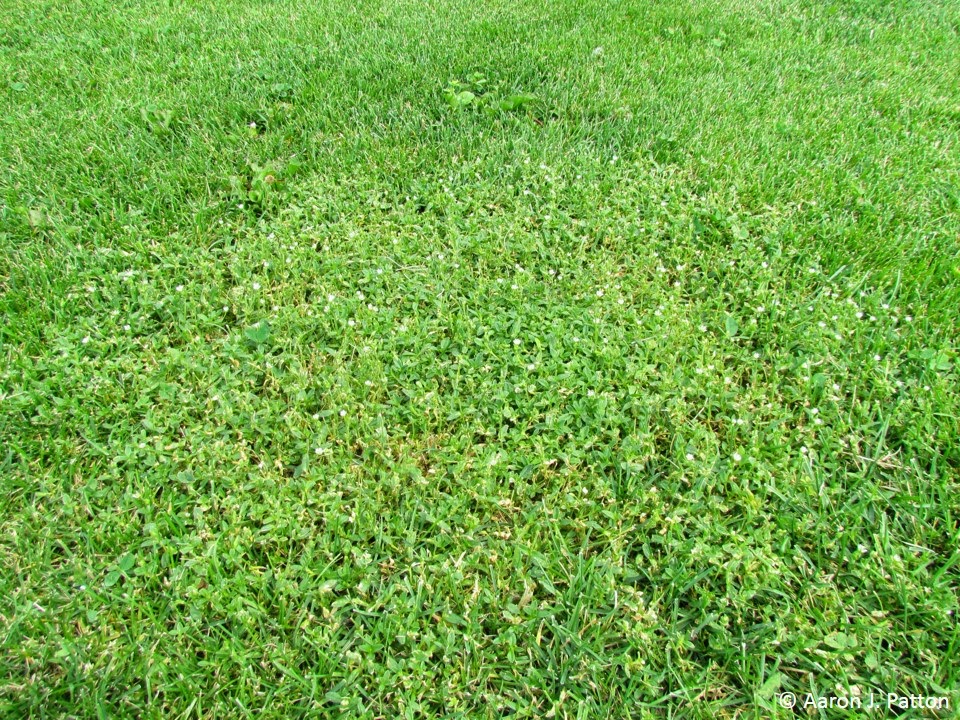
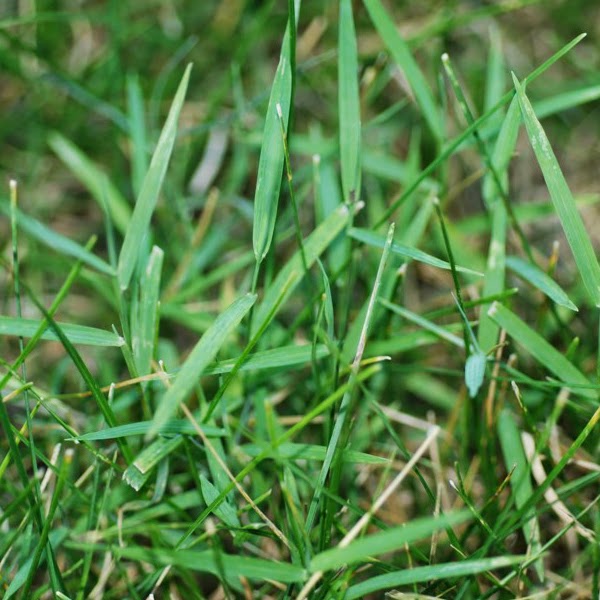
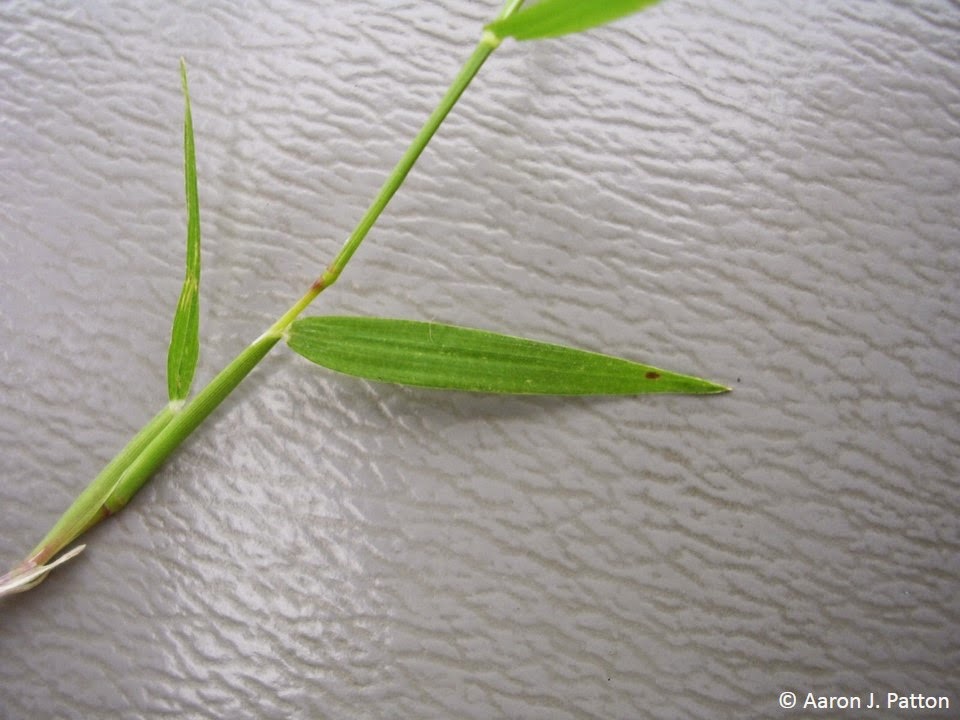
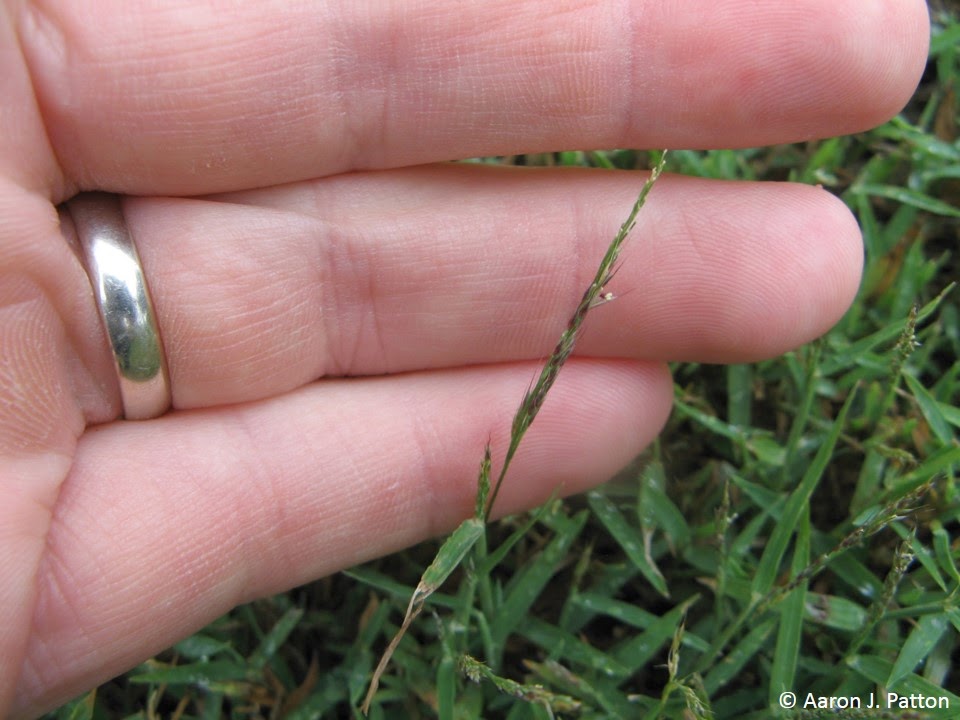
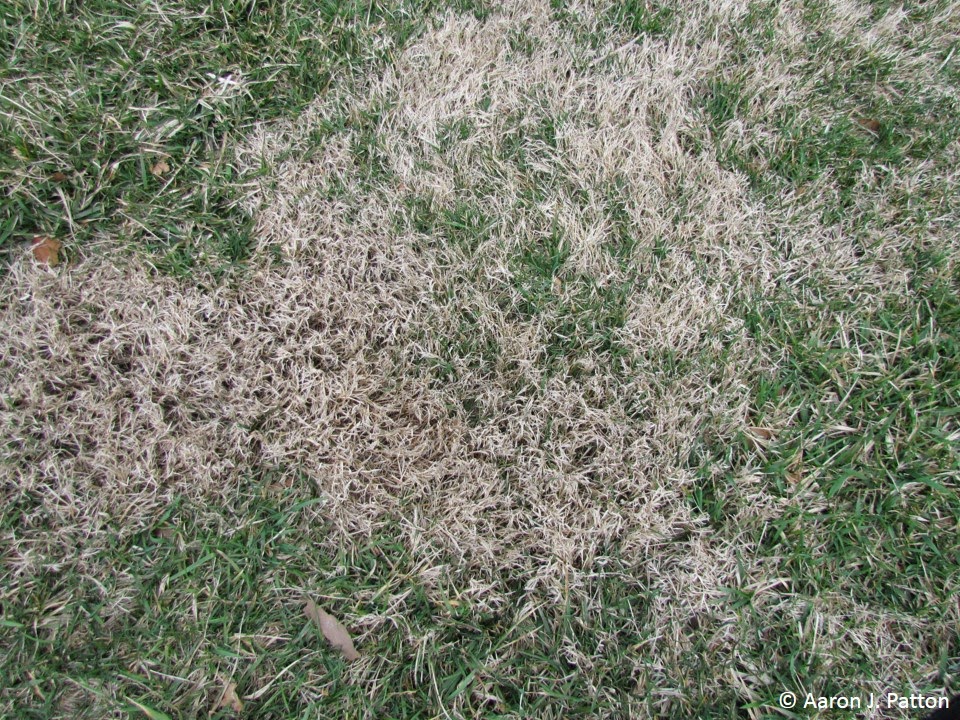
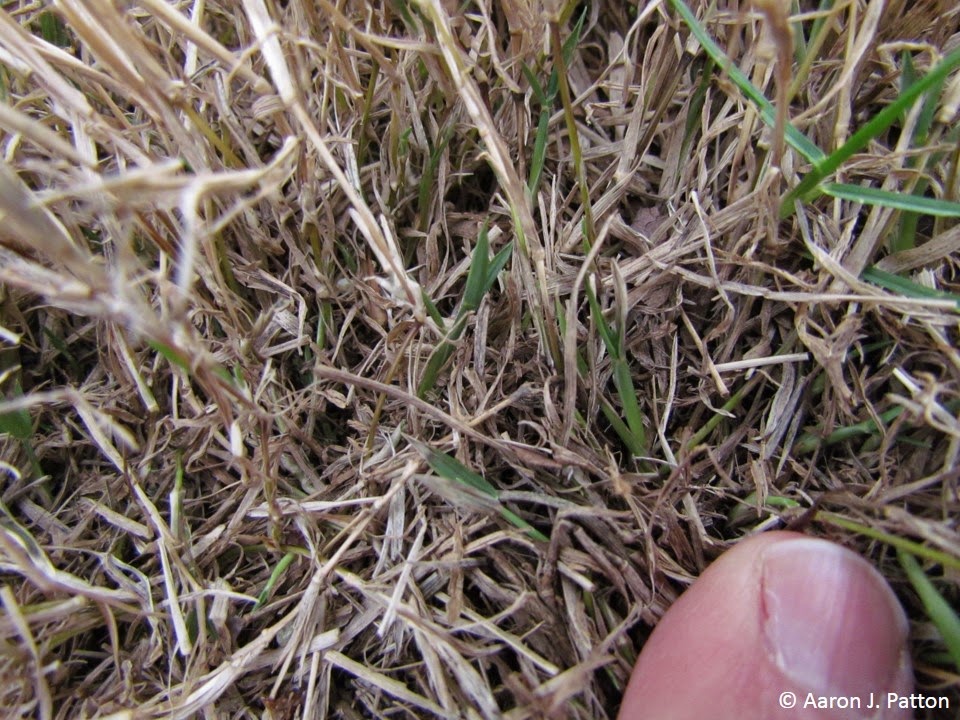
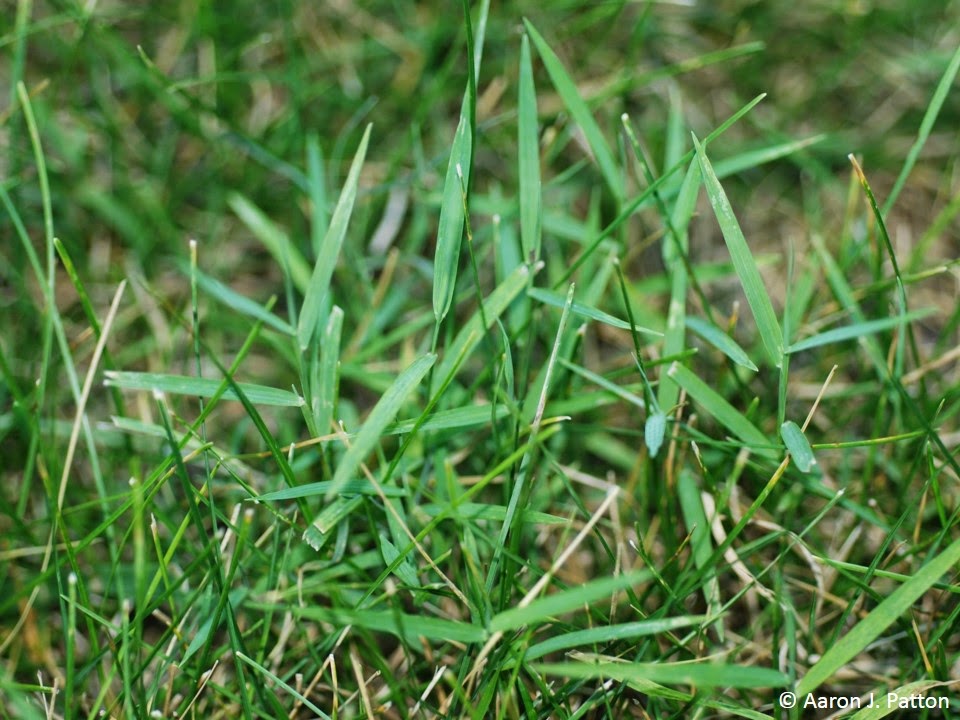
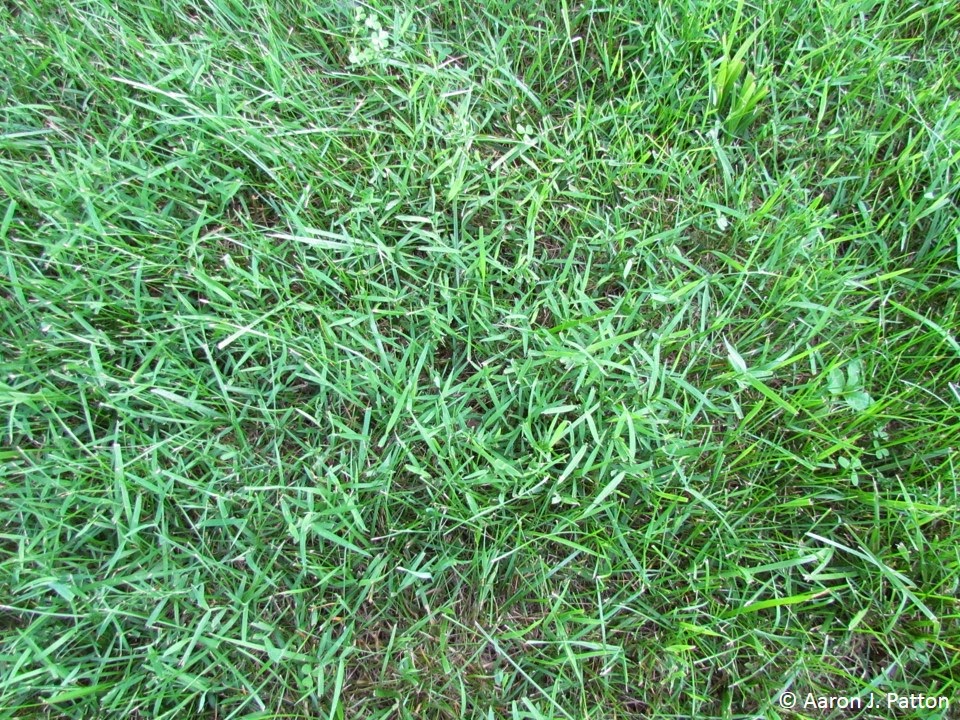
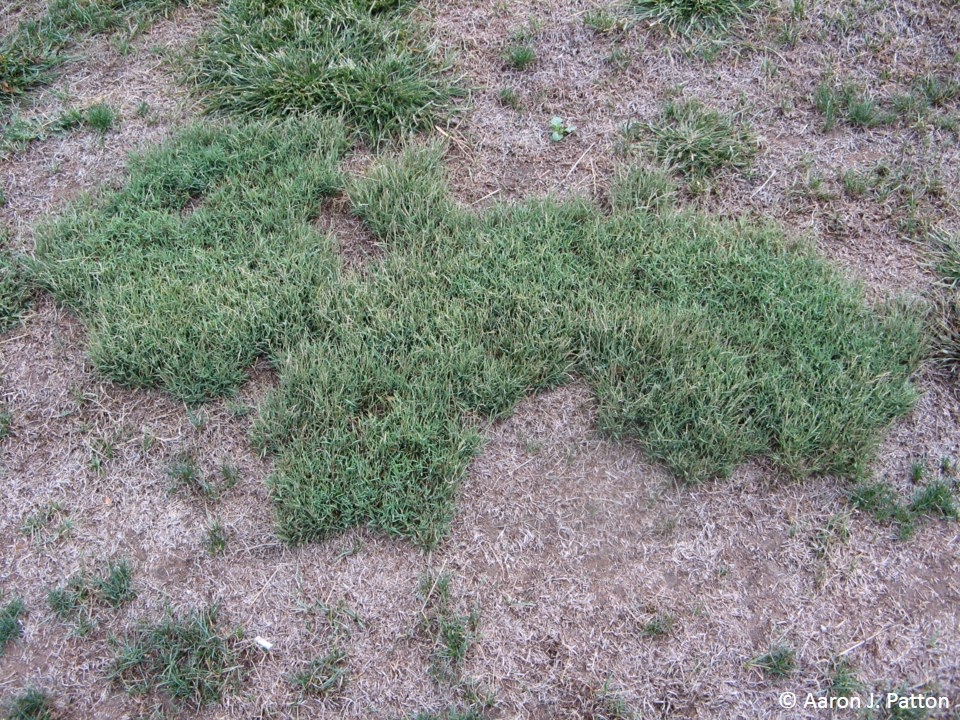
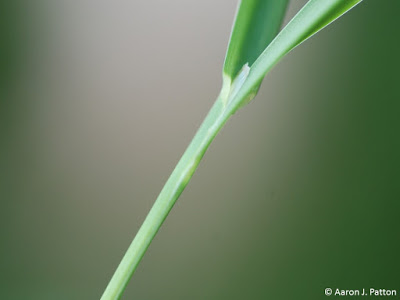
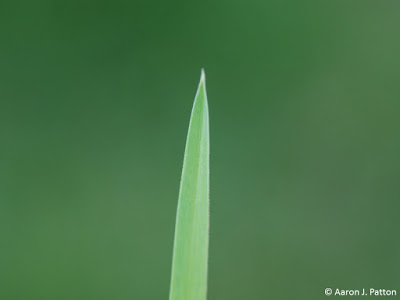
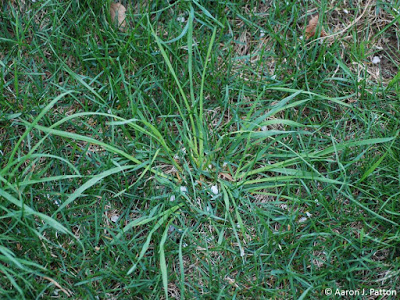
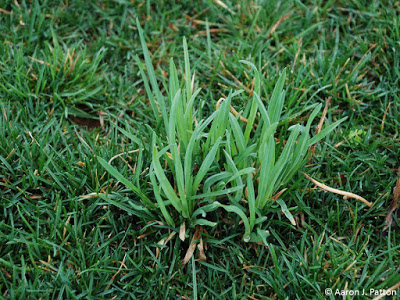
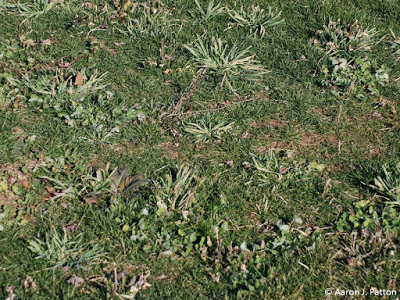
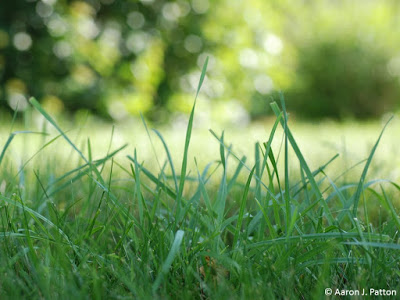
Identification: Field paspalum is a wide-bladed (3-10 mm wide), warm-season perennial turfgrass that becomes easily visible in mid-summer. It can have either dark green or yellow green foliage. It is found in cool-season and warm-season turf. It has a short rhizomes near the soil surface but spreads primarily by seed. Although these species have short rhizomes, they effectively are a bunch-type plant and form scattered clumps of grass in the landscape.

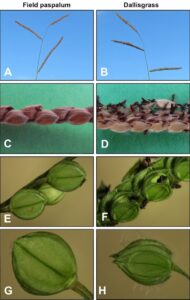
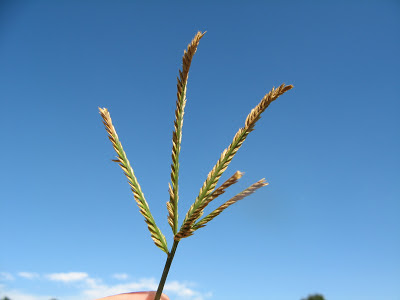
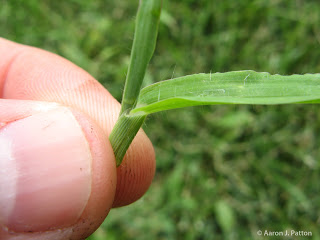
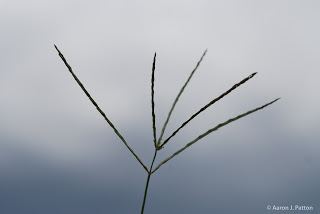
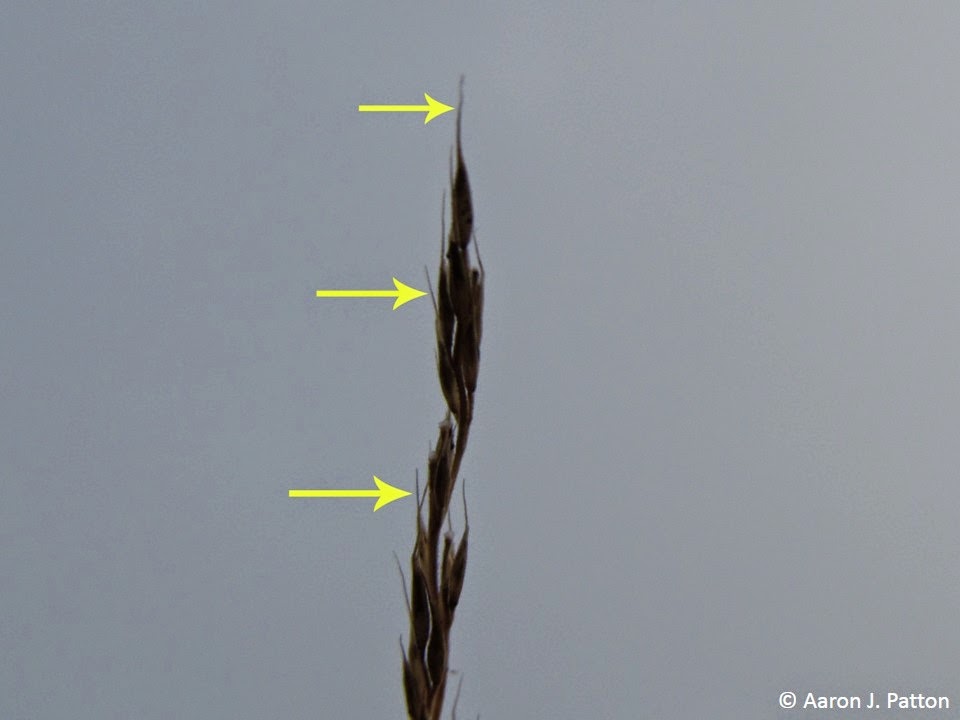
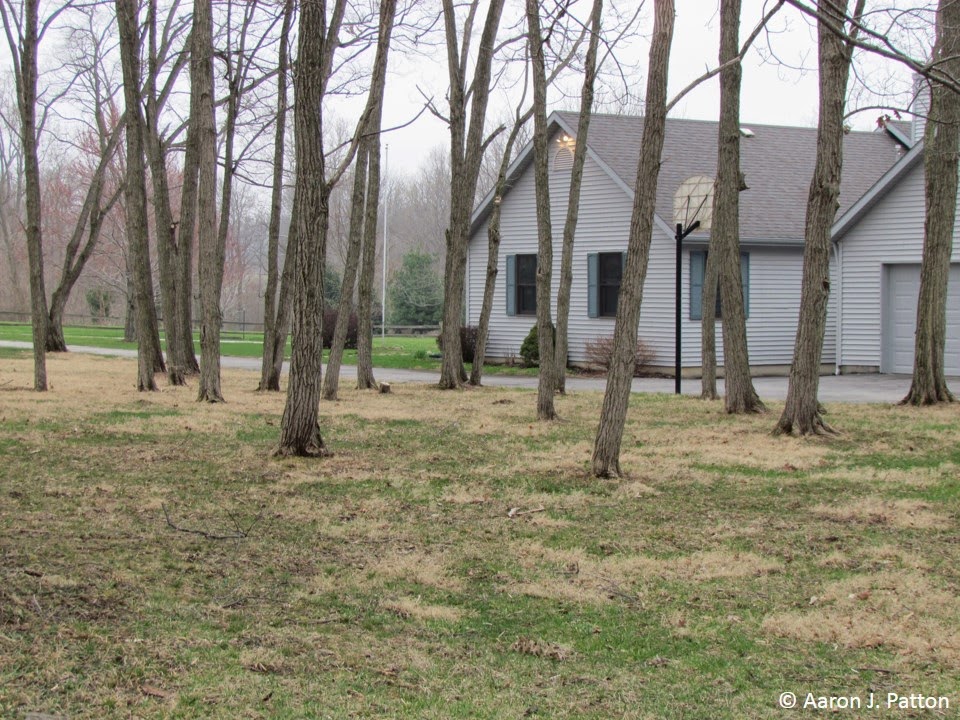
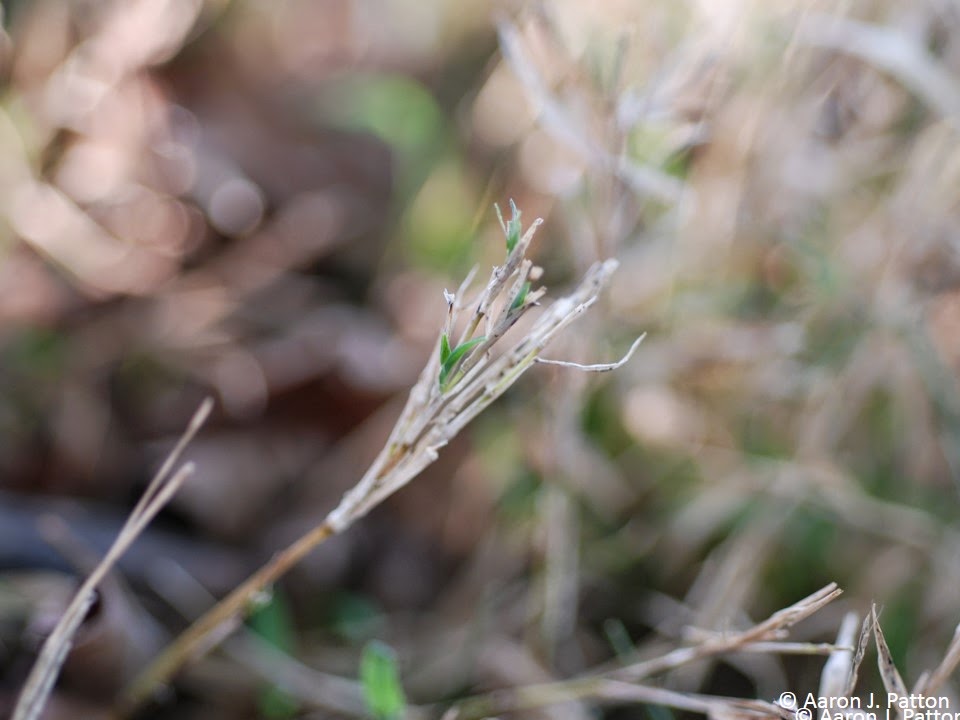
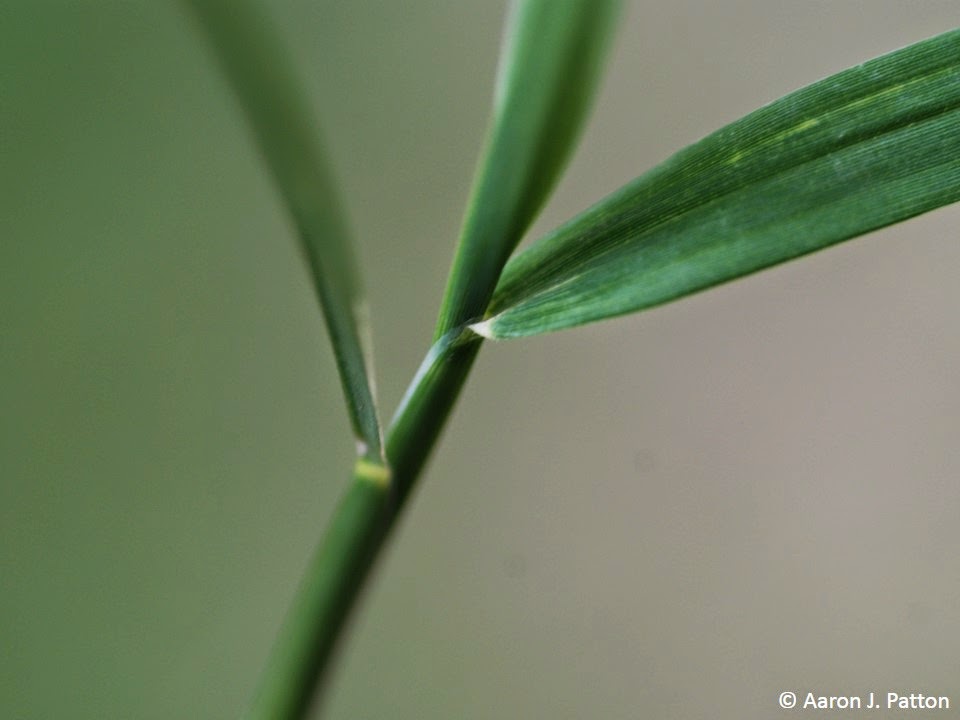
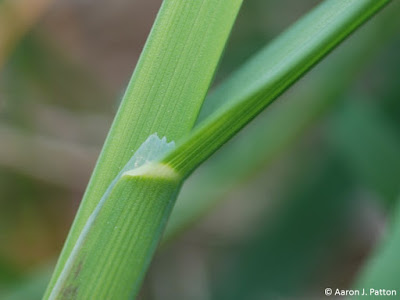
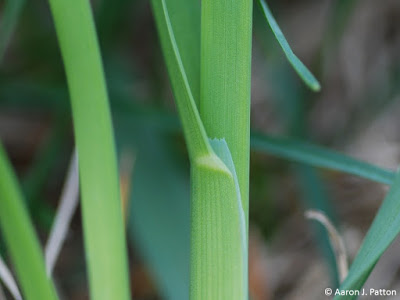
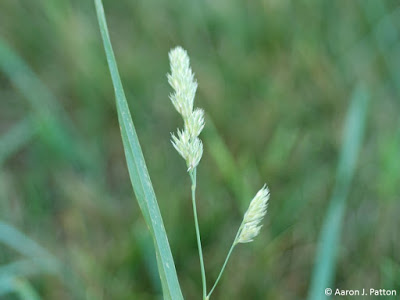
Field paspalum and dallisgrass can be distinguished from one another by a few characteristics although they are more similar than different. The range of adaptation is different with field paspalum distributed into farther north than dallisgrass. Field paspalum can be found in Kansas, Missouri, Illinois, Indiana, Ohio, Pennsylvania, and Maryland whereas dallisgrass is less commonly distributed in those areas (Fig. 1). Leaf sheath, leaf blades, and rhizomes of the two species are similar (Fig. 2). Both species have terminal panicles with racemosely arranged branches of similar number and length (Fig. 3). Dallisgrass can be distinguished from field paspalum by the spikelets in pairs appearing to be in four rows on dallisgrass compared to two in field paspalum (Fig. 3). Additionally, dallisgrass has long, silky hairs on the spikelets while field paspalum is glabrous (Fig. 3). Dallisgrass also has a 5- or 7-veined glume while field paspalum has a 3-nerved upper glume with veins at the margins (Fig. 3).
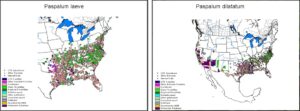
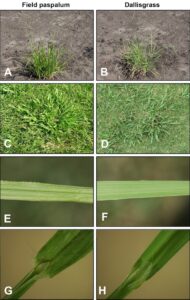
Fig. 1.
Fig. 2.
Fig. 3.

Cultural control: Reduce soil compaction and promote practices that increase turf density. The most effective way to control these weeds is to dig up the clumps in the turf with a shovel.

Biological control: None known.

Chemical control: Another option is spot treatment with the nonselective herbicide glyphosate (Roundup and others). At least two glyphosate applications are needed. Apply when the plant first greens up in the spring (late April or May), and again when regrowth appears. Multiple follow-up applications may be required. You can also spray dallisgrass and field paspalum in October before they turn off color and enter winter dormancy. Use a 1-2% spray solution (1.3-2.6 fl oz of glyphosate/gal of water).
Obviously, glyphosate is going to kill some of the desirable grass and could leave big, brown spots in the turf so spot apply the herbicide only to the weed and not to the turf, if possible. You can even use a paintbrush, sponge, or foam applicator to apply the glyphosate only to the weed to help reduce the risk of injuring the desirable turf.
In Kentucky bluegrass, fine fescue, tall fescue, or perennial ryegrass lawns, three applications of mesotrione (Tenacity) at 5 oz/A spaced with a two-week application interval should reduce dallisgrass and field paspalum by 75 percent or more. Start making these applications in June. In tall fescue, two applications of fluazifop (Fusilade II) at 5-6 oz/A at three- to four-week intervals starting in late-April and September will suppress field paspalum and dallisgrass. Adding triclopyr (Turflon Ester Ultra or Triclopyr 4) at 1 qt/A to fluazifop will improve turfgrass safety. Do not use on seedling tall fescue less than four weeks old.
Tribute TOTAL (thiencarbazone + foramsulfuron + halosulfuron) at 3.2 oz/A also is effective at controlling dallisgrass in bermudagrass and zoysiagrass turf when making multiple applications in later summer and early fall before winter dormancy, and a subsequent follow-up application in spring.
In zoysiagrass, two applications of fluazifop (Fusilade II) at 3-4 oz/A at three- to four-week intervals during the summer will suppress field paspalum and dallisgrass. Adding triclopyr (Turflon Ester Ultra or Triclopyr 4) at 1 qt/A to fluazifop will improve turfgrass safety.
Fountain Grass

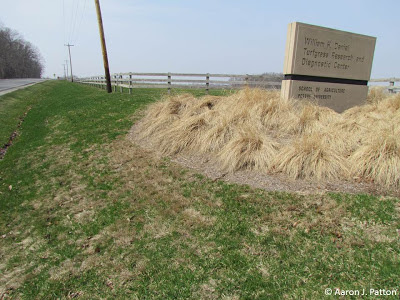
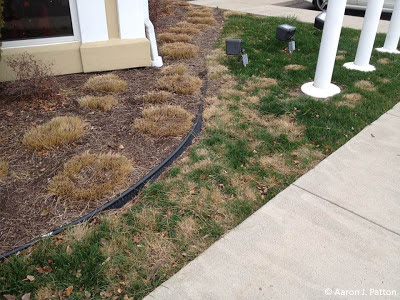
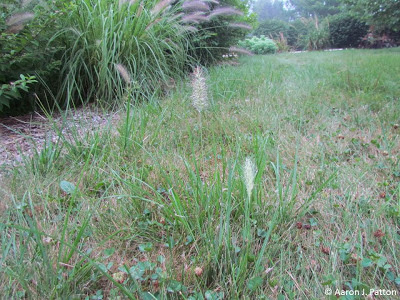
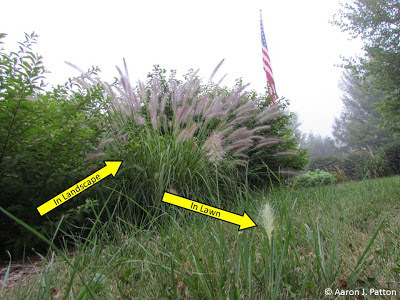
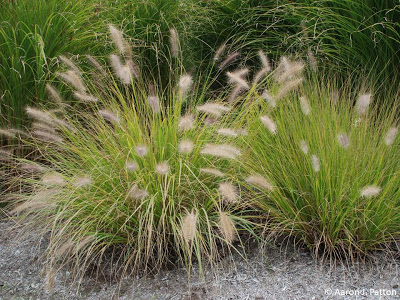
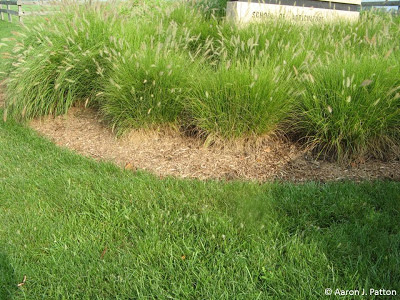
Biology: Fountain grass ((Pennisetum spp.) is an ornamental grass common to the landscapes of homes, commercial sites, and golf courses. However, following years of planting in these landscapes, we now realize that this species produces many viable seeds that drop onto the adjacent turf and then become tough-to-control perennial grassy weeds. Although most of the ornamental grasses cannot withstand short mowing, fountain grass does.

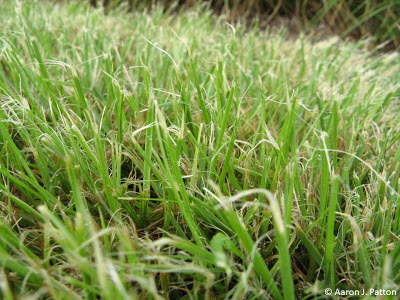
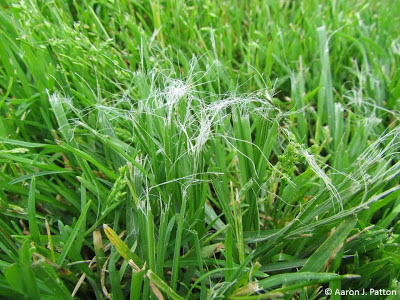
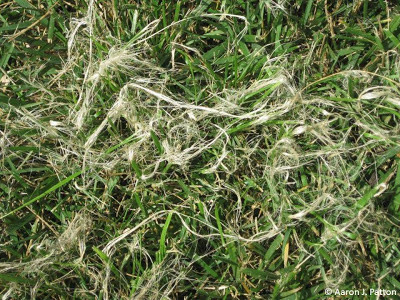
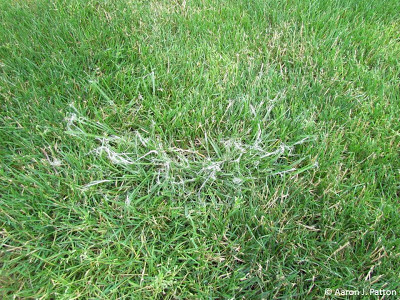
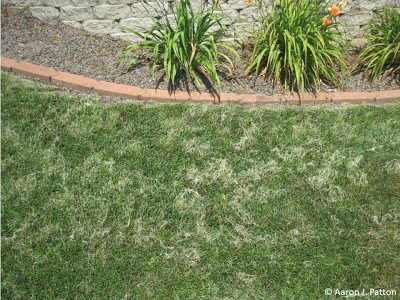
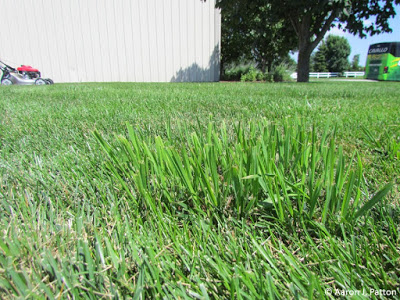
Identification: Typically, this grass can be identified by its visible shredded leaf blades in mid- and late summer, which leaves a whitish, wispy looking clump when mown.

Shredded leaf tips. Fountain grass is difficult to mow in summer even with a sharp mower blade.
Shredded leaf tips visible in this lawn.
The brown clumps in the lawn are fountain grass plants from the landscape bed.

Even when mown, fountain grass will produce a seedhead occasionally in summer.


Fountain seedhead that formed in an unmown lawn.

Cultural control: Don’t plant fountain grass in landscape beds unless you want it in the adjacent turf.

Biological control: None known.

Chemical control: This weed can be controlled by applying herbicides that contain quinclorac (Drive, Drive XLR8, Eject 75DF, Momentum Q, Onetime, Q4 Plus, Quincept, Quinclorac 75DF, QuinPro, Solitare, SquareOne). Two applications are needed for control. Glyphosate (Roundup and others) will also work as a nonselective spot-treatment option.

Goosegrass

Biology: Goosegrass (Eleusine indica) is an late-germinating summer annual grass that is often found in compacted areas or areas disturbed in the summer. These areas include compacted areas next to sidewalks or cart paths, golf course tees, and areas were soil is disturbed during the summer. Germination typically starts about two to three weeks after crabgrass germinates in early May in most Midwestern States although goosegrass is less common in northern areas of the Midwest like Michigan, Minnesota and Wisconsin.

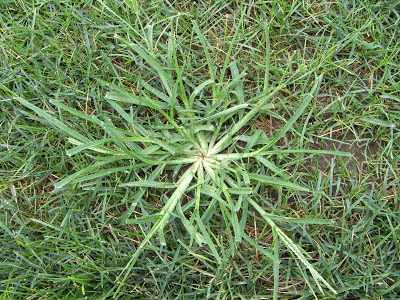
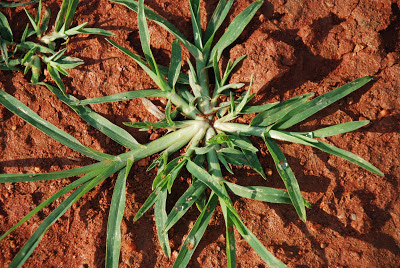
Identification: Goosegrass is a prostrate growing summer annual grass which forms a mat-like rosette. Its flattened leaf sheaths are typically a white to silver color, especially at the base of the leaf sheath. Because of this coloration and its similarity to crabgrass some call it silver crabgrass.

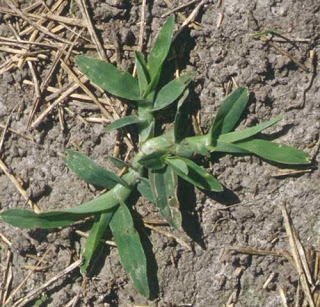
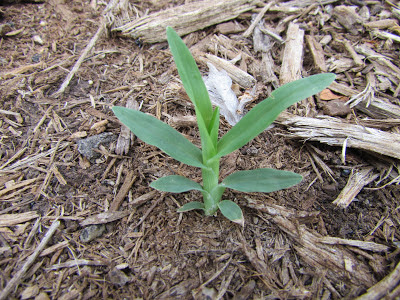
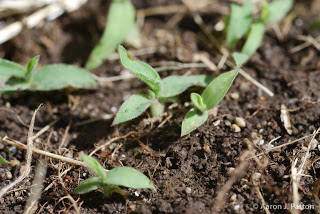
Seedlings develop several leaves (sometimes six or more) before tillering.

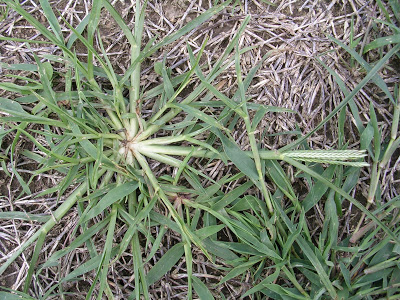
As the plants mature they tiller and become very tough and more prostrate in growth (especially in mown turf). Goosegrass produces seedheads from July to September in Indiana. The seedheads are similar in appearance to crabgrass but the seeds are slightly larger than crabgrass seeds and the spikes on the seedhead are often described as being “zipper-like” in appearance.

Furthermore, goosegrass can be distinguished from crabgrass by its leaf arrangement. Goosegrass leaves are folded in the bud (emerge from the sheath as folded) whereas crabgrass leaves are rolled in the bud (emerge from the leaf as rolled).

Cultural control: Reduce soil compaction through aerification and improve turf density.
Biological control: None known.
Chemical control: Goosegrass is best controlled with preemergence herbicides. Herbicides that contain oxadiazon (Goosegrass/Crabgrass Control, Ronstar, Oxadiazon) are the most consistent products for preemergence control of goosegrass. Other preemergence herbicides typically provide less goosegrass control than oxadiazon but can be effective where goosegrass is not too problematic.
Apply oxadiazon at the same preemergence application timing as a normal crabgrass application (the timing varies by location, but it is generally before April 15 in the Midwest). In areas with severe goosegrass pressure, consider a split application approach. Make the initial application at the normal crabgrass preemergence timing at half the rate, and then apply the second (sequential or split) application 60 days after the first.
For postemergence goosegrass control in cool-season turf, use fenoxaprop (Acclaim Extra), mesotrione (Tenacity), fluazifop (Fusilade II), topramezone (Pylex), or MSMA (golf courses and sod farms only). More than one application of these herbicides may be required for postemergence control of tiller goosegrass. Sulfentrazone (Dismiss) is also effective on pre-tillered goosegrass. These herbicides are labeled for specific turfgrass species or are labeled for use in specific areas. Consult the labels and identify your turfgrass species before application.
Postemergence controls in bermudagrass includes foramsulfuron (Revolver) and Tribute TOTAL (thiencarbazone + foramsulfuron + halosulfuron). You can use Fusilade II and Acclaim Extra on zoysiagrass. Fusilade II and Acclaim Extra work best when tank-mixed with 1 qt/A of triclopyr (Turflon Ester Ultra or Triclopyr 4). When controlling goosegrass avoid applications to drought- or heat-stressed turf.


Ground Ivy

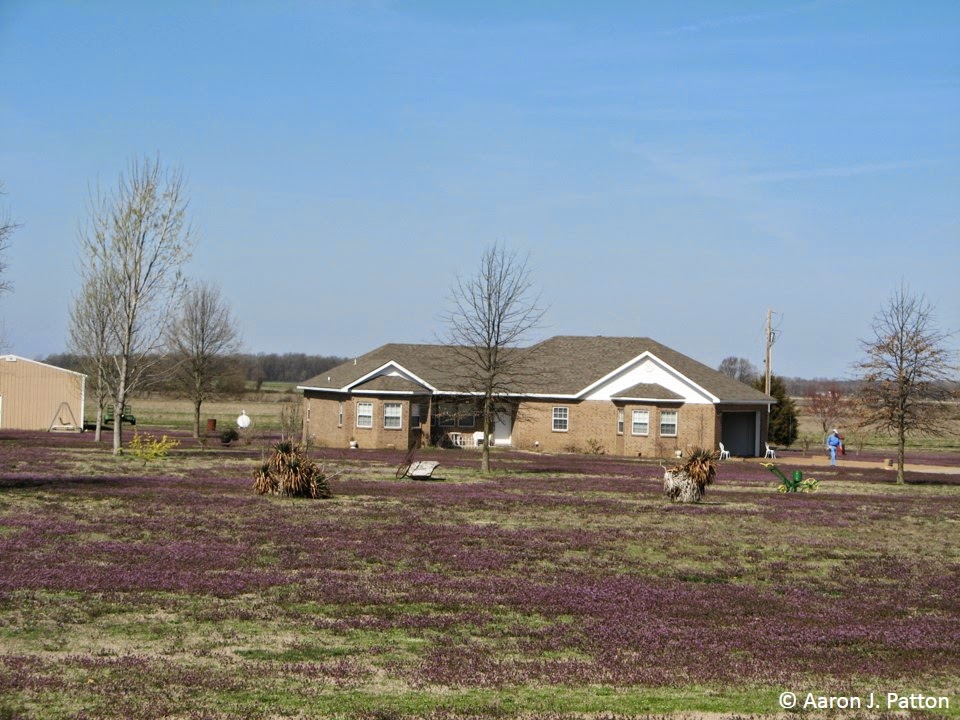
Biology: Ground ivy (Glechoma hederacea), also known as creeping Charlie, is a very difficult to control perennial broadleaf weed. It can often be seen growing in the shade and invading turfgrass and other mowed areas throughout the United States. Ground ivy thrives in moist, rich soils located in shaded areas, but will grow in full sun as well. These traits combined with the ability to produce aggressive rooting stolons, tolerate low mowing heights, and shade/crowd-out surrounding plants, help to make ground ivy one of the most difficult-to-control turf weeds in lawns.

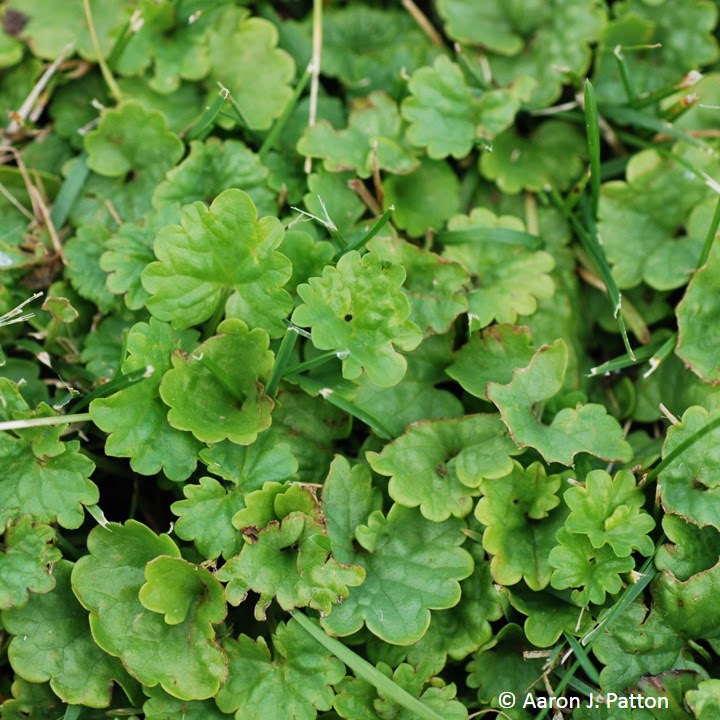
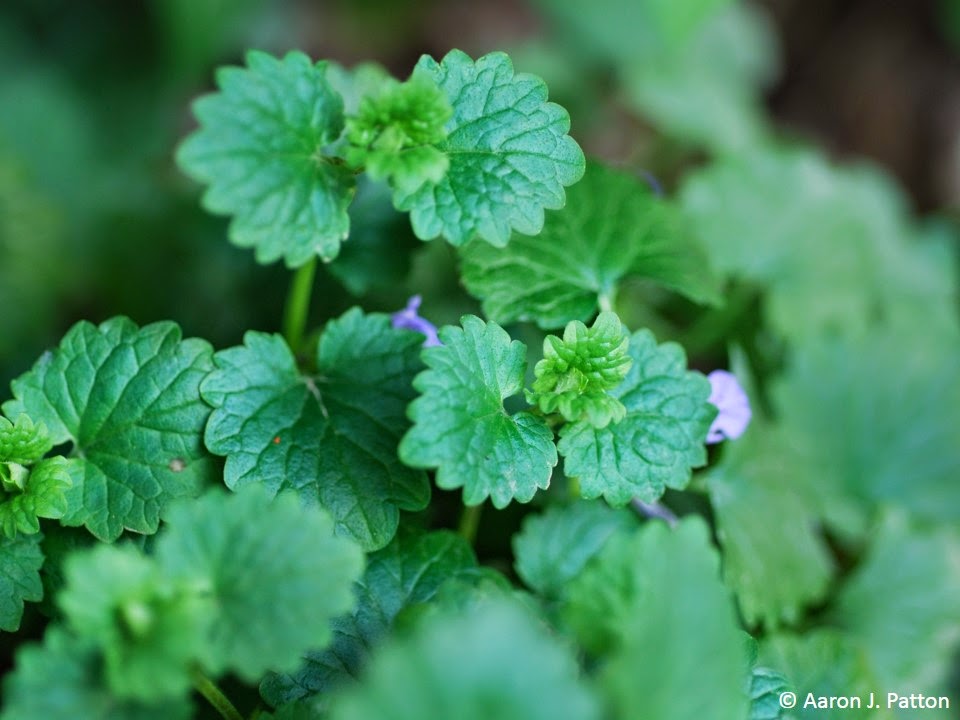
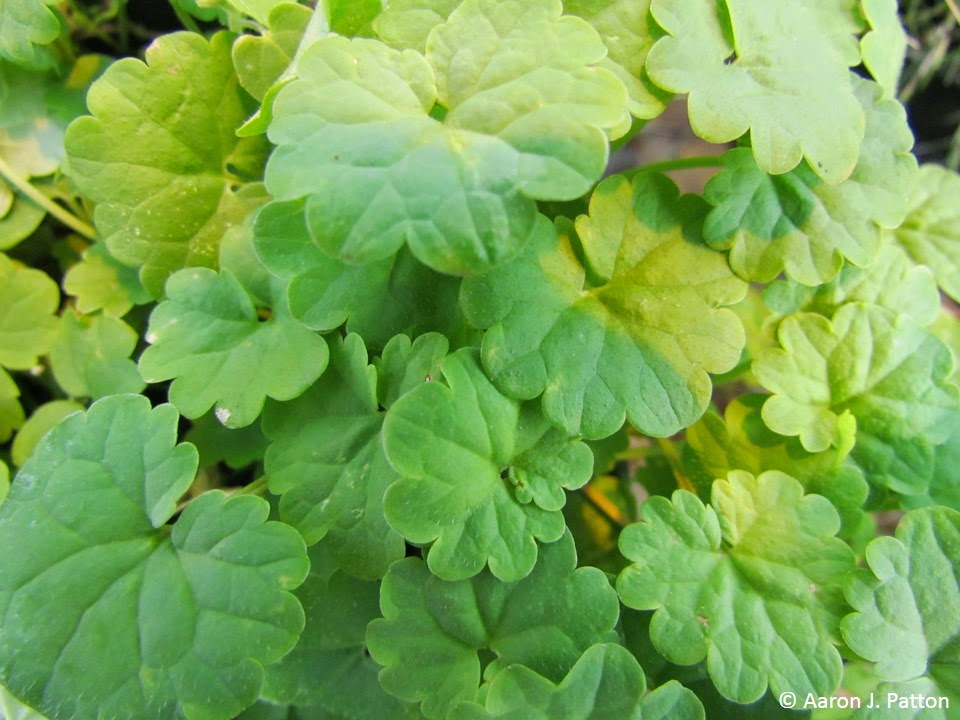
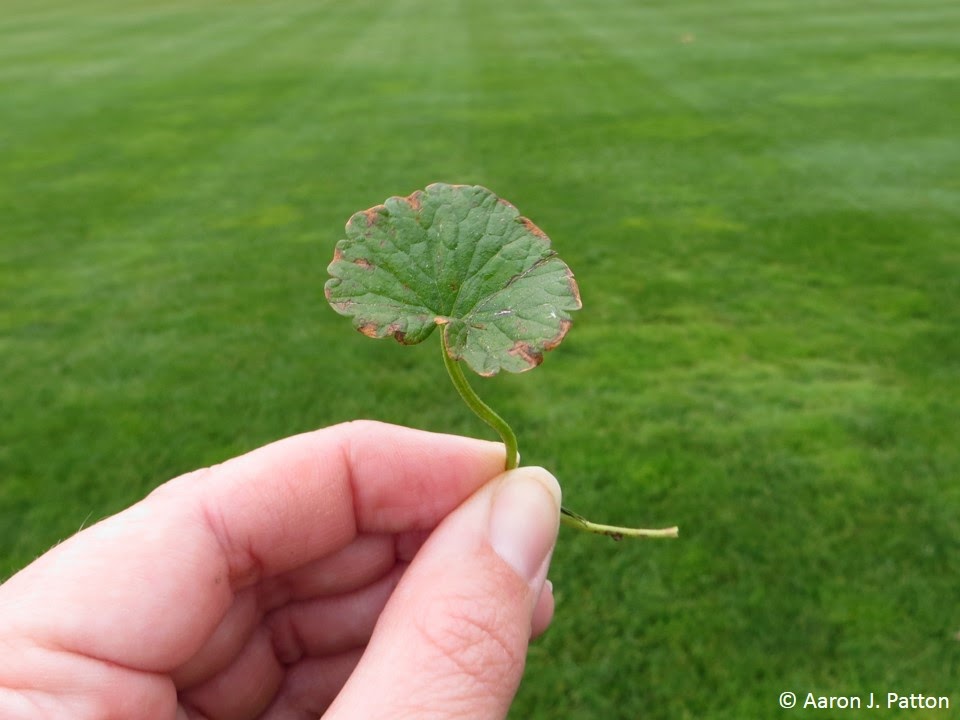
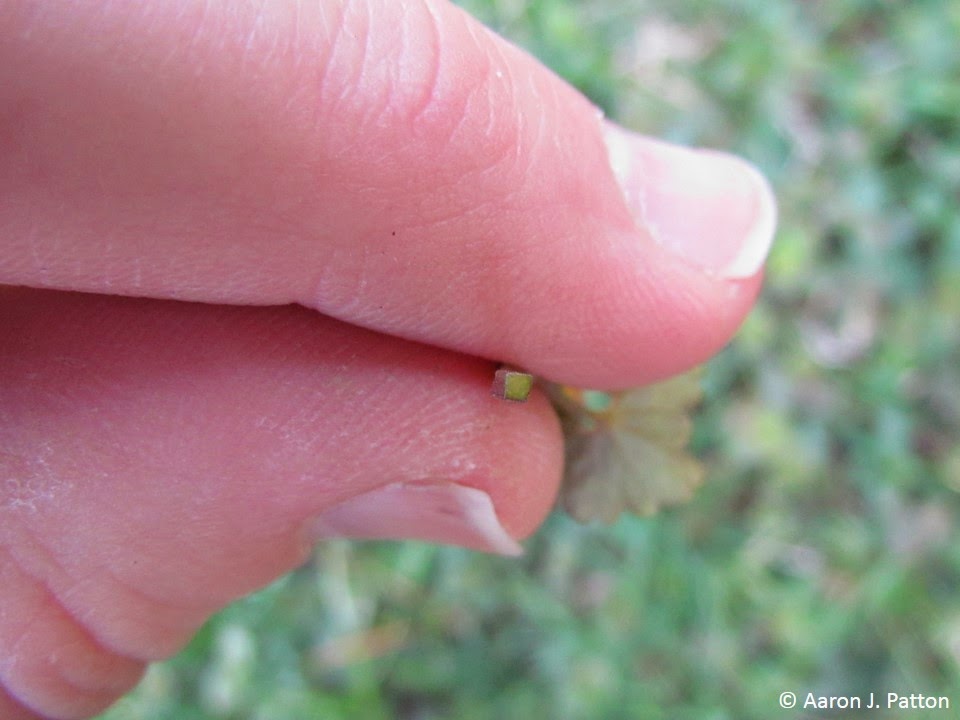
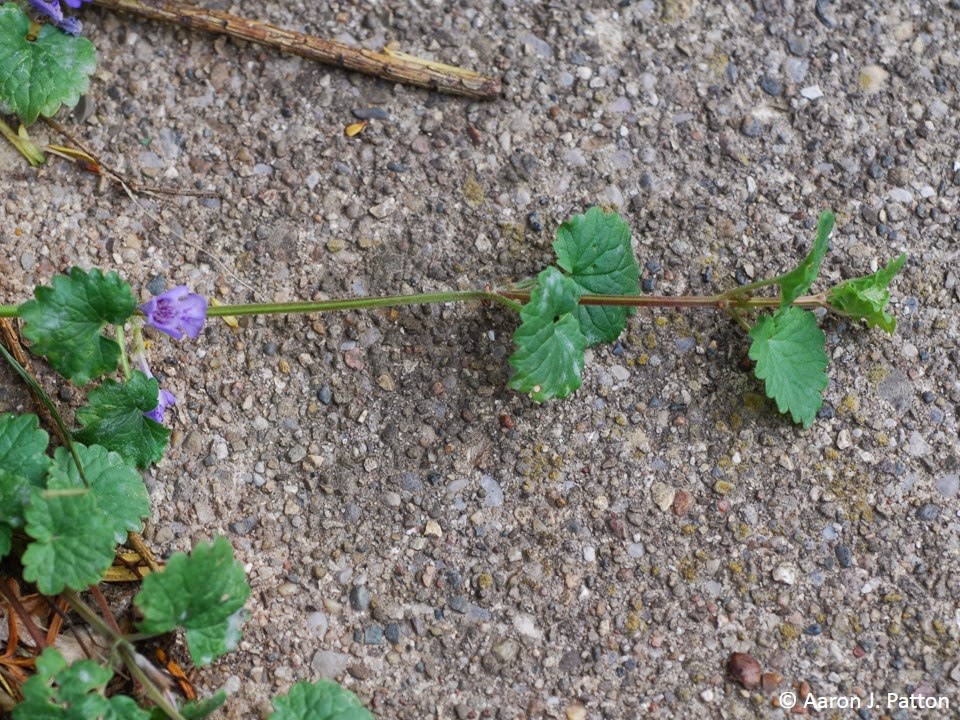
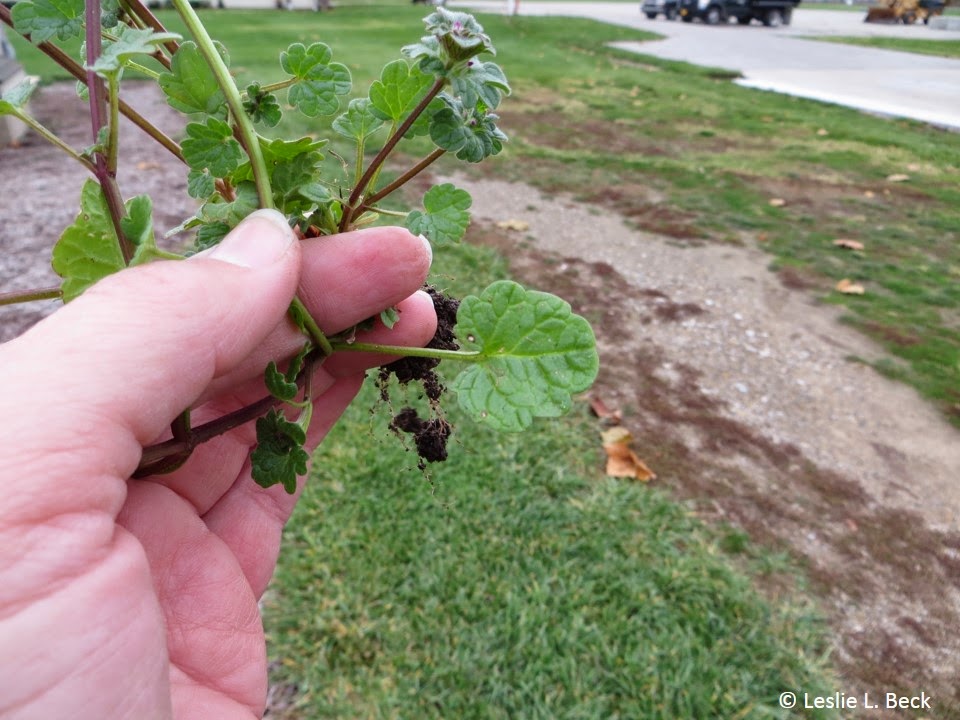
Identification: Ground ivy is a perennial broadleaf weed that invades turf through aggressive stolons that ‘creep’ below the turfgrass canopy. It forms very dense, mat-like patches that effectively crowd-out the surrounding turf. Like other members of the mint family, ground ivy has distinctive square stems with two leaves branching from each origin point (node) and emits a disagreeable odor when crushed, damaged, or mown. Leaves are round to kidney-shaped with prominent veins and broad rounded edges. These leaves are held above the canopy by long petioles (leaf stems) which can effectively shade and weaken the surrounding turf. Spreading stolons root aggressively at the node, further making ground ivy difficult to control. It produces flowers from April to June that are tubular in shape, purplish blue with red speckles, lobed petals, and are arranged in groups of three to seven. Ground ivy can often be mistaken for other broadleaf weeds such as common mallow or henbit. However, common mallow has rounded stems and sharply toothed leaf edges while henbit stems do not ‘creep’ along the ground nor root at the nodes.
Kidney-shaped leaves with deeply lobed edges
Two leaves branch from each node
Dense arrangement of ground ivy leaves
Leaves held atop long petioles (stems)
Square stems, characteristic of the mint family
Spreads via aggressive prostrate stolons
Ground ivy regrowth via aggressive stolons
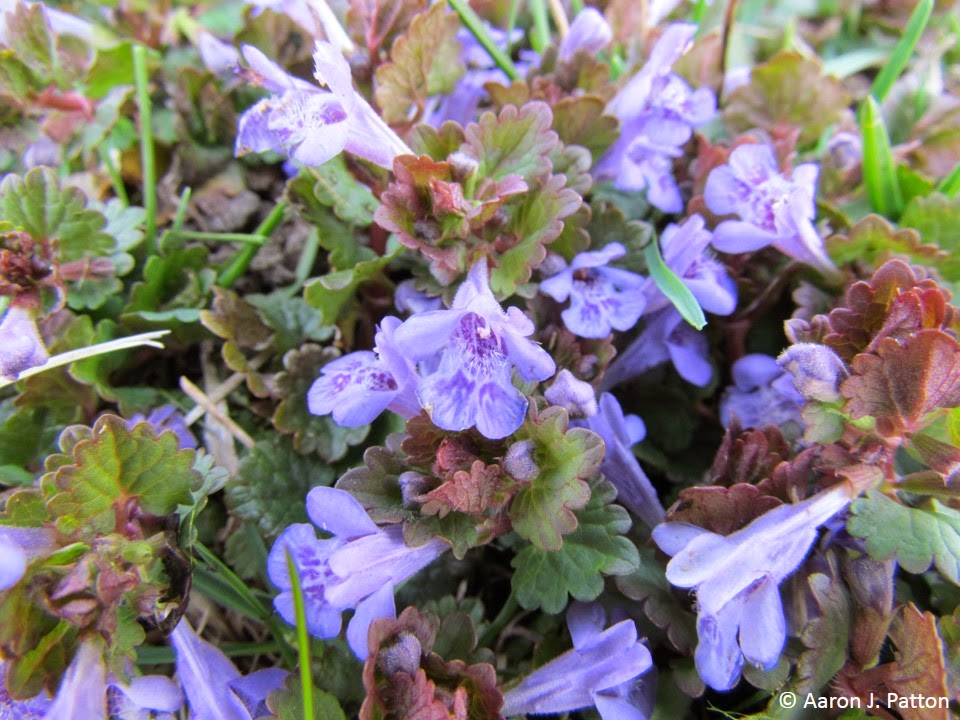
Ground ivy flowers


Cultural control: Because of its aggressive growth and establishment, there are very few cultural practices that have been observed to effectively control ground ivy. Management practices such as improving surface drainage, watering deeply and infrequently, and cultivating (aeration) compacted soils may hinder the development of ground ivy in favor of a more dense, aggressive turf. Nitrogen fertilization will also provide some reduction of ground ivy cover in turf.

Biological control: None known for specific use in ground ivy. Our preliminary research suggests that iron HEDTA (FeHEDTA) may be used to manage ground ivy with multiple applications.

Chemical control: Because of its aggressive nature and the survivability of stolons, there are no preemergence herbicide options for the control of ground ivy in turf although Gallery (isoxaben) can help reduce the ability of stolons from rooting which will slow the spread of this weed. As a result, management must focus on postemergence herbicides. Repeat applications of two- or three-way mixtures of 2,4-D, dicamba, MCPP, of MCPA may offer fair levels of control. Turflon Ester (triclopyr) typically provides better control. Additionally, products that contain triclopyr or fluroxypyr as one of the ingredients in a two- or a three-combination herbicide will work well. In warm-season turf, Manor (metsulfuron) can control ground ivy when applied in combination with a non-ionic surfactant (0.25%). Most of these herbicides require supplemental applications for adequate control.

Henbit

Biology: Henbit (Lamium amplexicaule) is a common winter annual broadleaf weed found throughout the United States. It can often be mistaken for another closely related winter annual broadleaf, purple deadnettle. Both can be observed by their showy pink to purple flowers which are primarily produced in April, but can appear from March to November in Indiana.

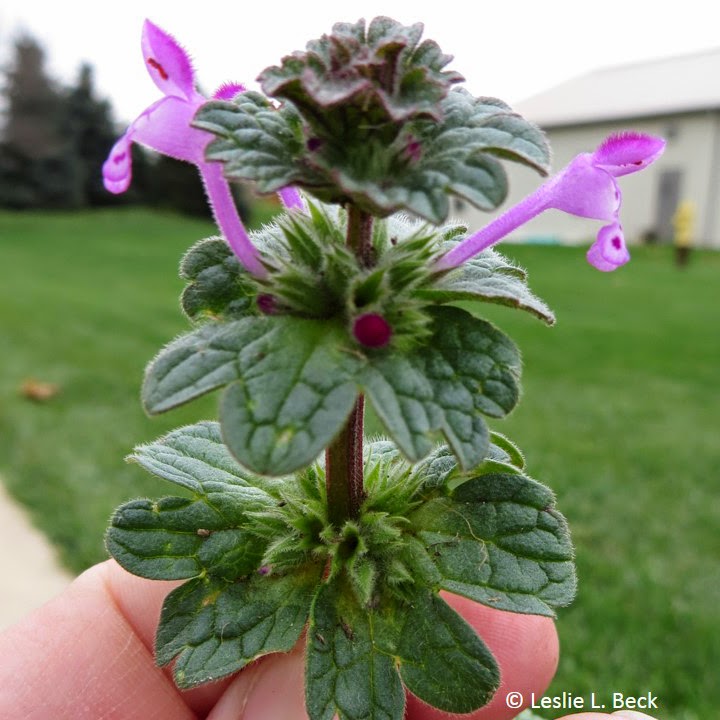
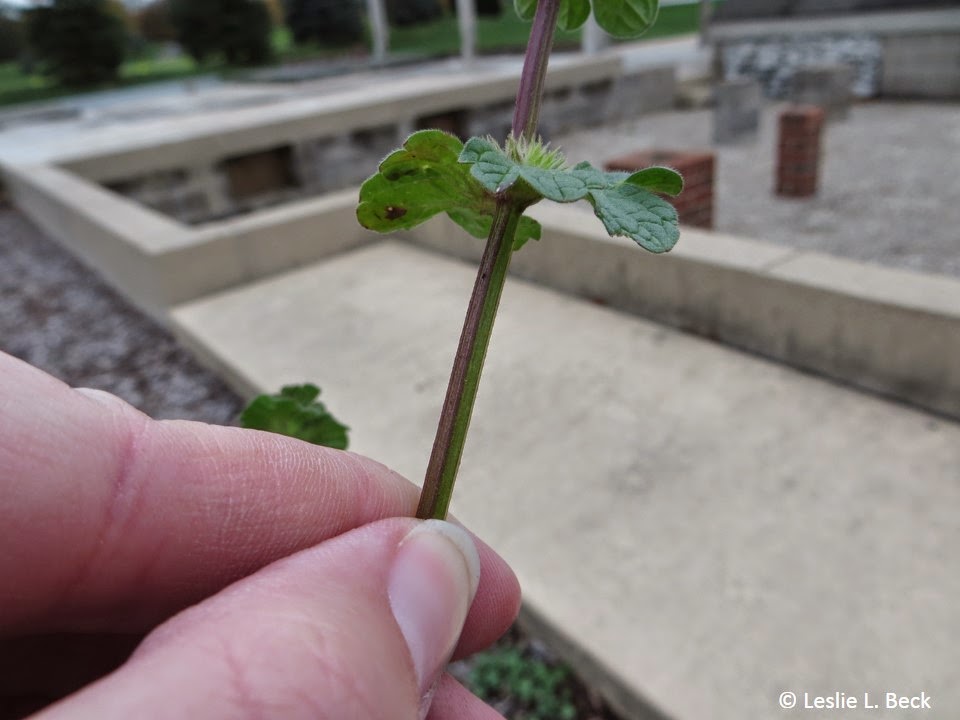
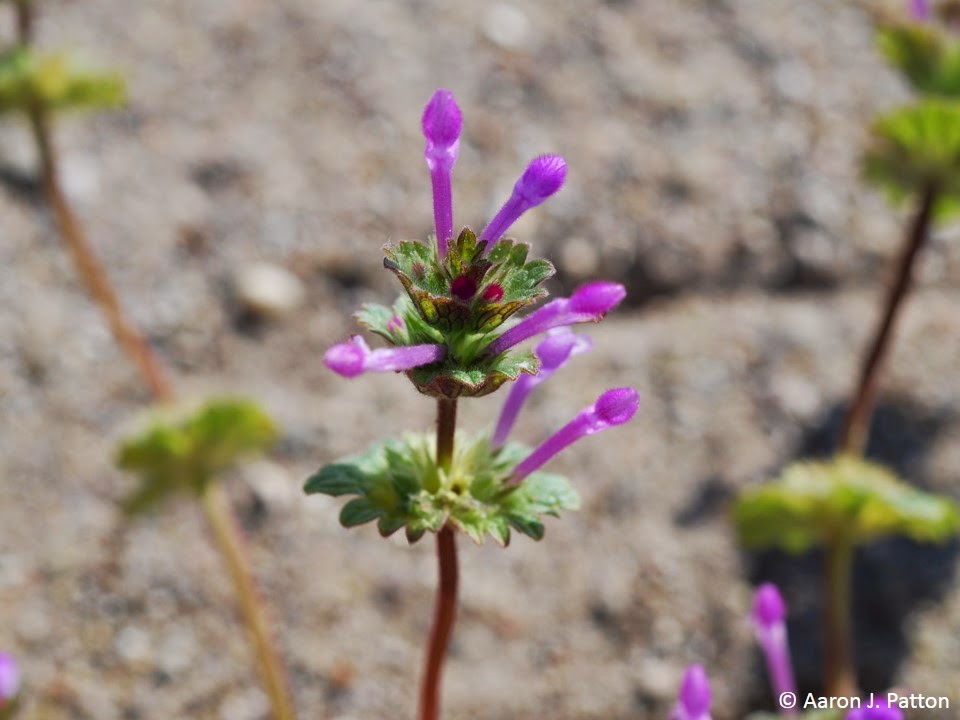
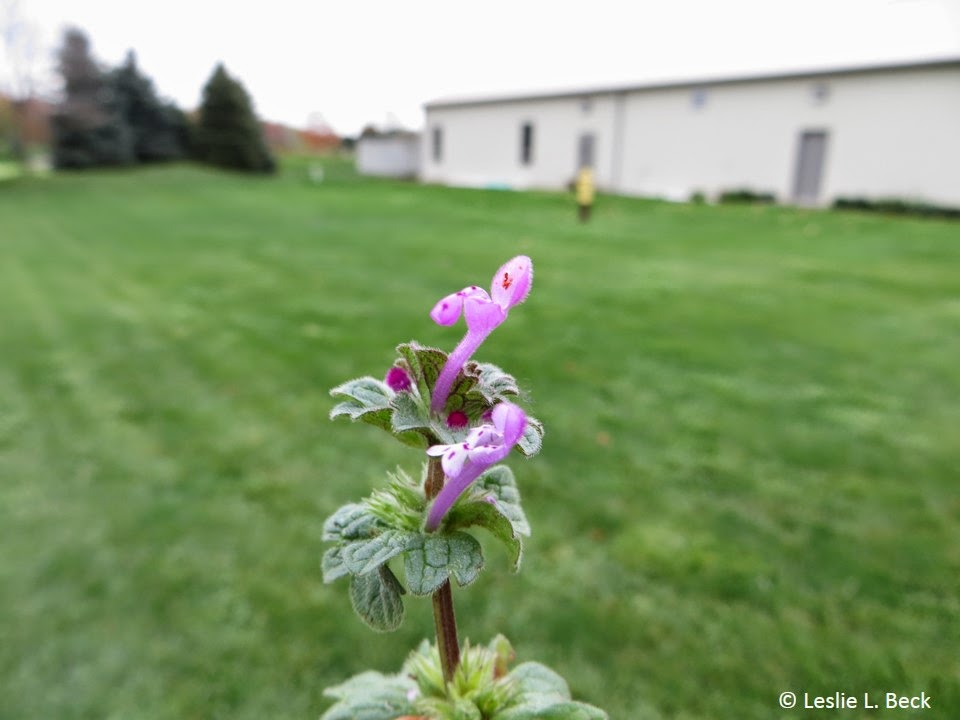
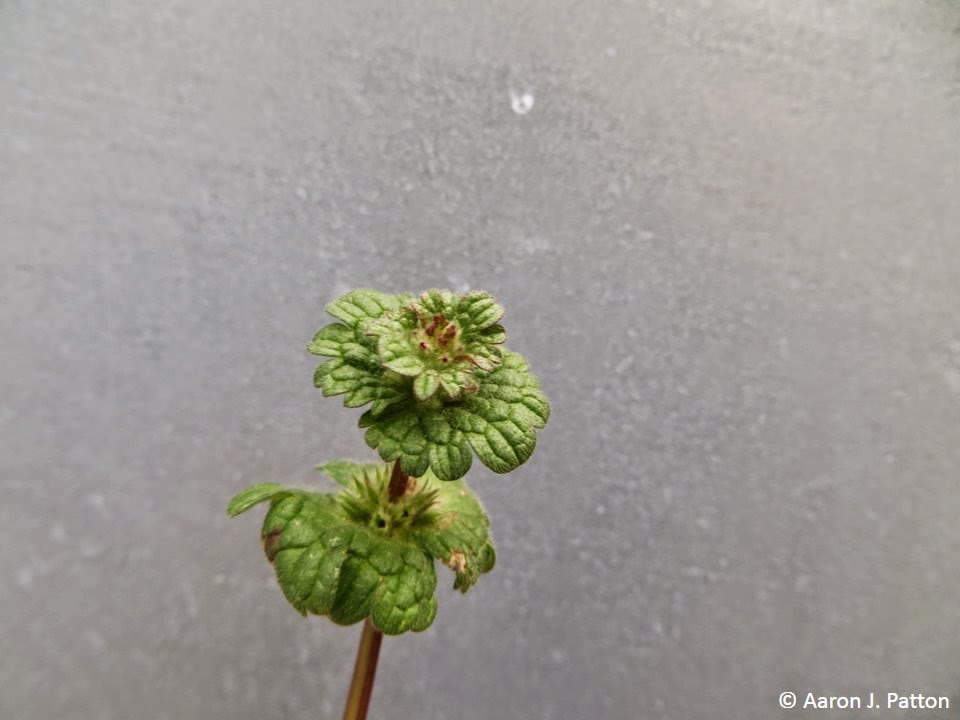
Identification: Henbit is a winter annual, meaning that it germinates in the fall, survives the winter as a vegetative plant which eventually flowers, develops seed, and dies as temperatures increase in late spring to early summer. As a member of the mint family, henbit has a characteristic four-sided (square) stem which can be sparsely hairy and greenish to purplish in color. All henbit leaves are hairy. Upper leaves are deeply lobed and encircle the main stem at the base (no leaf stem). In contrast, purple deadnettle leaves are more triangular, less deeply lobed, and are more reddish in color than henbit. Henbit flowers are small, pinkish-purple with darker coloring on the lower petal, arranged in whorls, and are tubular in shape.

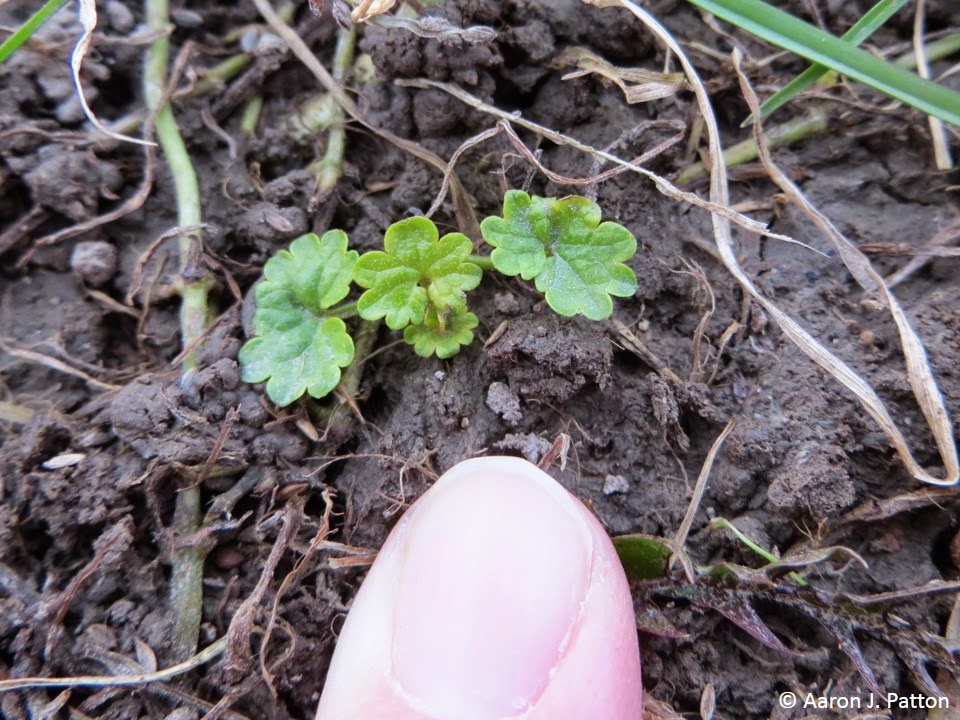
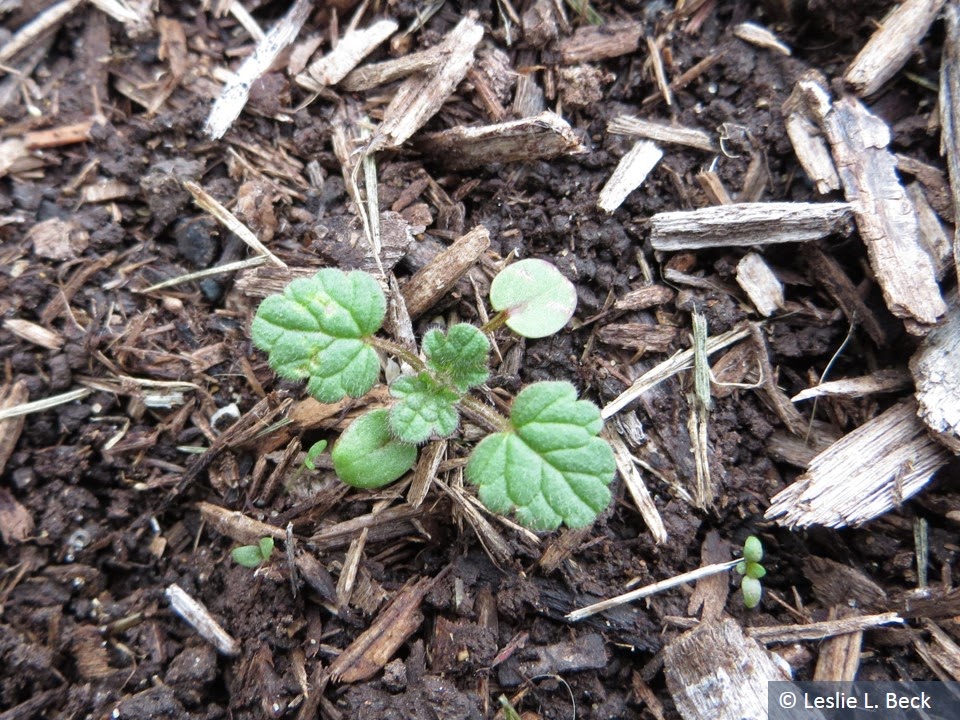
Early growth stage. Leaves are lobed and round-shaped.

Square-shaped stem
Tubular-shaped flowers
Two-lipped opening at the top of mature flowers
Upper leaves have no leaf stems (petioles)
Leaves toward the base of the plant have long stems (petioles)
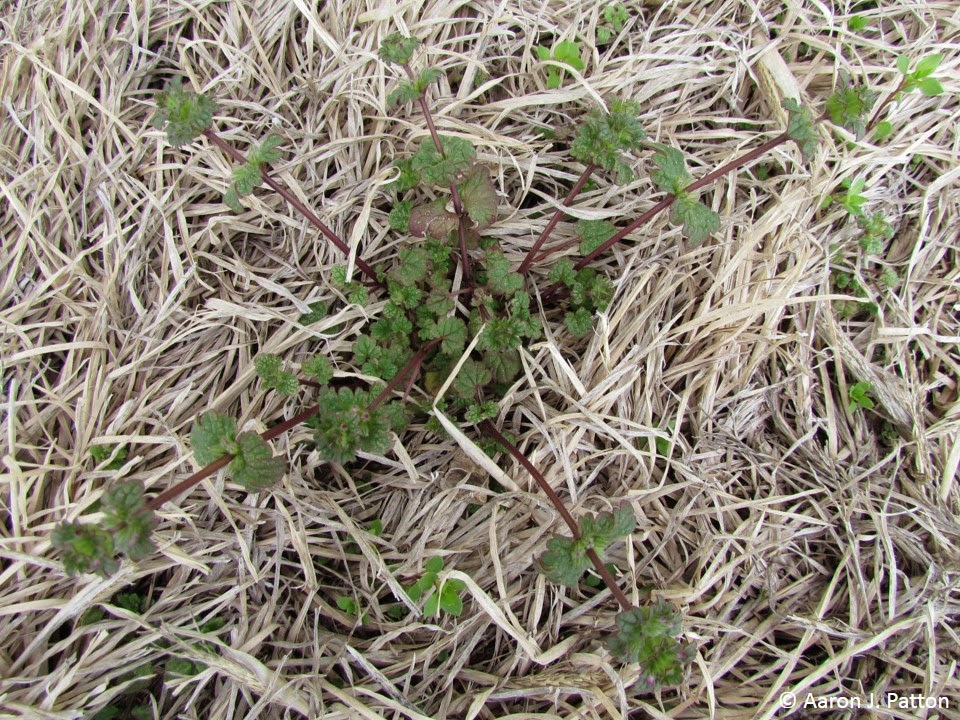
Prostrate growth habit in dormant turf
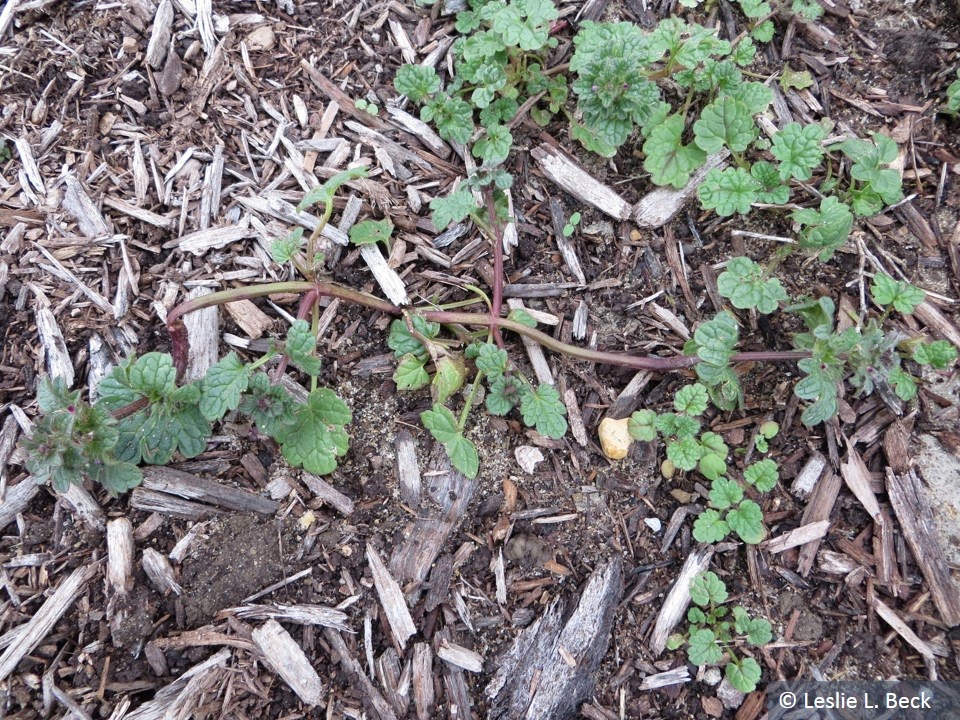
Prostrate growth habit in a landscape
Bermudagrass lawn heavily populated with henbit


Cultural control: Cultural practices that promote a dense, vigorous turf are the best way to reduce the encroachment of annual broadleaf weeds. For example, proper mowing (increased mowing heights), proper fertilization to improve turf density, irrigation to prevent drought stress, and aerification of compacted soils to improve root health are all cultural practices that can be used to manage henbit in turf. However, in situations where you only have a few plants, you can usually just pull henbit by hand.

Biological control: There are some organic postemergence herbicides available to control henbit. For example, pelargonic acid (Scythe) and acetic acid (5% or greater solutions) may be used to manage weeds. Other products such as Eugenol, which contain medium-length fatty acids and clove oil, have shown also some promise as an effective weed control tool. However, these organic herbicides do not differentiate between the target weed and the desired turf (non-selective) and should only be applied as spot treatments in direct contact with the weed only. As a result, most of these organic herbicides have limited use in turf and are better suited for weed control in parking lots, along fence rows, and in other bare-ground areas.

Many new organic products contain iron HEDTA (FeHEDTA) as the active ingredient. Multiple applications of these products are required for adequate weed control and turf injury is generally decreased (can actually make the turf darker); however, their ability to control weeds is not well-documented.

Chemical control: Henbit can be controlled by using both preemergence and postemergence herbicides. However, preemergence control is mostly utilized in bermudagrass and zoysiagrass lawns so chemical control discussions will focus predominantly on postemergence herbicides. Most postemergence herbicides that contain 2,4-D, dicamba, floroxypyr, triclopyr, and others will control henbit. The ideal time to make herbicide applications is when the plant is small in autumn. As the plant gets bigger, herbicides will become less effective at controlling henbit. Additionally, winter annuals will naturally die in the summer; therefore, late spring herbicide applications are generally not needed. When henbit leaves start to turn yellow in color, they are beginning to die naturally from heat stress and herbicide applications are no longer necessary.

Large Crabgrass

Biology: Large crabgrass ( Digitaria sanguinalis ), smooth crabgrass (Digitaria ischaemum), and to a lesser extent southern crabgrass (Digitaria ciliaris) are all species found in the Midwest that are collectively referred to as crabgrass. Large crabgrass is probably the most common of these in Indiana lawns. Combined, these crabgrass species are often considered to be the most problematic weed in lawns. Large crabgrass is summer annual grass that typically germinates in April in the Midwest (late March in southern areas and late April in northern areas). A germination tracker at www.gddtracker.net can be used to track the germination of crabgrass.

Identification: Large crabgrass is one of the first summer annual grasses to germinate in Indiana. Look for it first in bare soil areas like a garden or very thin turf areas and in areas with south facing slopes. First germination has occurred between March 22 and April 20 in the Lafayette area the past several years. Initial seedlings have an almost oval shaped, cotyledon.

After the first leaf emerges, plants may remain small for several weeks if the temperatures are cool. Additionally leaves will develop and eventual plants will begin tillering in June. If you look close at large crabgrass (also sometimes called hairy crabgrass) you will see hairs on the leaves (blade and sheath) and a membranous ligule. If the leaf sheath and upper leaf blade are mostly smooth (hairless) then you likely have smooth crabgrass.

As the plants mature they tiller and form small clumps. Large crabgrass also can produce stolons and root although it doesn’t spread far and remains mostly bunch type in growth habit.

Cultural control: Proper mowing (higher mowing heights), proper fertilization (some rather than none to improve turf density), irrigation to prevent summer dormancy during drought, and aerification of compacted areas to improve turf health are all cultural practices that can be used to reduce crabgrass.

Biological control: Some organic herbicides are available. The predominant organic herbicide in turfgrass systems is corn gluten meal for preemergence crabgrass control. This product has shown to be effective in northern states in lawns, although tests in Indiana and states south of Indiana show it has limited efficacy on crabgrass and that encouraging a dense turf through proper mowing, irrigation, and fertilization is equally effective.

Chemical control: Crabgrass can be controlled using preemergence or postemergence products.

Dithiopyr (Dimension), pendimethalin (Pendulum), and prodiamine (Barricade) are common ingredients in preemergence crabgrass products. These herbicides inhibit cell division and prevent crabgrass seeds from properly emerging. Since these herbicides work on germinating seeds, you must apply them prior to germination — with the exception of dithiopyr, which controls crabgrass after germination until it reaches one tiller.

Another approach to controlling crabgrass is to use postemergence herbicides after crabgrass has already emerged. Dithiopyr, quinclorac (Drive and others), MSMA (sod and golf), mesotrione (Tenacity), Fenoxaprop (Acclaim Extra) and other herbicides containing these ingredients can be used for postemergence crabgrass control. Each of these ingredients offers a slightly different spectrum of activity and works on specific sizes of crabgrass. Pick one based on the size of crabgrass you’re treating and the other weeds you have present in the area.

Mouse-ear Chickweed

Biology: Mouse-ear chickweed (Cerastium vulgatum) is a broadleaf weed that normally acts as a perennial; however, it has the ability to act as a winter annual depending climate conditions. Mouse-ear chickweed germinates by seed from late summer to fall or early spring. As long as cool climate conditions and moist soil persist, germination can also continue into the summer. Similar to common chickweed, its prostrate growth habit and capabilities to withstand low mowing practices make mouse-ear chickweed a prominent weed in turfgrass and other mowed areas throughout the United States.

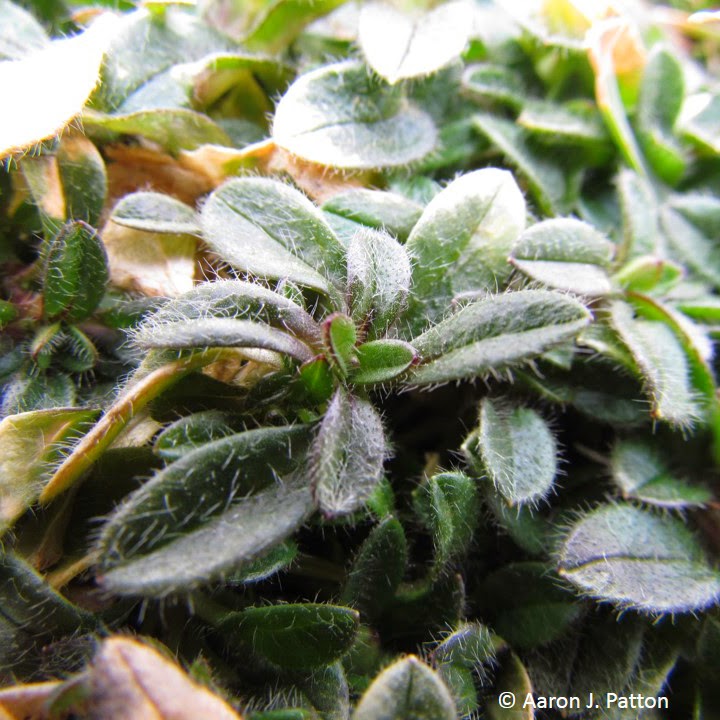
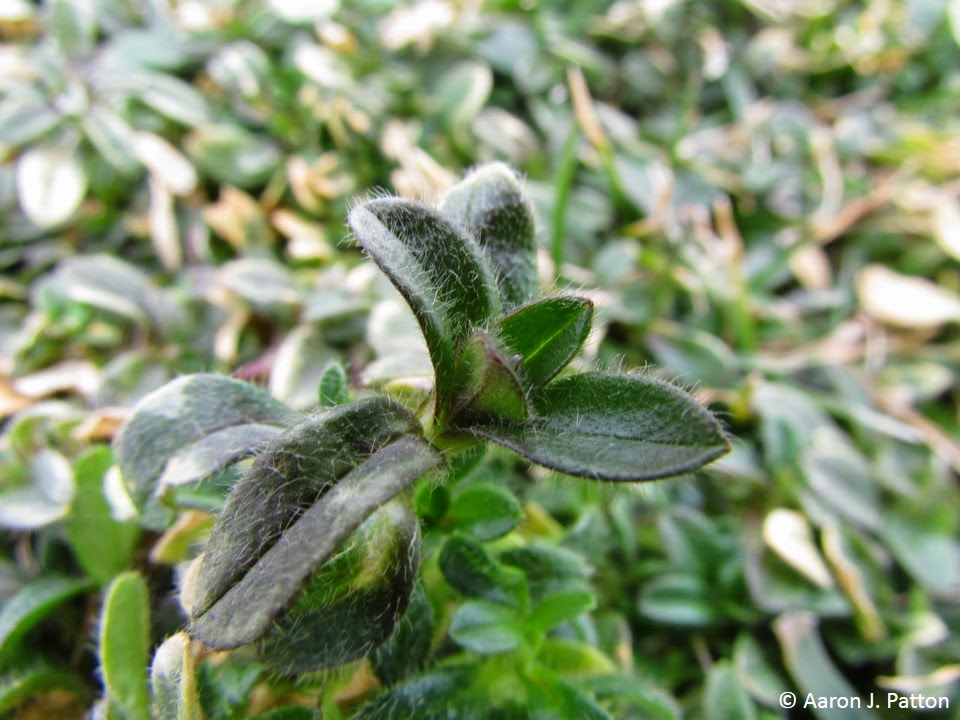
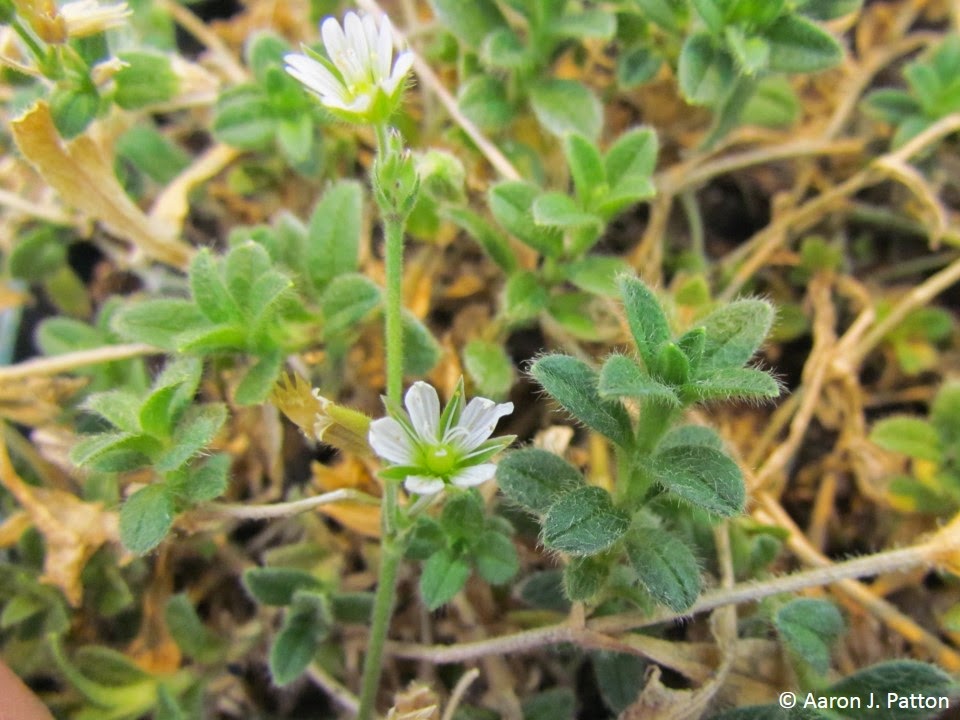
Identification: Mouse-ear chickweed is a perennial broadleaf weed that invades turf through the spreading of prostrate stems which form dense, mat-like patches. In unmowed areas, plants can form a more upright mound which then give rise to spreading and invasive stems. Mouse-ear chickweed stems are sticky/hairy and are capable of producing roots when nodes (origin points for leaves) come into contact with soil. Leaves are located opposite of each other on the stem and are dark green in color, oval to oblong shaped, and distinctly hairy on the entire upper surface and along the veins on the lower surface. Leaves also lack petioles (stems) and tend to overlap like a cup around the main stem at the base of the leaf. From May to October, mouse-ear chickweed produces small white flowers with five petals that are deeply clefted to the point where it looks like there are ten petals. Each flower has hairy sepals (green leaf-like structures that enclose and protect unopened flowers) that are almost as long as the petals. Mouse-ear chickweed can sometimes be mistaken for common chickweed; however, common chickweed does not have hairy leaves and its nodes cannot form roots when they touch soil.
Oblong leaves with dense hairs on upper surface
Daisy-like petals with 5 petals. Deep clefts in the center of each petal give the appearance of 10 total petals.
Dense, mat-like growth at low mowing heights
Large patch of mouse-ear chickweed in cool-season turf


Cultural control: Mouse-ear chickweed can form dense, mat-like patches which help to crowd out desirable turfgrass. Cultural management practices to develop a dense, aggressive turf may help to hinder the invasive qualities of mouse-ear chickweed. Since it has a weak and shallow root system, the weed could be managed by hand pulling when populations are small enough and the expanding stems haven’t already rooted.
Biological control: None known for specific use in mouse-ear chickweed. There are some organic postemergence herbicides available for turf weed control such as pelorgonic acid (Scythe), acetic acid (5% or greater solutions), and medium-length fatty acids (Eugenol); however, these products do not differentiate between the target weed and the desired turf (non-selective). As a result, these products are often used as spot treatments for weed control in parking lots, along fence rows, and in other bare-ground areas.Other organic products that contain iron HEDTA (FeHEDTA), may be used to manage mouse-ear chickweed; however, their ability to control this weed has not been effectively researched.

Chemical control: Control options for mouse-ear chickweed include both pre- and postemergence management strategies similar to those of common chickweed. However, since mouseear chickweed may behave as a perennial, a postemergence weed management strategy may be more effective.Postemergence control can be achieved with repeat applications of two or three-way mixtures of 2,4-D, dicamba, MCPP, or MCPA. A repeat application may be required.

Nimblewill

Biology: Nimblewill (Muhlenbergia schreberi) is a warm-season perennial grass found throughout the northeast, southeast, and Midwestern United States. It can often be mistaken for other mat-forming grasses with blue-green foliage such as bermudagrass or creeping bentgrass. It grows well in moist, shady areas but it is also found in dry, sunny areas. Nimblewill spreads vegetatively through short, weak stolons and creates patches in lawns that start off small, but then grow into larger patches.

Identification: Nimblewill forms mat-like patches in lawns as it spreads radially via short, weak stolons. It is usually distinguishable in cool-season lawns from its gray-green, coarse textured leaves. Nimblewill patches may be observed during the summer months as cool-season lawns are stressed by heat and drought. It is also easily distinguishable as brown, dormant patches surrounded by green cool-season turf during the winter months. It is often confused with bermudagrass, but has a short, jagged, membranous ligule compared to a hairy ligule on bermudagrass. Nimblewill often produces loose, spike-like panicles in late summer to early fall. Seeds on the seedhead will have long, hair-like awns that help further distinguish nimblewill from bermudagrass.

Nimblewill has short, pointed leaves
Nimblewill seedhead
Nimblewill seedhead with arrows pointing to awns
Dormant nimblewill in a shady lawn. Small patches grow together to form large areas.
New growth in the early spring
Dormant patch of nimblewill in the spring during greenup.
New growth in the early spring
Nimblewill leaves (center) in a cool-season lawn
Blue-grayish colored nimblewill leaves (Center) in a cool-season lawn
Patches of nimblewill that are green during drought. Nimblewill is drought tolerant as shown in this photo.

Nimblewill will have a membranous ligule and sparse hairs and bermduagrass has a hairy ligule and is usually very hairy.

Nimblewill has a small membranous ligule


Cultural control: The use of cultural practices, such as increased mowing height, fall fertilization, and overseeding to enhance cool-season turf density and vigor may help the lawn to outcompete nimblewill infestations.
Biological control: None known for specific use in nimblewill.

Chemical control: There are nonselective and selective control options available for nimblewill. Usually, stoloniferous, perennial grasses are controlled by spot-treating with a nonselective systemic herbicide such as glyphosate (Roundup). For best results, apply when the plants are young and actively growing. However, because nimblewill is capable of re-establishing through surviving stolons, at least two glyphosate applications are recommended, but three or more may be needed for complete eradication. It is important to allow the weed to regrow before making any follow-up applications.

Two new herbicides provide selective control options for nimblewill in cool-season turf. These herbicides are applied at relatively low use rates and homeowners are encouraged to hire lawn care professionals to make applications.

Mesotrione (Tenacity) can be used for selective control of nimblewill growing in a cool-season turf. To control nimblewill, start applying mesotrione in the spring (late-April) with a nonionic surfactant at 0.25% (v/v). You will need to make two or three applications. If you make three applications, use the 5 fl oz/A rate (or 6, 6 and 4 fl oz/A). The product does have a yearly maximum use rate, and the label states “do not apply more than 16 oz of Tenacity per acre per year or per crop (equivalent to a maximum of 0.50 lb of mesotrione per acre per year).” You can also apply mesotrione in late summer and fall, but you should initiate them by August for best results.

Another option is to apply topramezone (Pylex) at 1-1.5 fl oz/A at 21- to 28-day intervals starting in late April. For best results, include a methylated seed oil at 0.5-1.0% (v/v).

Orchardgrass

Biology: Orchardgrass (Dactylis glomerata), is a clump-forming, or bunch-type, cool-season grassy weed found throughout the Midwestern United States. It is typically used as a type of grazing or forage grass in pastures but it can be a weed in turf. It’s bunch-type growth pattern, light blue-greenish color, ability to tolerate partial shade, and rapid leaf elongation make orchardgrass a problematic weed (plant out of place) in many lawns.

Identification: Orchardgrass is a bunch-type cool season perennial grass that is commonly found in home lawns throughout the state of Indiana. Orchardgrass often infests lawns as a contaminant in grass seed or in newly established lawns that previously consisted of pasture-land. Orchardgrass can often be found thriving in partially shady conditions that might stress the health of the surrounding, desirable turf. It is easily spotted in lawns when it grows much more quickly and is lighter-green the surrounding turf. Additionally, its bunch-type growth habit doesn’t make a particularly dense canopy when it infests lawns, thus only enhancing its status as a grassy weed. 

Its leaves are folded in the bud and have a finely toothed, prominent membranous ligule. As it grows, the leaf blades become very long, are light-green/blue-green in color, and are still slightly rough to the touch on the surface and the outer leaf margins. The membranous ligules grow slightly longer and become more noticeable as the plant matures. The leaf sheaths are strongly compressed and folded. Because orchardgrass has a bunch-type growth habit, the clumps increase in size by developing aggressive tillers which emerge from the base crown of the plant. Orchardgrass also has a very rapid vertical growing rate compared to other desirable cool-season turf which requires more frequent mowing in order to keep a uniform lawn surface. Additionally, the leaf tips have a tendency to tear or shred, even when the mower blades are sharp.

In the late spring through mid-summer, the plant produces seedheads in a stiff, branched panicle with fan-shaped, densely crowded spikelets of viable seed. The spikelets are often so crowded that when observed from afar, the seedhead almost looks globular or spherical in appearance.

The prominent membranous ligule of orchardgrass.

A side view showing the compressed sheath/stem and folded vernation.
Orchardgrass has a boat-shaped leaf tip.
Clump of orchadgrass in a shady lawn.
Clump of orchadgrass in a newly seeded Kentucky bluegrass lawn.
Orchardgrass in a newly planted Kentucky bluegrass sod field.
The faster growth habit of orchardgrass is evident here.
Here a mature clump of orchardgrass is growing much quicker than the surrounding turf species.
Orchardgrass seedhead developing in a lawn between mowings.


Cultural control: None known specifically for orchardgrass. Mowing practices alone will not provide adequate management since orchardgrass can survive in many of the same environmental conditions and management programs as other desired turfgrass species. The best method of cultural control for orchardgrass is to avoid contaminating your turf system in the first place by buying certified seed mixtures/blends from a reputable seed company. Carefully read the labels of seed you are purchasing to make sure that orchardgrass is not mentioned as a weed seed. Existing clumps of orchardgrass can also be physically removed by hand, pocket knife or shovel/hoe.
Biological control: None known specifically for control of orchardgrass in cool-season lawns.
Chemical control: Unfortunately, only nonselective control options exist for orchardgrass in cool-season turf. Spot-treating with a nonselective systemic herbicide such as glyphosate (Roundup) will help to manage orchardgrass in cool-season lawns. For best results, apply when the plants are young and actively growing. Often multiple applications may be necessary to completely eradicate the weed; however, it is important to allow the grass to regrow before making any follow-up applications.

Pineapple Weed

Biology: Pineapple weed (Matricaria matricariodies), behaves as either a summer or winter annual and it is commonly found throughout the United States. It is a weed of both high- and low-maintenance turfgrass lawns, landscapes, and nursery crops. Its ability to tolerate low mowing heights and highly compacted soils allow pineapple weed to compete with in weak turf.

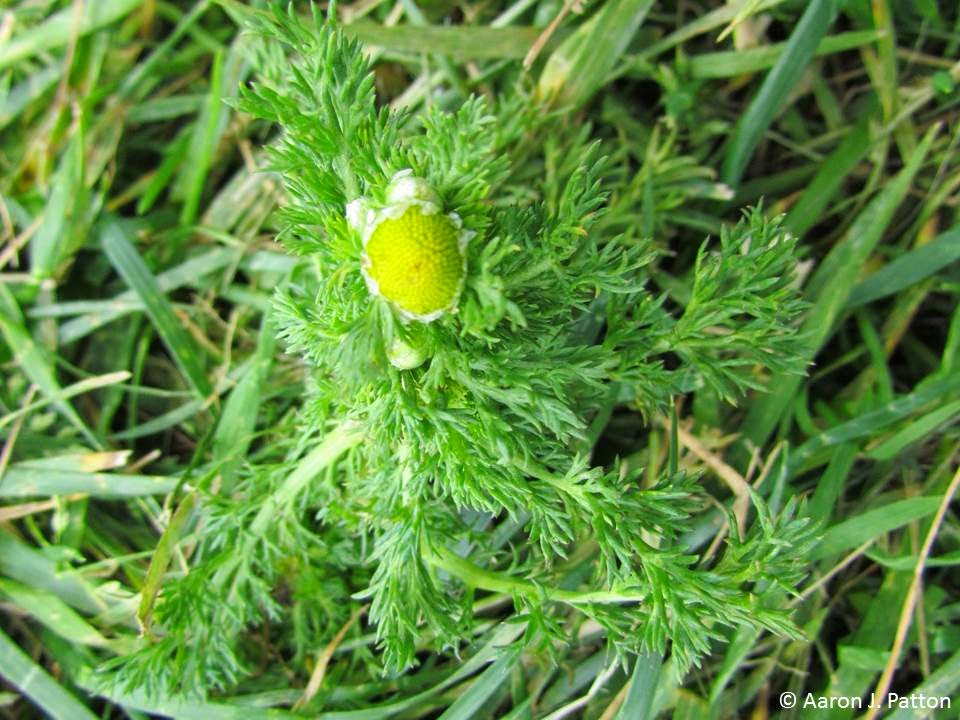
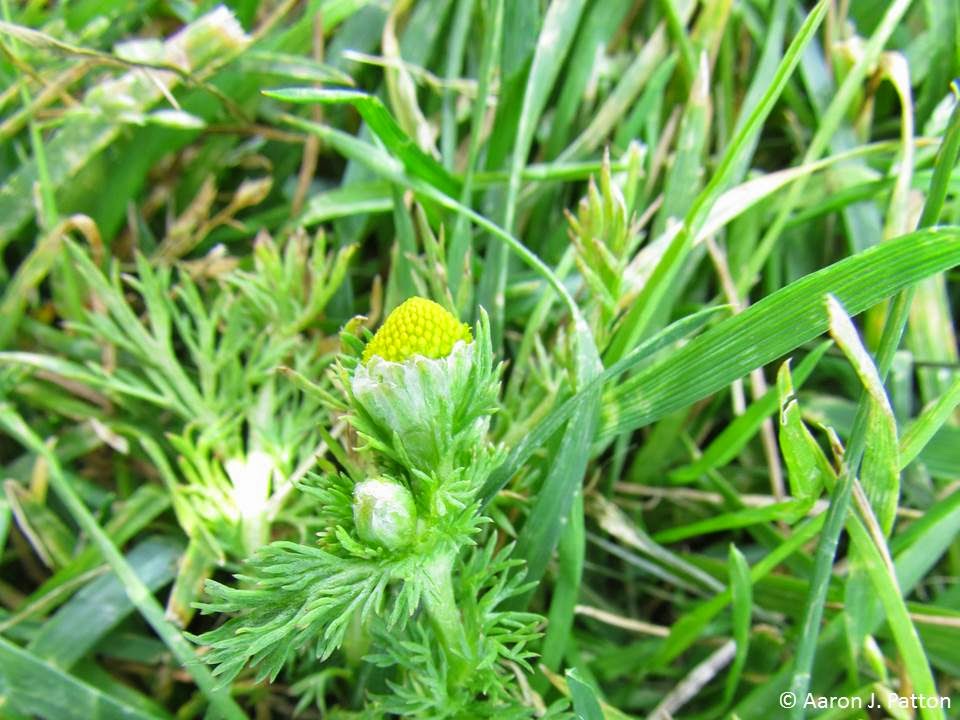
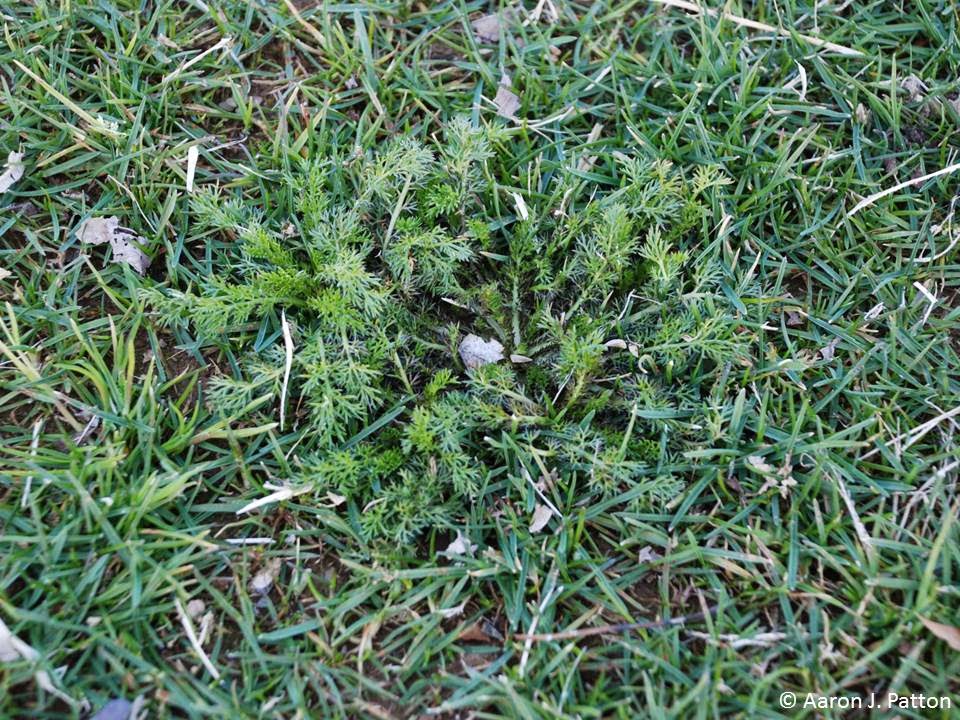
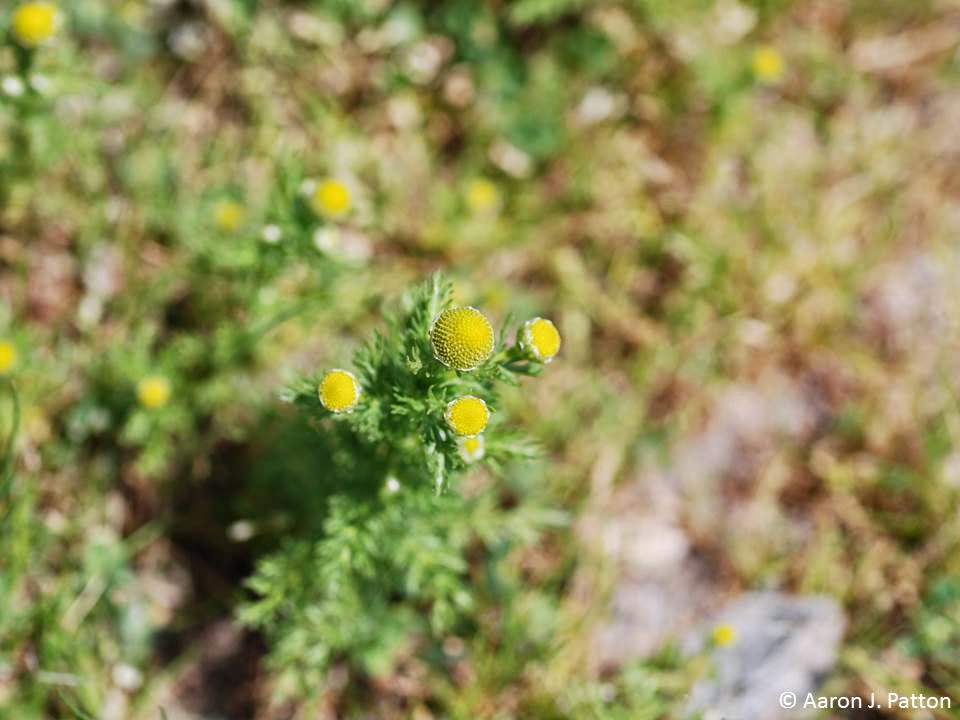
Identification: Pineapple weed can behave as either a summer or winter annual broadleaf in both high- or low-maintenance turf throughout the Midwestern United States. It has a very low-growing, bushy, and branching growth habit and it reproduces by seed, which have the ability to emerge year-round if environmental conditions are favorable. Typically, the seedlings germinate in late summer to early fall and again from early spring to early summer. Young plants form a small, but dense rosette of fragrant, hairless, shiny bright green leaves that are also thick and succulent. Rosettes form from a very shallow taproot with a secondary fibrous root system. As the plant matures, the smooth, hairless stems continue to elongate in either an erect or a low-branching/spreading growth habit. The leaves are also hairless, fleshy and are pinnately divided with deep, finger-like lobes and short linear segments. All pineapple weed foliage (stems and leaves) have a very sweet odor similar to that of pineapple when damaged or crushed; thus, giving the plant its common name. From May through September, the plant produces flowers that are yellow, egg-shaped, and are composed of densely-packed, tiny, yellowish-green flowers. Flowers also emit a very sweet, pineapple like odor when crushed. Pineapple foliage can sometimes be confused with that of wild chamomile; however, the foliage of plants in the chamomile family can range from highly bitter to absent, not sweet and pineapple-like.

Cultural control: None known specifically for pineapple weed. Though it tolerates low mowing heights and compacted soils, a combination of frequent mowing, adequate fertilization, and irrigation to keep turf dense will help the desired turf compete and gradually eradicate pineapple weed. Reducing traffic will also help increase turf density and reduce pineapple weed invasion. Additionally, hand pulling small populations may help to physically remove pineapple weed due to its shallow tap root.

Biological control: None known specifically for pineapple weed.

Chemical control: Since it reproduces from seed, it is possible to manage pineapple weed through the use of preemergence herbicides. However, control with preemergence herbicides may be difficult since the seeds have the ability to germinate year-round under favorable environmental conditions. Postemergence applications of two- or three-way mixtures of 2,4-D, dicamba, MCPP, or MCPA will likely provide adequate control in established turf. Though dicamba does the majority of the work in controlling pineapple weed, the addition of MCPP often helps to increase the effectiveness of the overall application. These products are available in multiple formulations at local retailers.